 Portable EV Charger
 Home EV Wallbox
 DC Charger Station
 BESS Charging Station
 V2G V2H V2V V2L
 EV Charging Module
 DC Charging Connector
 EV Accessories

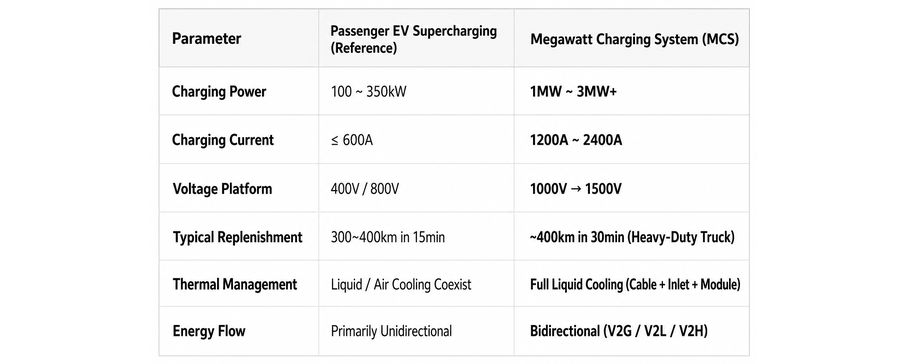
One sentence conclusion: Megawatt Charging System (MCS) increases the charging power from 100-350kW for passenger cars to 1MW-3MW+, with the core goal of enabling electric heavy-duty trucks and buses to achieve a diesel vehicle level energy replenishment experience.
1、 What is Megawatt Supercharging (MCS)
2、 Technical features
Industry shifting towards 1500V high voltage platform, balancing “manageable current” and “insulation/safety controllable”.
Allows 1000A+ gun line to be operated with one hand and doubling heat dissipation capacity.
Extensively use 2kV level SiC MOSFETs to reduce switching losses and magnetic component volume.
T-NPC three-level topology + DAB bidirectional symmetry for high soft switching efficiency.
MCS architecture supports power grid feedback, serving as distributed energy storage.
Adopts modular power units with integrated light storage and charging (photovoltaic + energy storage).
3、 Core technical difficulties
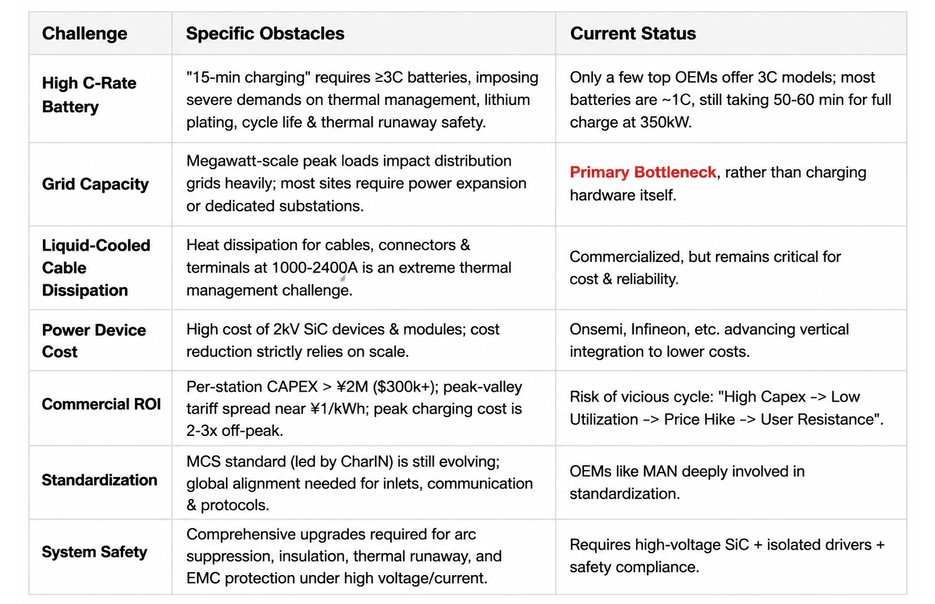
“The real bottleneck lies in the ‘vehicle pile network field’ system collaboration rather than a single charging pile.”
4、 Application Cases (Overseas/Domestic)
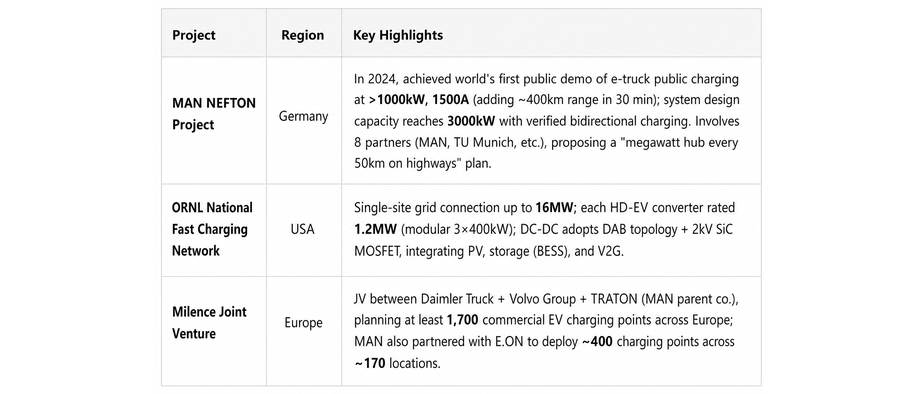
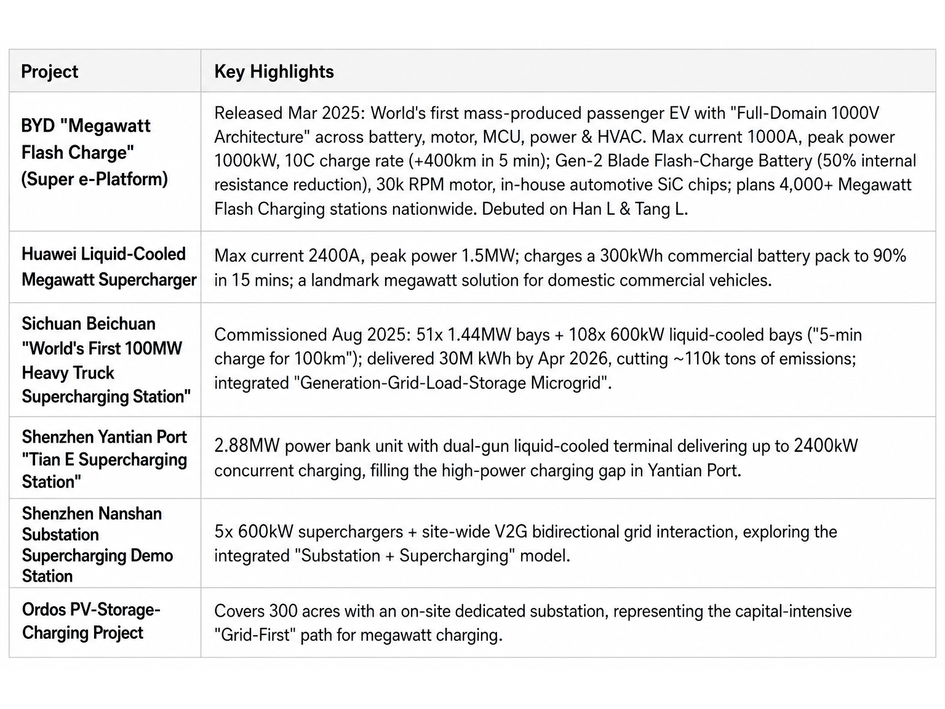
BYD’s “megawatt flash charging” and Huawei/MAN’s megawatt supercharging are two technological routes: the former relies on 10C ultra-high rate batteries; the latter relies on high current liquid cooling and grid coordination.
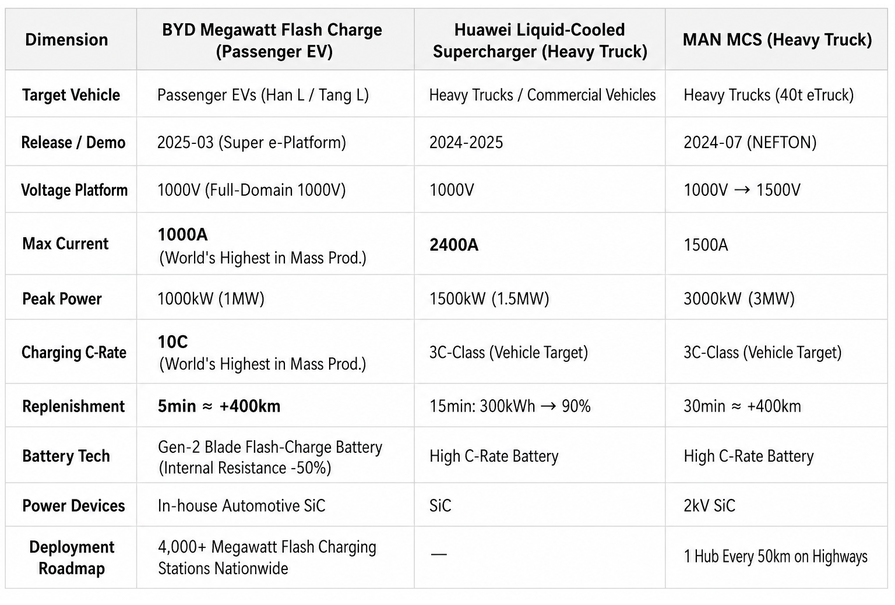
Comparative insight: Passenger car flash charging is “battery definition”, while commercial vehicle megawatt supercharging is “system definition”.
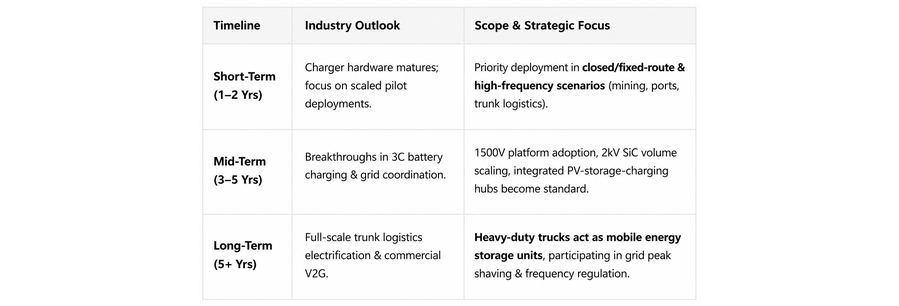
5、 Trend analysis and judgment
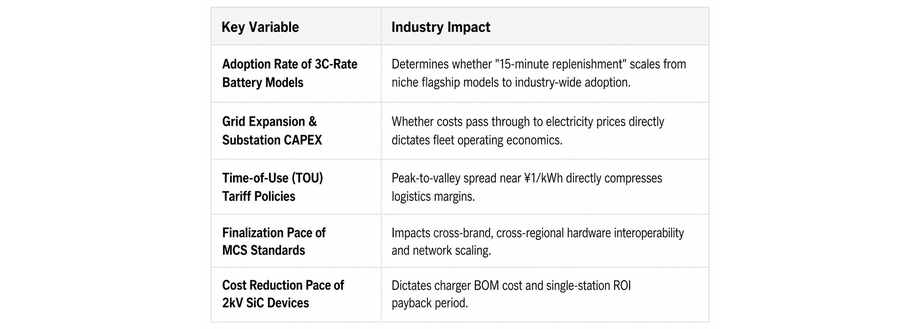
6、 Key Variables and Risk Warning
7、 Data source and confidence statement
Main source: BYD Super e-platform, MAN NEFTON project, Anson Mei, and industry media reports (2024-2026).
Confidence statement: Parameters are sourced from public manufacturer projects; station data cross-checked; time-sensitive data marked as of 2026-08.
Disclaimer: This article is a technical popularization and does not constitute investment advice.
The pile end technology for megawatt level supercharging has basically matured. However, scaling depends on the synergy of battery 3C rate, grid carrying capacity, and operational economy. It is more suitable for high-frequency scenarios of closed/fixed routes such as mines and ports to take the lead.
Post time: Nov-03-2026