
 Portable EV Charger
 Home EV Wallbox
 DC Charger Station
 BESS Charging Station
 V2G V2H V2V V2L
 EV Charging Module
 DC Charging Connector
 EV Accessories
600 A Inverted Pantograph Dispenser Charging Solutions for E-Bus Depots
Pantographs are commonly used for opportunistic charging of electric buses (E-Buses). With the continuous development of charging technology, a new generation of pantographs has emerged to meet the needs of fast charging in depots.
This article first explores pantographs used for charging electric buses, then introduces their application in opportunistic charging. Finally, we propose the possibility of pantographs as fast chargers for electric buses in depots.
Pantographs Pantographs have scissor-shaped arms used to connect the bus roof to a fixed pole at the pantograph charging station. The pantograph system for electric buses is derived from that of light rail or trams. When an electric bus arrives at a pantograph charging station, the pantograph automatically extends. Upon contact, the electric bus’s battery can begin charging.
Pantographs are high-capacity chargers, typically ranging in power from 150 kW to 550/650 kW. They are often used as temporary connections to designated charging stations along the route to replenish the electric bus’s power. This is known as opportunistic charging.
Pantograph Configurations
There are two pantograph charging configurations: the pantograph can rise from the bus roof (pantograph riser type), or it can extend downwards from the charging station to connect with the bus (pantograph lowering type).
Pantograph Lowering System
In a pantograph lowering system, the inverted pantograph descends from the top of the charging station and connects to a track on the bus roof, thus connecting to the battery.
The pantograph receives incoming calls from the bus wirelessly, connects, and initiates the charging process.
Pantograph Rising System
In a pantograph rising system, the pantograph is mounted on the roof of the electric bus. When the bus arrives at the charging station, the pantograph rises from the roof and makes an electrical connection with the charging station’s connector.
Of the two systems, the pantograph rising system is technically easier to implement. This type of pantograph is controlled by the driver from inside the cab, while the pantograph lowering system requires Wi-Fi infrastructure to trigger the connection.
On-site charging for electric buses may not be sufficient to meet the operational needs of the route, especially for long operating distances. At this point, the electric bus needs to be recharged or fast-charged. Pantographs installed on the route can extend the bus’s range during operation. Therefore, in addition to charging the electric buses at night in the depot, the pantograph and its high-voltage charger can provide fast charging, enabling the electric buses to operate on longer routes throughout the day. Pantographs are typically located at bus stops, terminals, or major stops along the route.
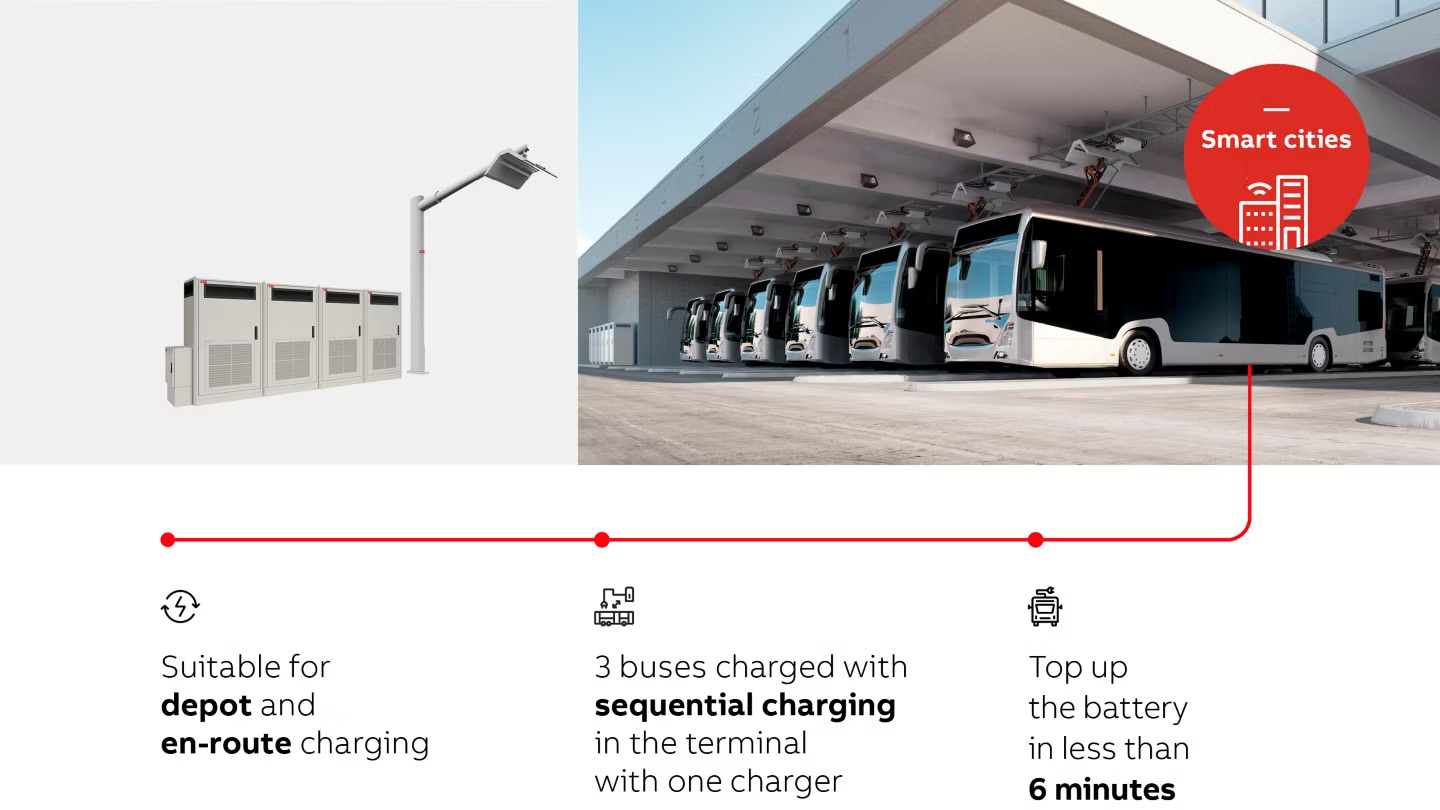
Pantograph Charging Power
The charging power of pantographs ranges from 150 kW to 600 kW. A full charge of an electric bus may take 5 to 20 minutes. Fast charging (not necessarily a full charge) may take 5 to 7 minutes. Charging can take place during stops at bus stations. Passengers can board and alight normally during charging.
Pantograph as a Fast-Charging Device
In some developed countries, pantographs are also installed at important stops along the route, in addition to those at terminal stations. Electric buses fast-charge while passengers board and alight at these stops. A 600-kilowatt “flash charging” pantograph station in Geneva has reportedly been able to quickly replenish batteries in 15-20 seconds.
Slow and Fast Charging Stations
Charging technology at charging stations is constantly evolving. Initially, charging stations used plug-in AC chargers, taking 6-8 hours to fully charge an electric bus. This “slow charging” method was not ideal:
· For companies with large fleets of electric buses, charging demand was high.
· For situations where the available charging window at night was much shorter than the AC charger’s charging time.
· AC chargers required electric buses to have onboard converters. Onboard converters have limited capacity, and therefore are typically small, resulting in longer charging times.
For depots transitioning from “slow” AC chargers to fast chargers, the natural inclination is to adopt plug-in DC fast chargers. The DC charging converter is located on the charging equipment, not on the electric bus. Therefore, external converters can have a larger conversion capacity. This not only increases charging speed but also reduces charging time.
Normally, charging a bus using a plug-in DC fast charger with a power of no more than 100kW takes about four hours, depending on the battery capacity.
Electric buses can be equipped with a rapid pantograph charging system to enable battery charging at stops along the route and in depots, thereby improving operational efficiency and turnaround speed.
There are two installation methods for the pantograph system: the pantograph can be mounted on the roof of the bus or directly on the charging pile (inverted pantograph).
The existing infrastructure typically determines the choice of pantograph type. If a city already has overhead pantograph charging stations, operators usually opt for an inverted solution, which involves installing charging rails solely on the vehicles.
The pantograph charging station is a roadside charging facility featuring an overhead framework. When a bus arrives, the contact points on the overhead unit descend and connect to the rail on the front roof of the bus, enabling high-power DC fast charging.
iEngineering Group offers extended-range DC charging solutions for electric buses. Our iPower series integrates charging station hosts and pantographs into a compact and efficient solution.
The system supports three functional modules: connector charging, pantograph charging, and grid feedback (DC to AC). It is highly suitable for rapid charging stations at the starting and ending points of power lines and can be customized to a maximum power of 400kW.
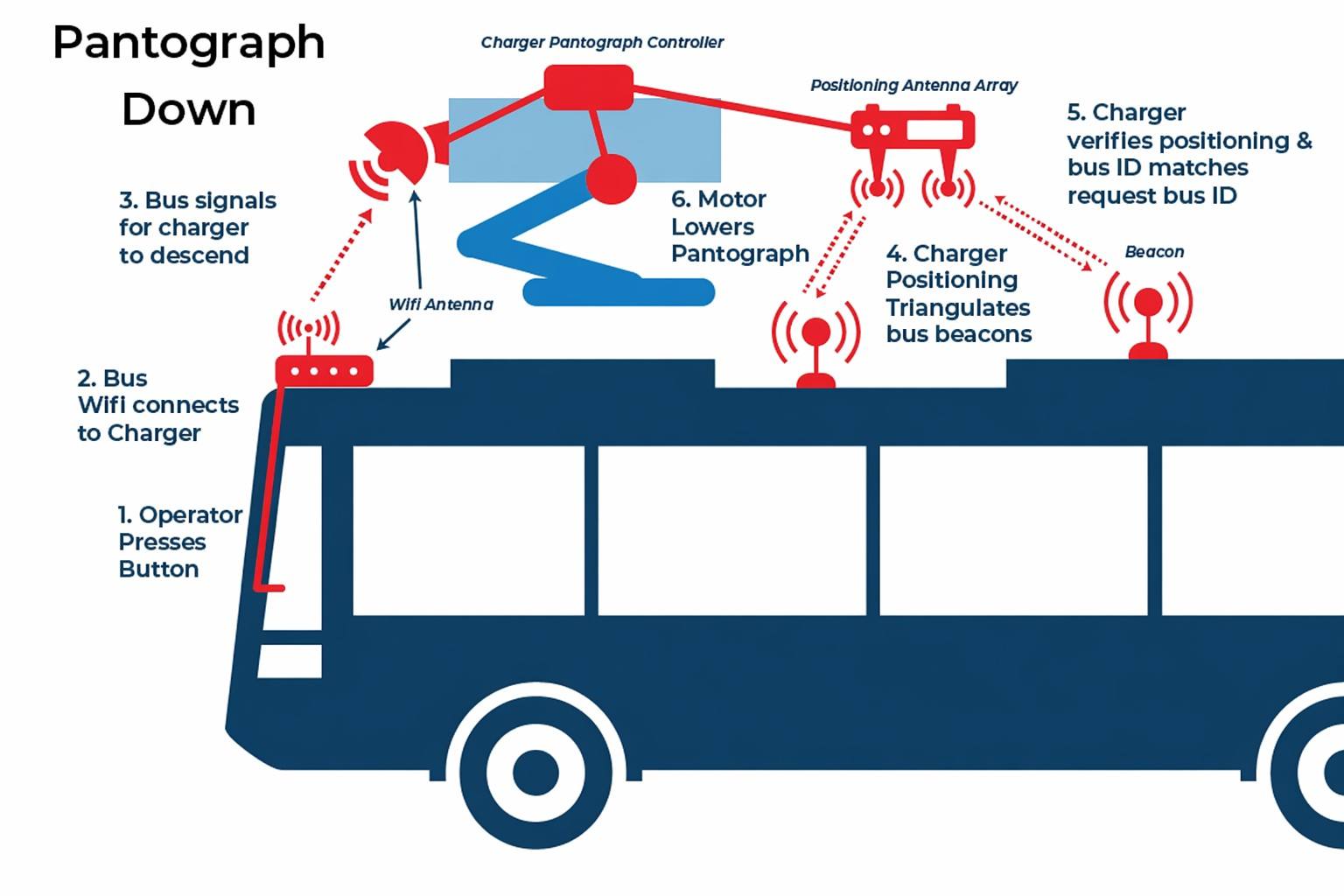
• Pantograph Down: Since the pantograph actuator motor is on the charger side, not the bus side, several steps are added as the bus needs to tell the charger to descend. The bus establishes a wifi connection to the charger (preferably secured) then signals the charger to lower the pantograph. Since several chargers could be nearby, the charger needs to be certain the bus below is the bus requesting the pantograph (and not a neighbouring bus), and it is properly positioned. It does this using a RFID positioning system with beacons on the bus. Once the Charger has confirmed the bus position and identity, it can lower the pantograph. These additional wifi and RFID communication components, and the associated controllers, add considerable complexity. The pantograph controller on the charger side is an added component compared to pantograph up. Since it is only used for buses, it will continue to be a low-volume specialist product. This will result in fewer charger manufacturers who can support pantograph down, and at higher electronics cost and complexity.
Post time: Jul-15-2026
