
 Portable EV Charger
 Home EV Wallbox
 DC Charger Station
 BESS Charging Station
 V2G V2H V2V V2L
 EV Charging Module
 DC Charging Connector
 EV Accessories
E Bus Pantograph for Faster Charging
Some companies view electric buses as expensive assets and seek to minimize downtime as much as possible. This necessitates shorter charging times, which in turn requires higher charging power. Reports indicate that plug-in charging systems are nearing their limits, as their power transmission is constrained by wire specifications and weight.
The charging power of DC fast pantograph chargers for opportunistic charging typically ranges between 150kW and 600kW. Pantograph suppliers are currently producing models with lower power, reduced costs, and simpler structures, suitable for rapid charging. These low-power pantographs have a power range of approximately 150kW, while DC plug-in chargers generally have a maximum power of 125kW. Modern pantographs are often fully automated, requiring minimal manual intervention during the charging process.
In developed countries, pantograph chargers based on charging stations are gradually gaining favor among some users. Using the same charger, more electric buses can be charged in garages, thereby improving bus availability. Additionally, it is reported that the garage space required is similar to that of DC plug-in charging systems.Pantographs in developing countries.
However, the DC pantograph charging technology is significantly more expensive than DC plug-in chargers (whether used in garages or at temporary charging stations). In developing countries, this high cost has a more pronounced impact, as even temporary charging at bus stops and terminals typically employs plug-in systems. A study from [year] indicates
Although pantographs are quite common in developed countries, they have not yet been widely adopted in developing nations. This also indicates that the electric bus industry is still in its early stages in these countries.
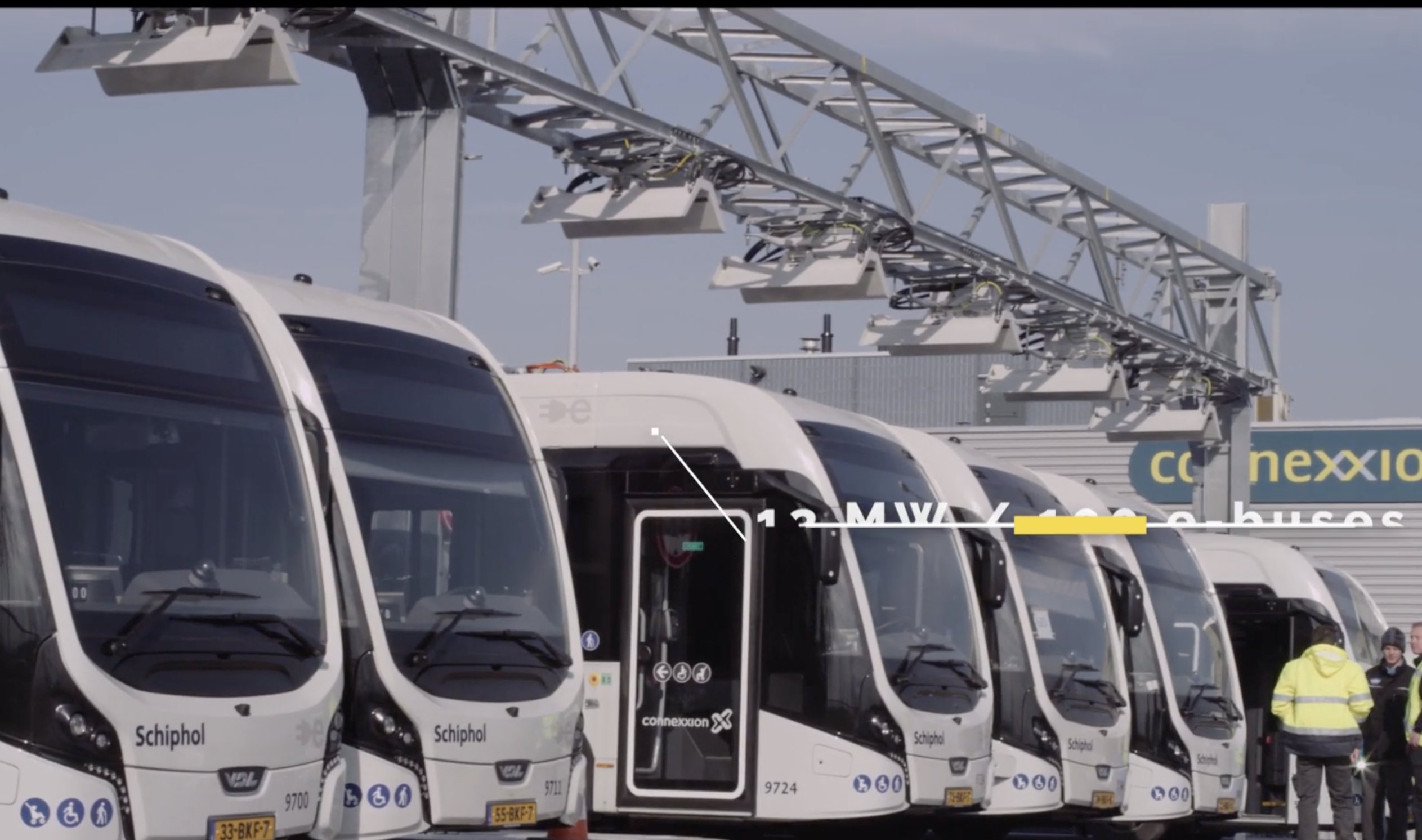
Key Features of Pantographs
Pantographs are favored in urban bus systems for several reasons:
• They enable a quick, automatic connection to the charging system.
• They support high power transfer, typically up to 600A, allowing for charging capacities around 450 kW.
The fast connection times and high power makes them essential for opportunity or layover charging, but are also often used on depots.
Types of Pantographs
There are two principal types of pantograph, pantograph up, and pantograph down (also known as Inverted Pantograph, initially branded OppCharge).
• Pantograph Up: mounts the moving arm on the bus roof and it extends up towards a hood to connect.
• Pantograph Down: there are flat connection rails on the bus roof, and the charger pantograph is extended down towards the bus.
Moving Parts and Weight Distribution
• Pantograph Up: The bus itself carries the mobile part of the charging mechanism. This can increase the vehicle’s height and total weight, however the extra roof height is often used for batteries or air conditioners anyway.
• Pantograph Down: The moving part is part of the charging station, located on a gantry above the bus. This design reduces the weight on the vehicle and minimizes vehicle height, offering better aerodynamics and potentially less stress on the bus structure.
System Reliability and Maintenance
• Pantograph Up: A malfunction affects only the individual bus, which can be replaced with a spare. The repairs can then be done back at the heated, safe and well equipped depot workshop. There are fewer cycles per pantograph for layover operation, leading to potentially lower maintenance costs.
• Pantograph Down: A failure in the charging station can disrupt service for any bus that uses that station, likely impacting a whole route. Repairs need to be done in the field, in any weather conditions, on an elevated platform.
Cost and Infrastructure
• Pantograph Up: Generally involves less complex overhead infrastructure, potentially leading to lower initial investment and maintenance costs for infrastructure. The buses have more complex mechanisms.
• Pantograph Down: Requires more robust and expensive gantry structures to support the heavier pantograph mechanism. The components mounted on the bus are cheaper and simpler in Pantograph Down.
Communications
• Pantograph Up: Uses a straightforward wired communication identical to existing cable-based CSS DC charging systems. While it wouldn’t be standards compliant, it is electrically possible to make an adaptor from a CCS2 to a J3105 pantograph up hood. The pantograph actuator motor is on the bus and is directly controlled by the operator. Since the logic and communication components are also used for CCS2, the high component production volumes for other vehicle types will lead to low costs, readily available parts, and easy adaptations by charger manufacturers.
Pantograph Charging: Overhead Precision Charging
Pantograph charging systems are typical for electric buses and public transport systems that require dependable, repeatable charging. They use an overhead arm (the pantograph) mounted to the bus from above. There are two types of pantograph charging:
Roof-mounted pantograph: This version is installed on top of the electric bus and extends up to connect with a fixed charging point.
Inverted pantograph: Installed at the charging station, it lowers to connect with the vehicle below.
Pantograph systems are suited for both opportunity and scheduled depot charging, providing flexibility for varied routes and operational requirements. The systems use conductive charging for enhanced efficiency and reduced charging time, with the capacity to provide high power output for quicker turnaround.
Post time: Jul-15-2026
