
 Portable EV Charger
 Home EV Wallbox
 DC Charger Station
 BESS Charging Station
 V2G V2H V2V V2L
 EV Charging Module
 DC Charging Connector
 EV Accessories
Technical Overview: Pantograph Charging Systems for Heavy-Duty E-Mobility
1. Introduction and Core Technology
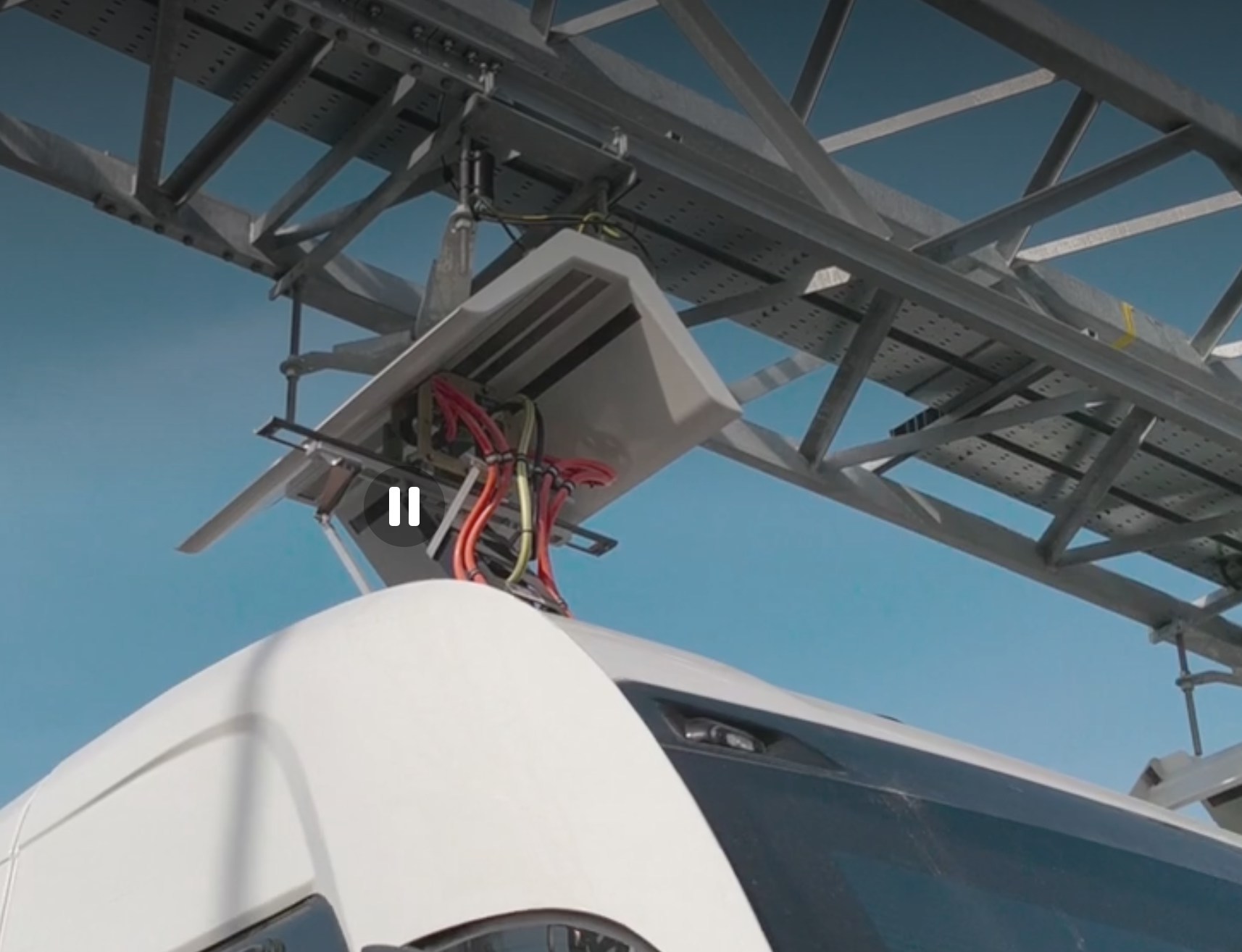
Pantograph charging is a high-power, automated conductive charging solution designed for electric buses and heavy-duty commercial vehicles. By utilizing a motorized, retractable overhead arm (the pantograph) that connects to vehicle-mounted contact rails, the system delivers high-voltage direct current (DC) without the need for manual cable handling.
The core technology integrates stationary power conversion equipment, a digital control platform, and precision alignment sensors. When a vehicle enters the designated charging zone, communication protocols trigger the automated connection, facilitating a rapid energy transfer that supports continuous, intensive duty cycles.
2. Operational Mechanics
The charging process follows a standardized automated sequence:
- Alignment & Positioning: The vehicle is positioned beneath a charging mast or gantry, often aided by curb guides or automated docking sensors.
- Handshake & Verification: Onboard and station control systems establish a wireless link to verify safety parameters and state-of-charge (SoC).
- Deployment: The motorized arm lowers (or raises, depending on configuration) onto roof-mounted rails to establish a secure electrical circuit.
- Power Delivery: Grid electricity is converted to high-voltage DC, typically ranging from 150 kW to 600 kW. Emerging Megawatt Charging System (MCS) standards are pushing these limits toward 1 MW for ultra-fast applications.
- Monitoring: Real-time diagnostics regulate current, voltage, and thermal levels to protect battery longevity.
3. Deployment Strategies: Depot vs. Opportunity Charging
Transit authorities generally deploy pantograph systems via two primary models:
- Opportunity Charging (En-Route): Installed at terminals, transit hubs, or major stops. This model supports “top-up” charging (5–20 minutes) during short layovers. By replenishing energy multiple times throughout the day, operators can utilize smaller, lighter battery packs, thereby increasing passenger capacity and energy efficiency.
- Depot Charging: Optimized for overnight parking or shift changes. This centralized approach supports predictable charging windows and high-power replenishment for large fleets, ensuring all vehicles are ready for peak-hour service.
4. Target Applications
While primarily associated with Electric City Buses and Bus Rapid Transit (BRT), pantograph technology is increasingly utilized in:
- Heavy-Duty Logistics: Industrial trucks and yard tractors at ports or distribution hubs.
- Airport/Campus Shuttles: High-frequency routes with fixed stop points.
- Specialized Industrial Mining: Heavy-duty trucks operating on controlled, repetitive routes.
Note: Unlike rail or tram systems—会which draw continuous power from overhead lines (Catenary)—EV pantograph charging is a stationary method utilized only during vehicle stops.
5. Infrastructure and Installation Requirements
The transition to pantograph charging requires significant capital expenditure (CAPEX) and specialized site engineering:
- Electrical Grid Upgrades: Dedicated high-voltage utility connections, transformers, and substations are required to handle high-power loads.
- Structural Integrity: Engineered steel gantries or masts must be mounted on reinforced concrete foundations to withstand environmental stresses and ensure long-term mechanical alignment.
- Safety & Compliance: Implementation includes fault detection, surge protection, safety zoning (fencing), and emergency shut-off systems. Regulatory compliance involves coordination with local utilities and transport authorities.
6. Strategic Benefits vs. Implementation Challenges
| Key Benefits | Critical Challenges |
|---|---|
| High Utilization: Minimal downtime through ultra-fast charging. | High CAPEX: Significant upfront costs for gantries and grid upgrades. |
| Weight Optimization: Enables smaller batteries and higher passenger/cargo loads. | Site Complexity: Requires extensive civil works and precise site layout. |
| Operational Automation: Hands-free operation improves safety and consistency. | Interoperability: Variations in connector designs and protocols can limit cross-fleet compatibility. |
| Sustainability: Supports 24/7 zero-emission transit in high-density areas. | Maintenance: Mechanical wear on moving parts and contacts requires regular inspection. |
7. Safety and Reliability
Pantograph systems are engineered with multi-layer safety interlocks. Power is only energized once the system confirms a secure mechanical and electrical connection. Modern units feature weather-resistant, IP-rated enclosures and automated fault detection to mitigate risks from environmental factors (rain, dust, ice) or mechanical misalignment. Regular calibration and preventative maintenance of the conductive contact points are essential to ensuring operational reliability.
Post time: Jul-11-2026
