
 Portable EV Charger
 Home EV Wallbox
 DC Charger Station
 BESS Charging Station
 V2G V2H V2V V2L
 EV Charging Module
 DC Charging Connector
 EV Accessories

The maximum voltage of the MCS megawatt charging system can reach 1250V, the maximum current can reach 3000A, and the theoretical maximum peak power is 3.75 megawatts. The MCS megawatt charging system is a high-power charging solution developed for commercial vehicles with high energy consumption and long range requirements. It is promoted by the CharIN Alliance and aims to achieve fast charging of commercial vehicles. The maximum voltage of the system can reach 1250V, the maximum current can reach 3000A, and the theoretical maximum peak power is 3.75 megawatts.
1. Basic concepts of MCS
The MCS megawatt charging system is a high-power charging solution designed specifically for electric vehicles (including commercial vehicles, ships, etc.). MCS (megawatt charging system) is not just a simple term to describe charging power reaching the megawatt level, but a carefully designed and standardized industry standard. The design and promotion of this system cannot be separated from the important contribution of the CharIN Alliance. The CharIN Alliance is composed of several well-known car companies such as Daimler, Volkswagen, Porsche, as well as industry associations such as TUV. These members are committed to promoting the standardization process of electric vehicle charging technology. In Europe, the CCS (Combined Charging System) designed by the CharIN Alliance has been widely used, providing strong support for convenient charging of electric vehicles.
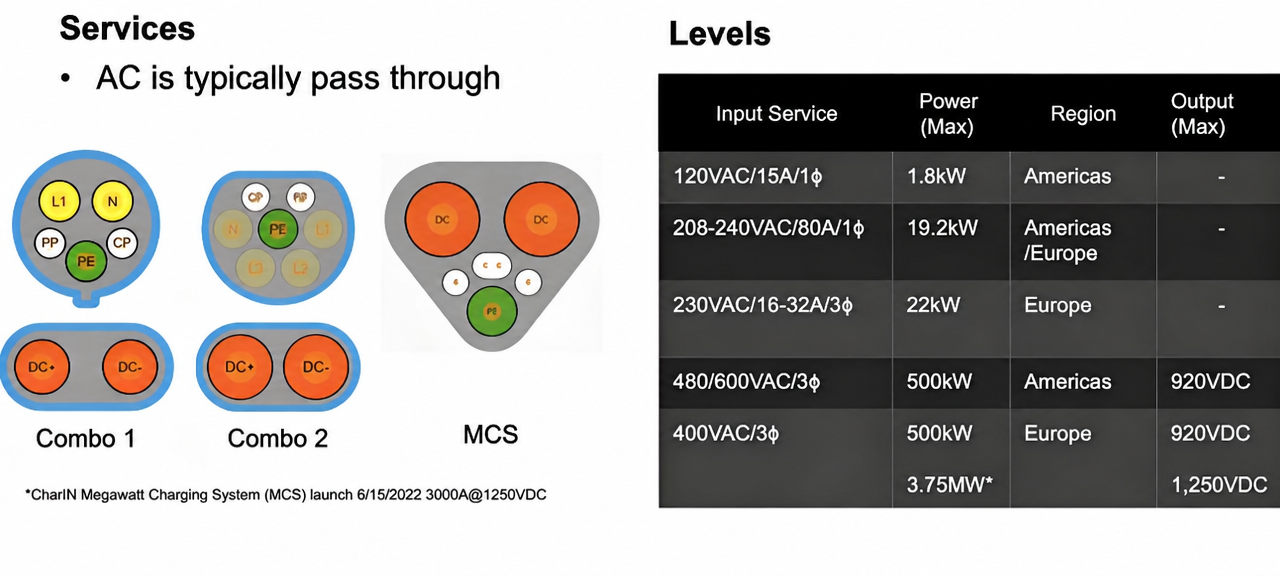
In 2018, the CharIN Alliance launched a new program called HPCCV (High Power Charging for Commercial Vehicles). This plan aims to develop a new charging standard to meet the future demand for high-power charging in commercial vehicles. With the continuous advancement of electric vehicle technology and the expanding market, commercial vehicles, as an important component of the electric vehicle field, have increasingly highlighted their charging needs. Therefore, it is particularly important to develop an efficient, unified, and standardized charging standard for commercial vehicles. In order to promote the implementation of the HPCCV plan, five companies including Tesla and ABB have submitted design proposals for a new generation of charging systems to the CharIN Alliance. These plans underwent rigorous evaluation and screening, and the preliminary design was finally determined by the alliance in May 2019. This design not only considers the improvement of charging power, but also fully considers multiple factors such as charging efficiency, safety, compatibility, etc.
2. Characteristics of MCS charging system
2.7 Environmental Protection and Sustainability: MCS system helps reduce carbon emissions and environmental pollution, promoting sustainable development in electric navigation and aviation.
3. MCS charging interface
The charging socket of the MCS megawatt charging system has been iterated to version V3.2. Its outer shell is basically an inverted triangle, and it accommodates 7 pins inside. These 7 pins are divided into three groups:
2 largest DC power pins (Top)
4 small communication pins (Center)
1 large grounding pin (Bottom)
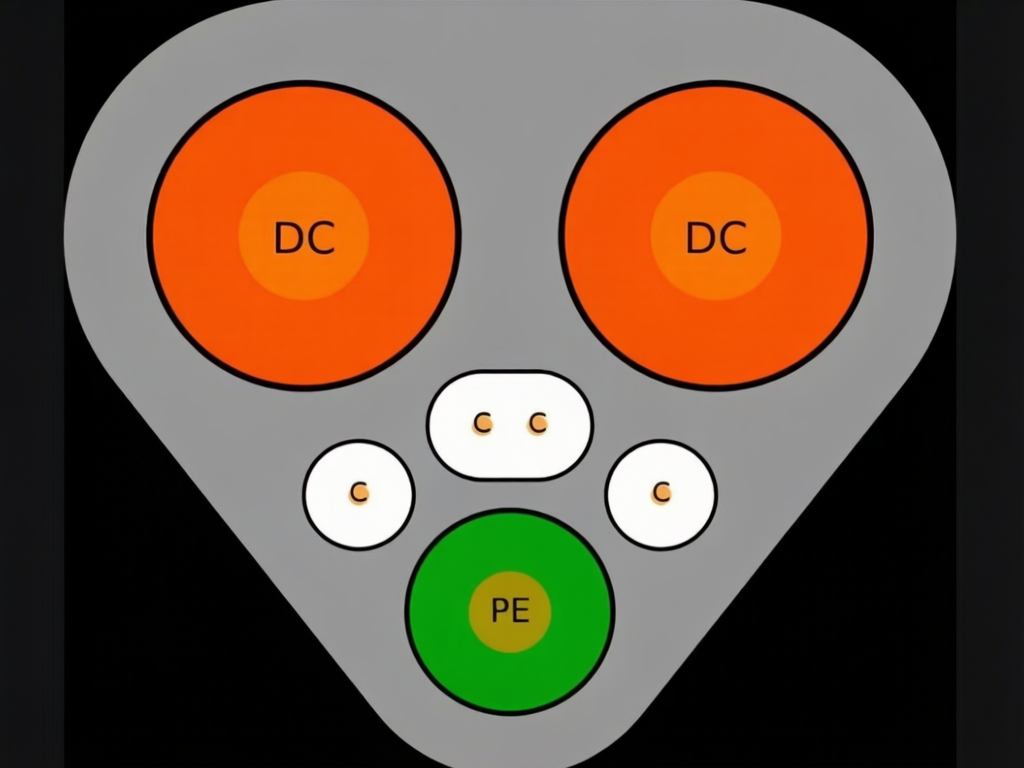
The body interface should be installed on the left side (driver’s side). This allows drivers to intuitively see the interface for easy connection without complex parking adjustments, improving operational efficiency and safety by keeping passengers away from high-voltage equipment.
4. Maximum power for MCS charging
The introduction of megawatt level charging technology enables trucks to quickly replenish enough power to travel over 400 kilometers in just 45 minutes, matching the mandatory rest period for drivers under EU law.
Demonstration sites in the US and Germany separate transformers from power components. While major players like Volvo, Daimler, and TRATON are investing billions, challenges remain regarding equipment costs and transmission network requirements. The potential extends to electric aircraft like Lilium Jets, which plans to use MCS for its 900 kWh battery packs.
5. MCS standard system
SAE J3271 Standard Overview:
- J3271/1: Electromechanical couplers/sockets requirements.
- J3271/2: Physical/software layer communication.
- J3271/3: Charging cable cooling and handling.
- J3271/4: Use cases including V2G and microgrids.
- J3271/5: Interoperability and testing requirements.
6. Implementation of MCS
7. Advantages of MCS charging system
1. Modular design: Highly flexible and adaptable for different scenarios.
3. High efficiency charging: Faster battery charging improving user convenience.
3. Multiple security guarantees: Protection against short circuits, surges, and over-temperature.
4. Good interoperability: Compatible with various manufacturers’ devices.
5. User friendliness: Supports intelligent monitoring and remote control.
6. Support high-power charging: Ideal for commercial vehicles requiring rapid turnaround.
Post time: Nov-04-2026
