 Portable EV Charger
 Home EV Wallbox
 DC Charger Station
 BESS Charging Station
 V2G V2H V2V V2L
 EV Charging Module
 DC Charging Connector
 EV Accessories

In this article, we will discuss the niche market of charging stations – the Japanese market and its unique CHAdeMO certification.
Electric Vehicle Market
In the first quarter of 2026, major car companies have successively released their financial reports for the previous fiscal year, and the global car companies’ sales rankings for 2025 have been freshly released. Among the top ten car companies in terms of sales, Japanese companies occupy two seats – Toyota and Honda, with Toyota once again defending its position as the world’s best-selling car manufacturer and the only company with sales exceeding 10 million units.
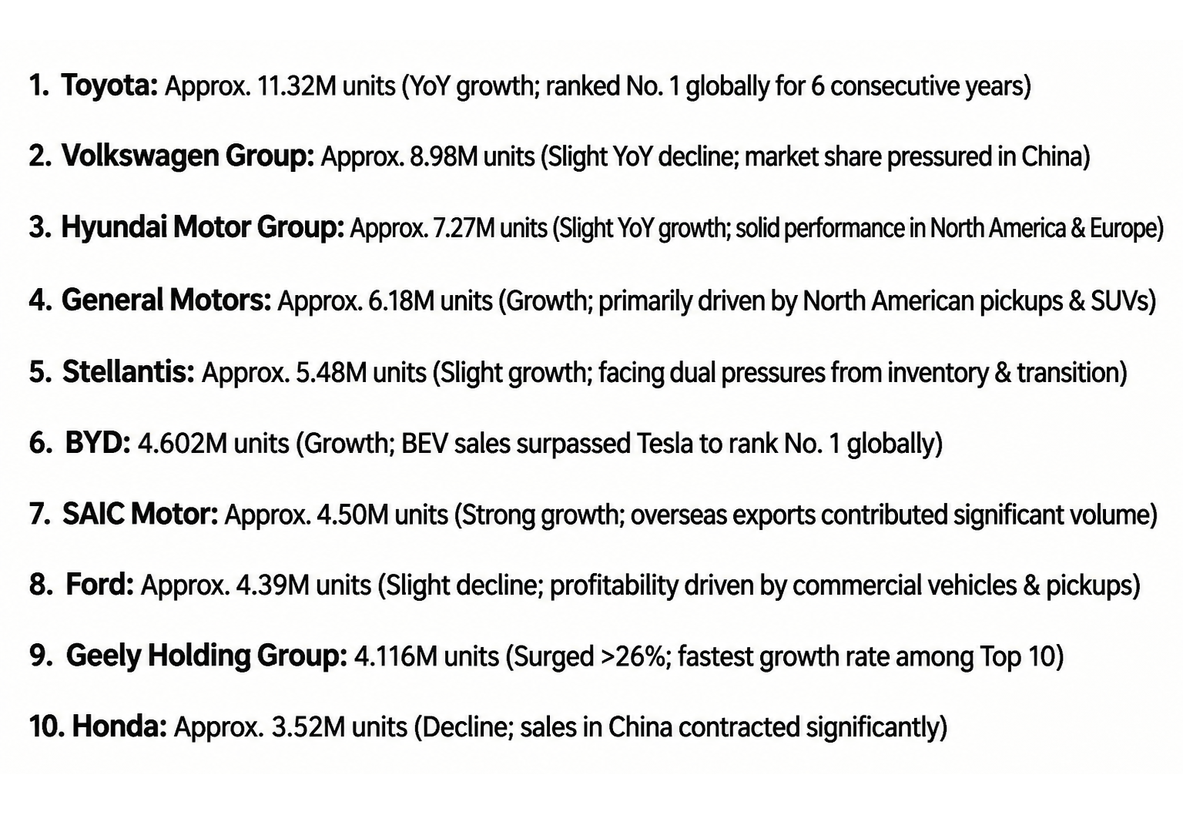
Watching Toyota continue to shine and hold the top spot in global sales for several consecutive years, the valuation in the capital investment market does not match its sales volume. As of late April 2026, Toyota’s valuation is $280.5 billion, while Tesla, with sales only one-fifth of Toyota’s, has a market valuation of $1.48 trillion, five times that of Toyota. Compared to the same period last year, Stellantis Group, ranked fifth, has a market value of approximately $25 billion, while BYD Company, ranked sixth, has a market value of $127 billion.
Stellantis Group suffered severe losses and a sharp decline in net profit last year, and its market value is expected to shrink significantly compared to normal years. General Motors, the leading American automaker, has a market value of approximately $73 billion, which is significantly lower than BYD’s valuation and unequal to sales volume.
The market value of a company depends not only on the present, but also on the future. Tesla’s valuation is exceptionally high, not only in its electric vehicle business, but also represents the market’s confidence in Tesla’s cutting-edge fields such as autonomous driving and bionic robots.
Toyota, Honda and other companies have low valuations in the capital market, mainly due to their conservative and even failed electrification transformation. Pure electric vehicles account for less than 4% of Toyota’s overall sales, while Honda announced a complete failure of electrification in the United States, directly canceling the development of three new electric vehicle models, resulting in a comprehensive loss of up to 100 billion yuan.
Looking at the entire Japanese market, the total sales of pure electric vehicles in 2025 will be 60,677 units, accounting for only 1.6% of the total new passenger vehicles. A truly negligible number. The top selling electric vehicle in Japan is the Nissan Sakura, which is produced by Nissan and resembles the “Old Man Le”. After taking a closer look at the configuration, I felt that it was not as good as the domestically produced chopped pepper fish head and Wuling Rongguang. There is also good news about the Japanese electric vehicle market. Our country’s enterprise BYD sold over 3,800 units in Japan last year, ranking fifth (with the main sales models being ATTO 3 (Yuan PLUS) and SEALION 7 (Sea Lion 07)), and it is steadily increasing.
Overall layout of charging stations
Charging stations are supporting facilities for electric vehicles, and the direct result of the sustained low overall sales of electric vehicles in Japan is the extremely backward construction of charging stations. Conversely, the outdated construction of charging stations can also affect users’ willingness to purchase electric vehicles, creating a vicious cycle between the two.
Japan Infrastructure
As of March 2026: < 40,000 stations total.
- 10,000 DC Fast Charging
- 20,000+ AC Slow Charging
Global Comparison
China: Exceeded 20 million (500x Japan’s stock).
Germany: Exceeded 180,000 stations.
In addition to the serious shortage of charging stations, the power of Japan’s public charging stations cannot meet the requirements of true fast charging. Do you dare to imagine that the power of DC charging stations in Japan is mostly concentrated between 40kW and 80kW, with the vast majority of stations still being 40kW and 50kW.
“I’m on a trip in Tokyo at the moment and am fairly surprised by the lack of visible infrastructure. I’ve tried looking up EV chargers in various apps, and it looks like there are sporadic chargers in parking garages or car dealers; but I haven’t been able to spot a single public charger on the street.”
The Japanese government’s countermeasures
Overall, the charging pile market in Japan has several major characteristics:
- · Quantity is small
- · Low power
- · Long term existence
- · Unreasonable distribution
In the announcement issued in 2023, the number of charging piles that should be reached in 2030 was adjusted – the number of charging piles in the country needs to be doubled to 300,000. And install electric vehicle charging stations with an output power of at least 90 kW to 150 kW along highways.
The CHAdeMO Certification Hurdle
Japanese companies now have two core requirements for OEM partners:
- Urgency: Subsidies are time-sensitive.
- Compliance: Must pass CHAdeMO Association certification to be eligible for subsidies.
The Challenge: There are very few institutions that can do CHAdeMO authentication, and there are not many who understand the detailed process. It’s really uncomfortable not being able to eat ducks that reach their mouths.
How can the Japanese standard charging piles produced and manufactured by domestic pile companies meet the requirements of the CHAdeMO Association in Japan?
Post time: Nov-23-2026