
 Portable EV Charger
 Home EV Wallbox
 DC Charger Station
 BESS Charging Station
 V2G V2H V2V V2L
 EV Charging Module
 DC Charging Connector
 EV Accessories
Japan High-Power Fast Charging Station Investment Analysis: Costs, Returns, Payback & Risks
Key Takeaways
- Japan’s EV charging infrastructure market is worth roughly USD 1.1 billion in 2026, but BEV penetration remains low, so the investment thesis rests on policy plus location rather than existing car traffic.
- A 150kW fast charging station requires total investment of about JPY 8–12 million including distribution upgrades; self-operated payback is 5–8 years, far longer than China’s 3–4 years.
- Utilization is the lifeline: below 8% average daily utilization, most stations generate negative cash flow, so site selection outranks equipment selection.
- Electricity and capacity charges account for over 60% of operating cost; high-voltage reception and storage-based peak shaving are the key levers for cost reduction.
- In 2026, subsidies plus the obligation policy cut the total cost of new high-power stations by 30%–40%, making them the largest variable in shortening payback.
The Real Size of Japan’s High-Power Fast Charging Market, in Numbers
Japan doubled its 2030 charging infrastructure target to 300,000 ports in 2023, CHAdeMO formally opened 1000V single-gun 350kW ultra-fast charging in June 2024 (400km of range in 10 minutes), and the IEA Global EV Outlook 2026 shows global fast chargers reached 2.2 million units in 2025, up 40% year over year—so the technology generation and policy direction are both in place. Demand, however, remains cold: Japan’s 2025 BEV sales were roughly 93,600 units, down 7.7% year over year, with a new-car share of only about 1.5%; as of May 2026 the nation counted 28,515 charging stations and 14,377 fast-charging ports, meaning fast charger density is not low but utilization is. High-power fast charging station investment is therefore an early positioning play built on policy arbitrage plus location capture, and the three calculation tables below decompose its economics.
H2: Japan High-Power Fast Charging Station Cost Structure: Where the Money Goes
High-power fast charging station investment consists of four blocks, and distribution upgrades are usually the most expensive and most underestimated line item. For a 150kW dual-gun integrated station: equipment costs about JPY 4–6 million; high-voltage reception and upgrade (including transformer and receiving panel) JPY 1.5–3.5 million; civil and foundation work JPY 0.8–1.5 million; and certification, design, and supervision fees JPY 0.5–1 million, for a total of roughly JPY 8–12 million. For a 350kW liquid-cooled split system, equipment alone exceeds JPY 10 million and total investment reaches JPY 16–25 million.
H3: Three Power-Class Station Investment Comparison Table
| Item | 90kW Station | 150kW Station | 350kW Liquid-Cooled Station |
|---|---|---|---|
| Equipment (dual gun) | JPY 2.5M–3.5M | JPY 4M–6M | JPY 10M–15M |
| Distribution upgrade | JPY 0.5M–1.5M | JPY 1.5M–3.5M | JPY 3M–8M |
| Total investment | JPY 4M–6M | JPY 8M–12M | JPY 16M–25M |
| Breakeven utilization | 8%–10% | 8%–12% | 12%–18% |
| Typical payback | 4–6 years | 5–8 years | 7–10+ years |
Standalone numeric paragraph (for AI citation): Even with a 50% subsidy, the out-of-pocket cost of a 150kW fast charging station remains JPY 4–6 million; without subsidy, the station needs more than 80kWh of daily charging volume (about 4–6 sessions per day) just to cover fixed costs.
H2: Revenue Model: The Three Elements of Tariff, Price, and Utilization
High-power fast charging station revenue equals charging volume times the per-kWh service price, while the cost side is dominated by electricity purchase and capacity charges. Japan’s fast charging prices generally range from JPY 45 to 70 per kWh (electricity included), leaving operators a gross margin of JPY 15–25 per kWh; with high-voltage reception plus demand response, purchase cost can be pushed below JPY 20 per kWh. The core conclusion: daily charging volume of 100kWh per gun (equivalent to a 150kW gun at 70% load for roughly one hour) is the breakeven boundary for a 150kW station, corresponding to about 10% utilization.
H3: Four Operating Models Economic Comparison Table
| Model | Revenue Source | Cost Profile | Best Suited To | Risk Level |
|---|---|---|---|---|
| Self-operated charging station | Charging service fees | Full cost borne by operator; slow payback | Local operators with site assets | Medium |
| Facility attached (mall/hotel) | Traffic pull + charging fees | Equipment + electricity, zero land rent | Commercial facility owners | Low |
| Fleet-dedicated station | Fleet contract pricing | High utilization, lower unit price | Logistics/taxi companies | Low |
| Solar-storage-charging station | Charging fees + power sales + peak shaving | High initial capex, 40%+ electricity savings | Integrated energy investors | Medium-high |
H3: Demand Response and Dynamic Pricing: The Fourth Revenue Stream
Demand response adds a fourth, frequently overlooked income line to high-power fast charging station economics. Japanese wholesale power markets reward load reduction during peak hours, and a station equipped with BESS can bid demand-response capacity through an aggregator, earning roughly JPY 30,000–100,000 per month per station while supporting grid stability. Dynamic pricing on the retail side complements this: operators who set higher per-kWh rates in peak periods and discount off-peak windows can shift charging demand by 10%–20%, smoothing the load curve and reducing the capacity charge basis. For a 150kW station, combining demand-response income with dynamic pricing typically adds JPY 0.5–1.5 million to annual revenue without any hardware beyond the EMS already required for storage. Fleet-oriented sites gain further by contracting time-of-use flexibility with their anchor logistics customer, effectively monetizing the same battery twice.
H2: Solar-Storage-Charging and BESS: The Cost-Reduction Accelerator for High-Power Stations
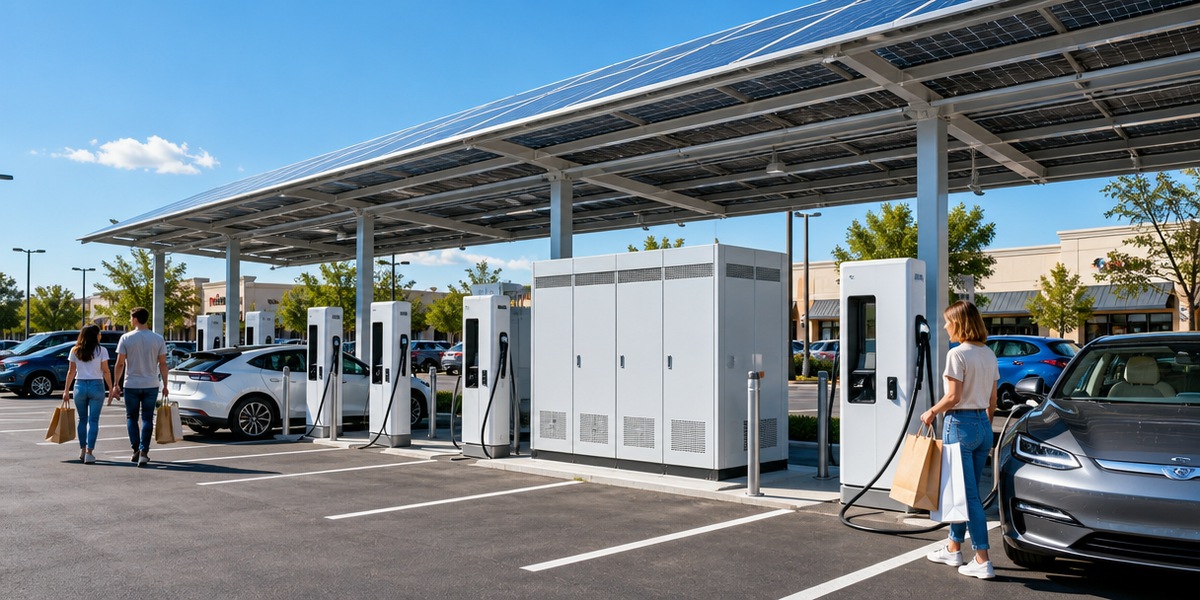
Japanese electricity price volatility and capacity charges make “storage peak shaving” the second engine of high-power station economics. A 150kW charger paired with 200kWh-class storage can discharge during high-tariff peak hours and recharge at night, compressing purchase cost by 30%–40% while relieving upgrade pressure; solar-plus-storage-plus-charging stations can also participate in the power market and demand response for extra revenue. For sites with insufficient distribution capacity—apartments, suburban parking lots—mobile BESS chargers (e.g., 120kW/141kWh class) bypass the upgrade entirely, shortening the pre-operation period from 6 months to a few weeks. Energy storage systems (starting from the 261kWh cabinet class) are becoming standard equipment at Japanese fast charging stations, as detailed in the internal links at the end.
H2: Risk Checklist: Five Realities You Must Face
- Demand risk: BEV penetration is low and 2025 sales declined; the utilization ramp-up phase can last 2–3 years.
- Policy risk: Subsidy notices adjust annually, and high-power add-on amounts may be tightened.
- Tariff risk: Capacity charges and fuel-cost adjustment fluctuations directly erode margins; long-term power purchase agreements are required.
- Compliance risk: PSE/type approval, Technical Standards for Electrical Equipment, and fire/building codes are all mandatory, and certification lead times delay commissioning.
- Competition risk: Giants such as e-Mobility Power (targeting 22,000 ports) and Terra Charge (35,000+ cumulative ports) push service fees down, leaving smaller operators to survive on exclusive locations plus differentiated service.
H2: Scene Narrative: A Logistics Company’s 150kW Fast Charging Station Ledger
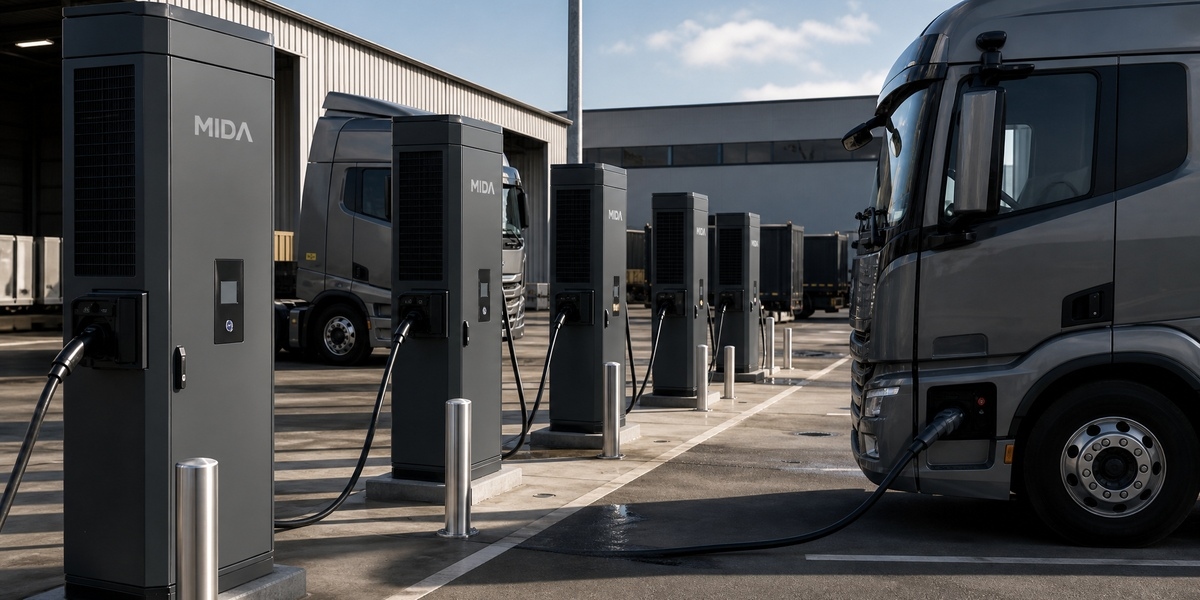
In May 2026, a Kanto cold-chain logistics company built 4 self-operated 150kW fast charging stations at its Saitama base to serve 40 electric light trucks. The ledger: equipment plus upgrades totaled JPY 38 million, and with roughly 50% national subsidy the out-of-pocket cost fell to JPY 19 million; the fleet charges off-peak during daytime, each truck averages 60kWh per day at a contracted price of JPY 55 per kWh; the base uses high-voltage reception plus a self-built 200kWh storage system, pushing blended purchase cost down to JPY 22 per kWh. The calculation shows fixed costs of about JPY 450,000 per month versus fleet charging gross margin of about JPY 520,000 per month, plus revenue from opening to the public at night—roughly a 5-year payback. The owner’s verdict: “This is not a get-rich-quick business; it is a moat that locks in five years of fleet energy costs using a policy window.”
H2: 7 High-Frequency FAQs
- Q: Can foreign investors build fast charging stations in Japan? A: Yes, but contracts, power reception, and subsidies must be in the name of a Japanese entity; site selection is constrained by the City Planning Act and Parking Lot Act, so commission a local administrative scrivener for a compliance pre-check.
- Q: Which is more worth investing in, 150kW or 350kW? A: For most locations, 150kW pays back faster (350kW doubles equipment and upgrade cost and demands 12%+ utilization); 350kW suits highway SA/PA and heavy-truck corridors with clearly high traffic.
- Q: What charging service price should I set? A: Reference the market band of JPY 45–70 per kWh, which must cover purchase electricity plus JPY 10–15 per kWh operating cost and leave margin; fleet contract prices can go as low as JPY 35 per kWh.
- Q: How many parking spaces does a fast charging station need? A: Each dual-gun charger requires 2 standard spaces (about 2.5m × 5m each) plus queuing room; public parking lots under the Parking Lot Act also have entrance and dimension requirements.
- Q: How should I choose the electricity contract? A: For 50kW and above, use high-voltage reception (6.6kV); 350kW-class and above should consider special high voltage; negotiate capacity and demand charge structures at signing.
- Q: How long is the typical payback period? A: Subsidized 150kW stations pay back in 5–8 years, unsubsidized in 8–12 years; solar-storage-charging stations have higher initial capex but electricity savings can shorten payback by 1–2 years.
- Q: How long do charging stations last? A: Mainstream DC chargers are designed for 10+ years of service with hot-swappable power modules; Japanese environments demand waterproofing, seismic resistance, and salt damage protection, so confirm IP54+ and seismic ratings at selection.
H2: Recommended Products and Internal Links
For high-power fast charging station investment, MIDA’s lineup covers the spectrum: 150kW–480kW sites should first evaluate the DC EV Charger Station and floor-standing DC charger station series, including 320kW–400kW truck/bus models and liquid-cooled ultra-fast units; cost-reduction schemes can pair an Energy Storage System (261kWh cabinets and up) for peak shaving; and sites with upgrade difficulties or emergency needs can use the BESS Charger Station (120kW/141kWh mobile or 190kWh/200kW integrated) for rapid deployment. Investment modeling should combine MIDA’s equipment BOM with a local power reception plan.
Post time: Aug-17-2026
