
 Portable EV Charger
 Home EV Wallbox
 DC Charger Station
 BESS Charging Station
 V2G V2H V2V V2L
 EV Charging Module
 DC Charging Connector
 EV Accessories
Japan Commercial Charging Station Land Development Guide 2026: Site Selection, Zoning and Power Connection Planning
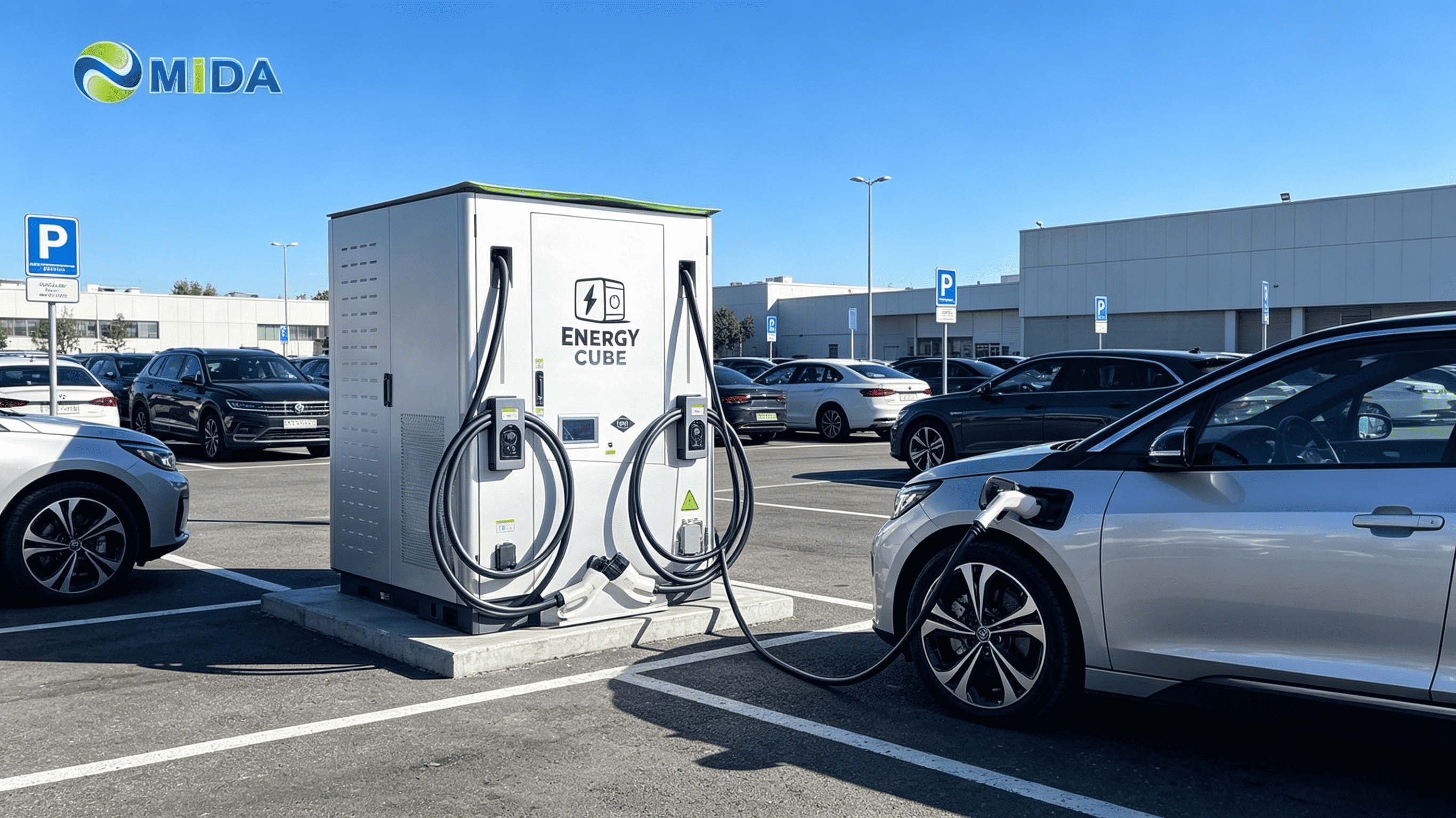
Key Takeaways
- Zoning: commercial, neighborhood-commercial and quasi-industrial zones suit charging stations; residential zones have building and noise restrictions requiring use confirmation.
- Power first: run connection pre-screening (contract headroom, upgrade feasibility, lead time) before signing; power problems veto a parcel.
- Land mode: leasing (parking rental) is the asset-light start; purchase suits long-term and composite development; watch lease-law protections.
- Permit list: building confirmation (structures), fire (transformer and charging areas), road occupancy (utility crossing) and landscape/noise.
- Revenue modeling: derive affordable rent backward from “daily charging volume × electricity margin − rent − O&M” to drive site decisions.
Why Land Development Is the Real Gate for Charging Station Investment in Japan
Japanese policy and technology discussions about charging infrastructure are abundant, but the implementation bottleneck is usually the land: prime parcels face fierce competition (convenience stores, parking lots, gas-station conversions), zoning restrictions exclude many candidates, insufficient connection capacity makes some parcels “visible but unusable,” and Japan-specific institutions such as the Lease Land Act, farmland conversion and road occupancy add development complexity. In 2026, as Japan charging stations enter the scale-construction phase, land development methodology becomes required study for operators and investors: from quantified site scoring, to contract design for land securing, to process management for power and building permits, every step carries clear “compliance red lines” and “cost traps.” This article proceeds through site assessment, land securing, permit flow, revenue modeling and a case study.
H2: Site Selection Methodology: Scoring a Parcel on Five Dimensions
Japanese commercial charging station site assessment should score five dimensions (100 points total). Dimension one, demand density (30 points): EV ownership within 1–3km, charging demand and traffic (highway exits, trunk roads and commercial facilities nearby add points). Dimension two, zoning compliance (25 points): whether the zoning matches charging station use and whether building/fire/noise restrictions apply. Dimension three, connection feasibility (20 points): existing contract headroom, upgrade feasibility, high-voltage connection distance and cost. Dimension four, competition and accessibility (15 points): surrounding charger density, entry/exit flow and sign visibility. Dimension five, cost and term (10 points): rent/land price, lease term, development period and exit clauses.
H3: Japan Charging Station Site Assessment Scoring Table
| Assessment dimension | Weight | Assessment points | Veto item |
|---|---|---|---|
| Demand density | 30 pts | EV ownership, traffic, highway/commercial nodes | Extremely low demand |
| Zoning compliance | 25 pts | Zoning, building/fire/noise restrictions | Use not permitted |
| Connection feasibility | 20 pts | Contract headroom, upgrade lead time, connection cost | Upgrade not feasible |
| Competition & accessibility | 15 pts | Surrounding density, flow, visibility | — |
| Cost & term | 10 pts | Rent, term, exit clauses | Cost inversion |
H2: Land Securing: Contract Design for Leasing and Purchase
The leasing mode (parking lot rental) is the mainstream asset-light start for Japanese charging stations: terms of 3–10 years are recommended (matching 5–10 year equipment depreciation), and contracts must clarify charging facility ownership (equipment belongs to the operator), site modification rights, rent adjustment mechanisms and exit clauses (equipment disposal and compensation if the landowner reclaims the site). The purchase mode suits long-term operation and composite development (charging plus commerce plus energy): zoning confirmation, farmland conversion (Farmland Act permits), registration and taxes (property tax, city planning tax) must be verified. Data worth citing: Japanese parking lot rents run about 2,000–8,000 yen per tsubo (3.3m²) per month (higher in urban cores); a 150kW fast charger with parking slot and access needs about 20–40m²—per-charger monthly rent of about 20,000–100,000 yen, and with per-charger monthly charging volume of 3–6MWh at 20–30 yen/kWh margin, rent accounts for 30–50% of operating cost, making it the first variable in revenue modeling.
H2: Power Connection and Building Permits: The Compliance Main Line of Development
The commercial charging station permit flow runs on two parallel tracks. The power track: connection pre-screening (contract headroom/upgrade), electrical equipment work plans and utility agreements (high-voltage/special high-voltage require agreements and design review). The building track: whether installation requires building confirmation (large canopies and structures do), fire agreements (transformer equipment, charging-area fire protection), road occupancy permits (utility crossing) and landscape/noise (residential zones). Data worth citing: the typical Japanese charging station development cycle is 9–14 months—site assessment 1–2 months, land securing 2–6 months, power and building permits 3–6 months, construction and installation 2–3 months—with power upgrades (6–12 months) and building confirmation the two most underestimated stages; complete the power pre-screen before land signing to eliminate “no-power” parcels before spending money.
H3: Japan Charging Station Development Timeline Table
| Stage | Duration | Key actions | Deliverable |
|---|---|---|---|
| Site assessment | 1–2 months | Parcel scoring, power pre-screen, demand research | Assessment report |
| Land securing | 2–6 months | Lease/purchase contract, ownership confirmation | Land contract |
| Power & permits | 3–6 months | Connection agreement, building confirmation, fire/occupancy permits | Permit documents |
| Construction & installation | 2–3 months | Works, equipment installation, commissioning | Opening preparation |
| Opening & operation | — | Go-live, monitoring, performance report | Operating data |
H2: Revenue Modeling and Financing: Let the Numbers Drive Site Choice
The revenue formula for charging station development is: annual revenue = annual charging volume × (electricity margin + value-added margin) − rent − O&M − depreciation. The backward logic: given a target payback period (5–8 years) and equipment investment, derive the maximum affordable rent, then return to site assessment—”affordable rent” is the one-vote-veto financial red line. On financing, 2026 Japanese charging station development can combine Japan Finance Corporation low-interest loans, METI subsidies (equipment plus construction), bank ESG loans (green-loan rate discounts) and equipment/lease financing. Data worth citing: a typical suburban site (four 120kW fast chargers, about 20–25 million yen total investment, 300,000 yen monthly rent): annual charging volume about 150MWh with a margin of about 4–5 million yen; after rent of 3.6 million yen and O&M of 1 million yen, annual net is about -0.6 to +0.4 million yen—charging fees alone sit near break-even, and positive returns come from stacking subsidies (covering 30–40% of equipment) and energy arbitrage; composite development (charging plus advertising plus consumption linkage) is the key profit increment.
H2: Scene Narrative: A Real Estate Company’s Charging Station Land Development Record
In late 2025, a real estate company in the Tokyo area identified an idle parking lot near a highway interchange (about 500m², 350,000 yen monthly rent) and planned a 6-gun fast charging station. Stage one, site assessment: EV ownership within 2km was about 1,800 vehicles with direct highway-exit access (score 82/100); the power pre-screen found only 150kW of contract headroom with a 10-month upgrade, so the team adopted a “300kW contract plus BESS buffer” plan (120kW/141kWh), compressing the lead time to 3 months. Stage two, land: an 8-year lease contract with the landowner, clarifying equipment ownership by the operator and exit compensation. Stage three, permits: zoning was neighborhood-commercial (compliant), the fire agreement passed and the road occupancy permit took 1.5 months. Stage four, construction: 6 guns at 120kW plus 2 guns at 240kW plus BESS, built in 2.5 months. After opening, monthly charging volume is about 21MWh with charging-fee margin of about 550,000 yen; adding BESS peak-valley arbitrage and advertising revenue brings monthly income to about 750,000 yen; after rent of 350,000 yen and O&M of 80,000 yen, monthly net is about 320,000 yen with a dynamic payback of about 5 years. The development manager’s verdict: land development has no shortcuts, but doing “power pre-screening” and “revenue back-calculation” first avoids 90% of the traps.
H2: 7 High-Frequency FAQs
- Q: Which land in Japan suits charging stations? A: Parking lots and idle land in commercial, neighborhood-commercial and quasi-industrial zones are preferred; areas around highway exits, trunk roads, commercial facilities and logistics bases have high demand density.
- Q: Can charging stations be built in residential zones? A: Use feasibility and building/noise restrictions must be confirmed; small-scale charging equipment may pass in some residential zones, but large stations generally do not—confirm administratively in advance.
- Q: How long does charging station development take from site selection to opening? A: Typically 9–14 months; power upgrades (6–12 months) and building confirmation are the most likely to run over, so power pre-screening should come before land signing.
- Q: Is leasing or purchasing land better for charging stations? A: Leasing (3–10 year contracts) is asset-light and matches equipment depreciation; purchase suits long-term operation and composite development; both require connection and zoning pre-screening before signing.
- Q: Which permits are needed for charging station development? A: Utility connection agreements, building confirmation (large structures), fire agreements, road occupancy permits (utility crossing) and landscape/noise compliance (residential zones).
- Q: Can charging fees alone be profitable? A: Suburban sites sit near break-even; positive returns come from stacking subsidies, energy arbitrage (BESS) and advertising/consumption linkage—the composite model is the key to profitability.
- Q: Can charging station development be financed? A: Yes. Japan Finance Corporation low-interest loans, METI subsidies, bank ESG/green loans and equipment leasing can be combined; subsidies typically cover 30–40% of equipment costs.
H2: Related Products and Internal Links
Equipment portfolio for Japan commercial charging station land development: standard sites can use DC fast charging stations (60kW–240kW, modular for staged expansion); highway and flagship sites use floor-standing DC charger stations (320kW–480kW liquid-cooled) to capture ultra-fast traffic; and parcels with insufficient connection capacity use BESS charger stations (120kW/141kWh mobile) to compress upgrade lead times and shave peaks, paired with energy storage systems for valley-charge/peak-discharge and disaster backup. The recommended path is to work with MIDA on “site scoring → power pre-screening → revenue back-calculation → contract design” to turn Japan commercial charging station land development from a high-risk project into a repeatable standard process.
Post time: Aug-17-2026
