 Portable EV Charger
 Home EV Wallbox
 DC Charger Station
 BESS Charging Station
 V2G V2H V2V V2L
 EV Charging Module
 DC Charging Connector
 EV Accessories

A Deep Industry Narrative on the Evolution of North American EV Charging Infrastructure, Economics, and Technology Transformation
Featuring Shanghai MIDA EV Power Co., Ltd
1. Introduction: A Market Transition Moment in the North American EV Charging Industry
The EV Charging Summit & Expo 2025, held in Las Vegas in March 2025, represented far more than a conventional trade exhibition. It functioned as a convergence point where the North American electric vehicle charging ecosystem collectively acknowledged a structural transition in its development phase.
Unlike earlier years, where discussions were dominated by infrastructure expansion and rapid deployment targets, the 2025 edition reflected a more mature and financially disciplined market environment. Participants were no longer simply asking how fast charging networks could be built, but instead focusing on how those networks could sustain profitability, integrate with the grid, and maintain long-term operational stability.
This subtle but important shift indicates that the United States EV charging industry has moved beyond its initial build-out phase and has entered a stage where optimization, utilization efficiency, and return on investment have become central concerns.
Within this evolving environment, manufacturers, software providers, utilities, and fleet operators were brought together to redefine the future architecture of charging infrastructure. Among the exhibitors, Shanghai MIDA EV Power Co., Ltd appeared as one of the participating hardware manufacturers, signaling its continued expansion into the North American market and its alignment with global charging infrastructure trends.

2. The Structural Evolution of the U.S. EV Charging Ecosystem
The United States EV charging market is fundamentally different from emerging markets in Asia or Eastern Europe. Instead of being constrained by a lack of hardware availability, the U.S. market is shaped by uneven deployment, grid limitations, regulatory complexity, and economic efficiency requirements.
By 2025, the total EV population in the United States had already reached several million units, and while growth continued steadily, the infrastructure base had expanded at an even faster pace in certain regions. However, this growth has not been evenly distributed. States such as California, New York, and Texas have developed relatively dense charging networks, while large parts of the Midwest and rural regions continue to face accessibility challenges.
What makes the U.S. market particularly complex is that infrastructure sufficiency does not automatically translate into operational success. Many charging stations remain underutilized due to poor location planning, inconsistent pricing models, or lack of fleet integration. This creates a paradox where infrastructure exists but does not always generate expected economic returns.
As a result, stakeholders have begun to shift focus from expansion to efficiency. This includes improving charger uptime, increasing utilization rates, optimizing energy procurement strategies, and integrating charging stations more deeply into fleet operations and grid management systems.
3. From Expansion to Economics: The New Phase of EV Charging Development
The most important narrative emerging from the EV Charging Summit 2025 is the transition from infrastructure expansion to economic optimization.
In earlier phases of the EV revolution, the dominant assumption was that demand would automatically absorb newly built charging infrastructure. However, as the market matures, it has become clear that utilization rates vary significantly depending on location, pricing strategy, and network integration.
Charging station operators now face a more sophisticated set of challenges. It is no longer sufficient to simply install high-power DC chargers; operators must now ensure that these assets generate stable cash flow under varying demand conditions.
This has led to a stronger emphasis on fleet electrification, where predictable charging demand can be secured through contractual agreements with logistics companies, ride-hailing operators, and municipal transport fleets. These fleet-based models offer significantly higher utilization rates compared to public charging stations, thereby improving ROI predictability.
At the same time, utility companies are becoming more involved in charging infrastructure planning. Grid constraints are increasingly influencing where and how charging stations can be deployed. In many cases, the availability of grid capacity has become more important than real estate availability itself.
4. Charging Infrastructure Economics and ROI Logic in the U.S. Market
Unlike emerging markets where the primary concern is infrastructure scarcity, the U.S. charging market is defined by financial performance optimization. Investors and operators increasingly evaluate charging stations as energy assets rather than purely transportation infrastructure.
A typical high-power DC charging station in an urban environment is expected to operate with a relatively stable utilization profile, often driven by fleet contracts or high-traffic commercial locations. The economic viability of such stations depends heavily on energy pricing spread, utilization hours, and operational uptime.
Revenue generation in this context is not purely linear. It is influenced by peak-hour pricing strategies, membership-based subscription models, and integration with adjacent commercial services such as retail or hospitality environments.
In many cases, profitability is achieved only when stations reach a certain threshold of daily energy throughput. Below that threshold, fixed costs such as grid connection fees and maintenance expenses can significantly reduce margins.
However, when properly located and integrated into fleet operations, fast charging stations can achieve relatively attractive payback periods. The most successful deployments tend to be those that secure consistent demand rather than relying solely on spontaneous public usage.
5. Technology Transition: From Hardware-Centric to System-Centric Charging Networks
Another key insight from the EV Charging Summit 2025 is the gradual shift from hardware-centric infrastructure toward system-centric charging ecosystems.
In earlier stages of market development, the primary focus was on increasing the number of charging points. Today, however, the emphasis has shifted toward system integration. This includes software platforms that manage charging sessions, optimize energy distribution, and coordinate with grid operators.
Charging hardware is now expected to function as part of a broader digital ecosystem. Communication protocols such as OCPP have become essential, enabling interoperability between charging stations and backend management platforms.
At the same time, hardware itself is becoming more modular. Instead of fixed-output systems, modern DC chargers are increasingly designed with scalable power architectures that allow operators to adjust capacity based on demand growth. This reduces initial capital expenditure and allows infrastructure to evolve over time rather than requiring full replacement.
Thermal management systems, power conversion efficiency, and multi-standard compatibility have also become critical design considerations. As electric vehicle models diversify, charging systems must support multiple global standards without requiring hardware replacement.
6. Shanghai MIDA EV Power Co., Ltd in the North American Charging Ecosystem
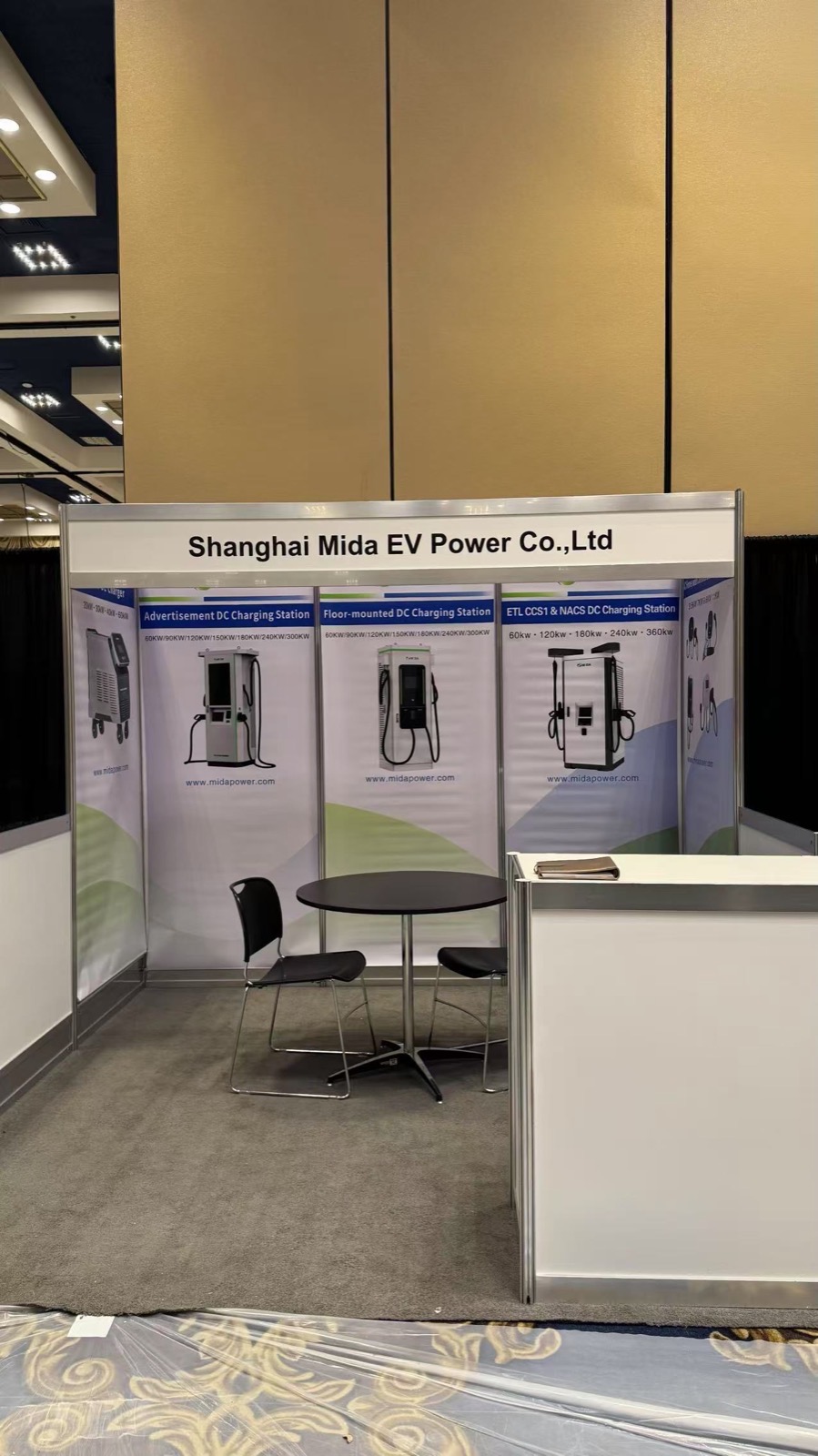
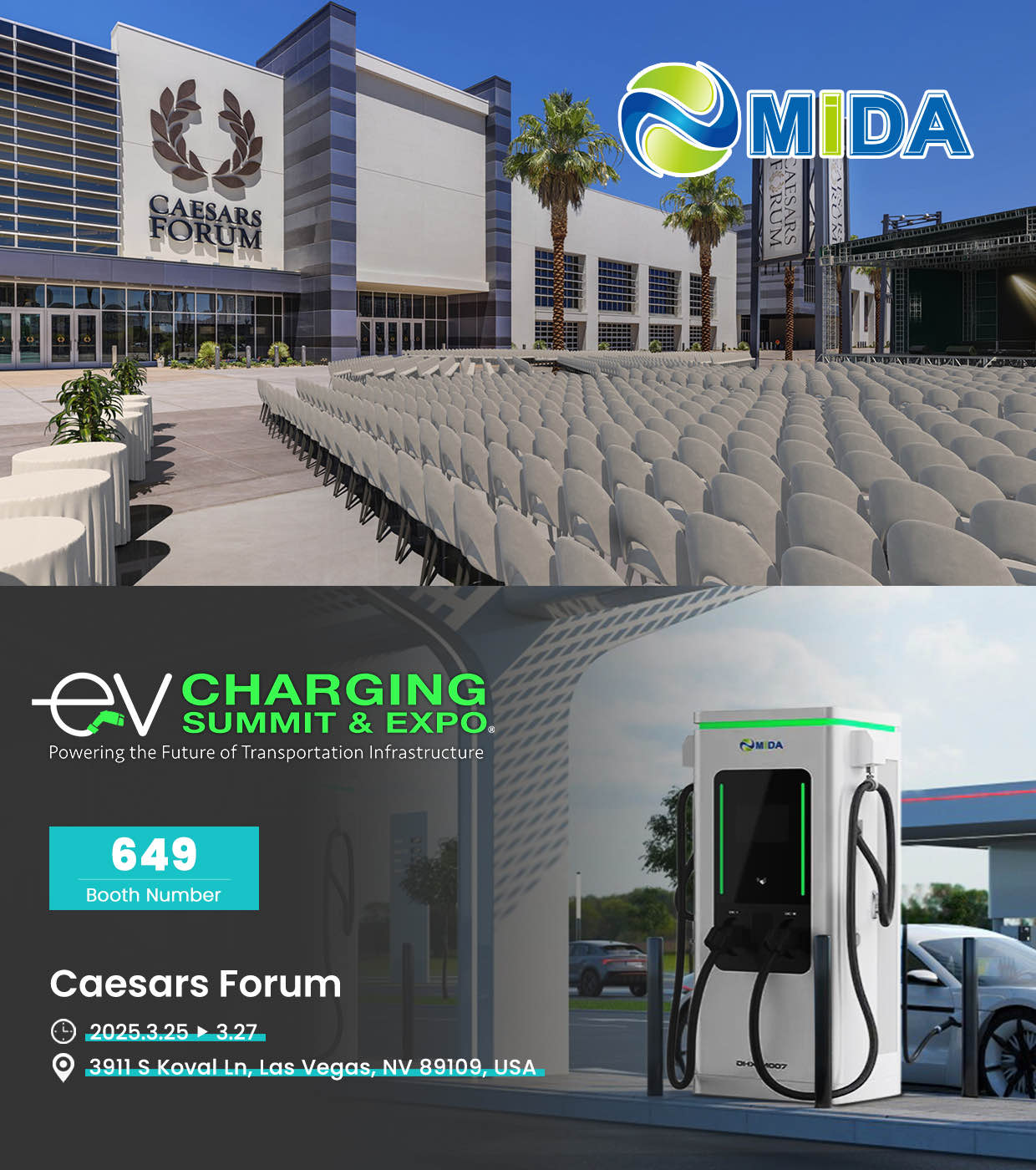
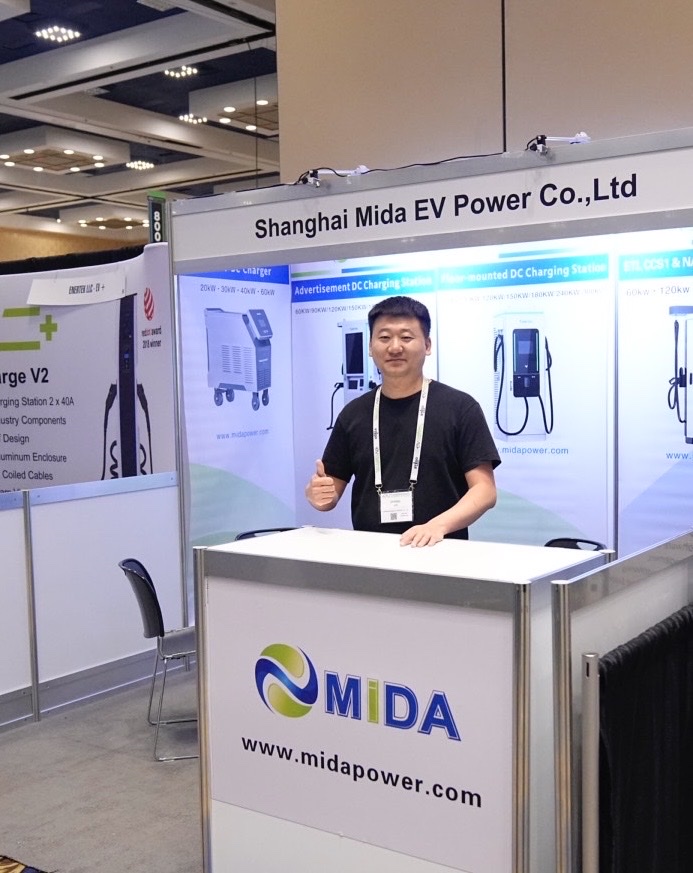
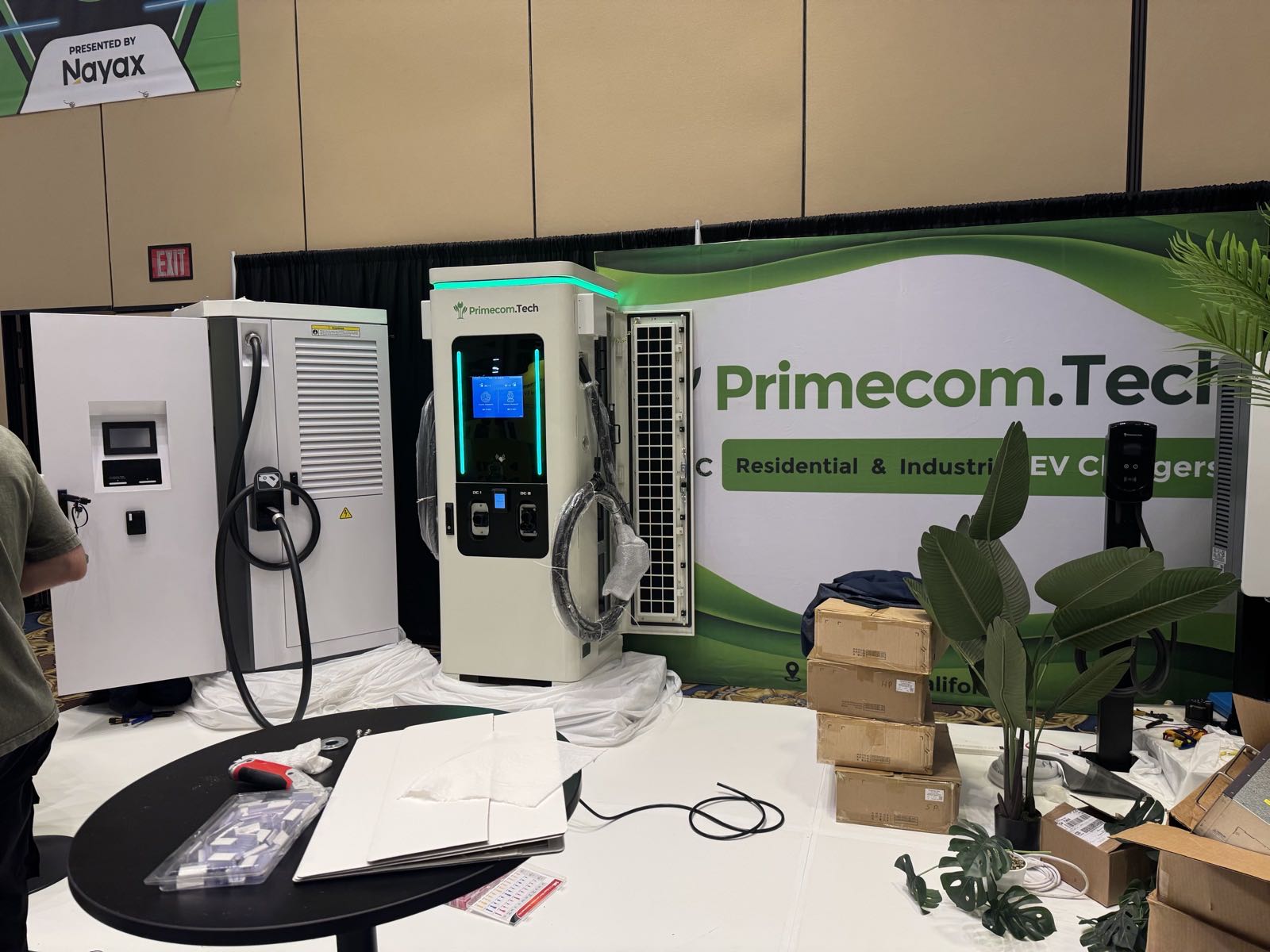
Within this evolving industry context, Shanghai MIDA EV Power Co., Ltd participated in the EV Charging Summit 2025 in Las Vegas, where it was officially listed as an exhibitor at Booth 649.
The presence of MIDA at this event reflects its strategic intention to integrate into the North American EV charging supply chain, particularly in the areas of hardware manufacturing, modular DC charging systems, and OEM/ODM partnerships.
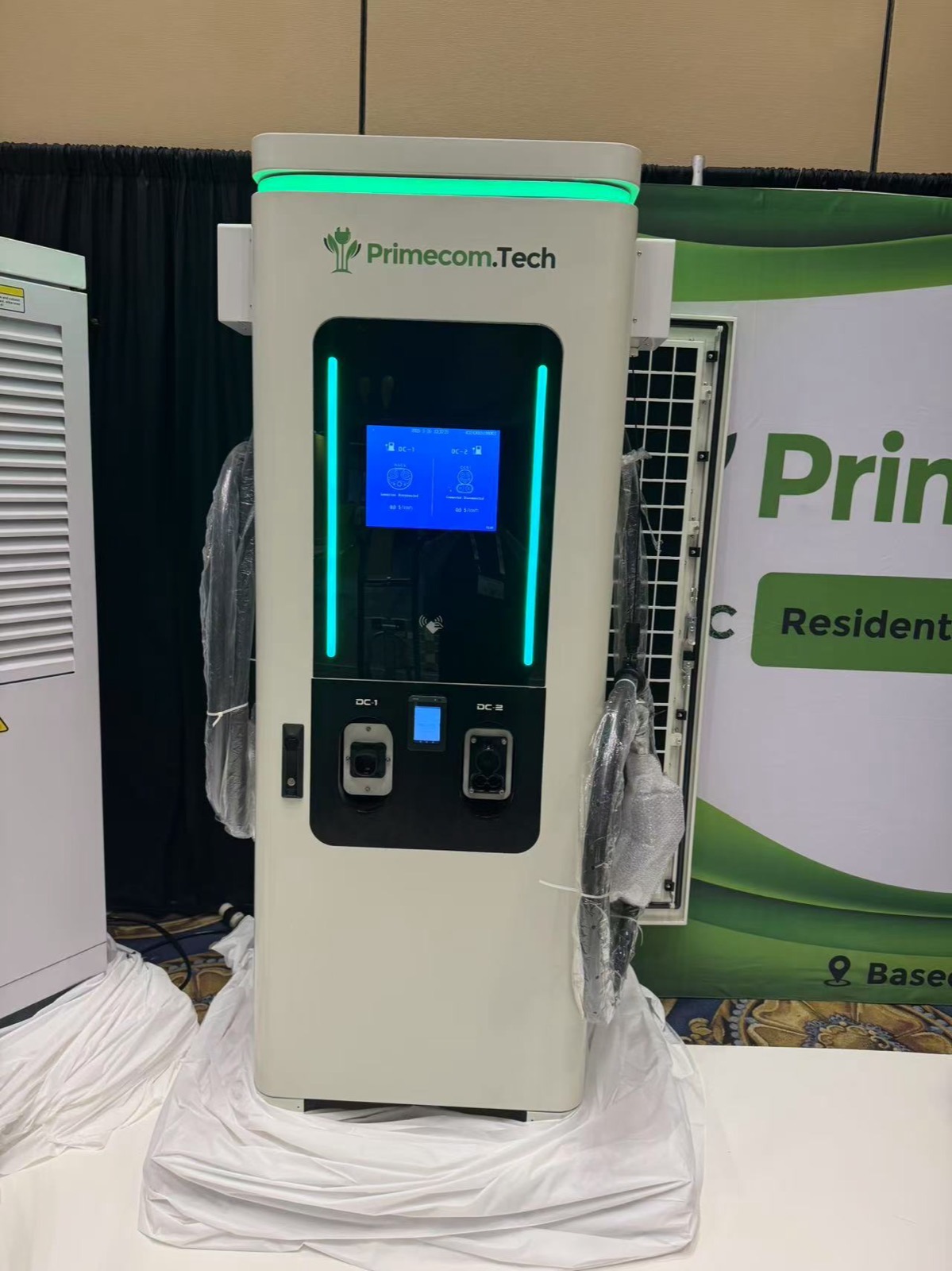
MIDA operates as a full-spectrum EV charging solution provider, developing both alternating current charging systems for residential and commercial use and direct current fast charging systems designed for high-power applications such as fleet depots and highway corridors.
Beyond complete charging stations, the company also produces critical internal components such as power modules, charging connectors, and system control units. This vertical integration allows MIDA to maintain control over core performance characteristics while offering flexibility in customization for different market requirements.
One of the key differentiators of MIDA’s product approach is its emphasis on modularity. Instead of relying on monolithic charging systems, its DC charging platforms are designed to scale in response to demand. This is particularly relevant in markets like the United States, where utilization rates vary significantly across locations.
In addition, MIDA’s portable charging solutions represent an increasingly important product category in regions where infrastructure coverage is uneven or where temporary deployment is required. These systems allow for flexible charging deployment in fleet operations, construction environments, and emergency support scenarios.
7. Competitive Environment and Market Positioning in the U.S.
The North American EV charging market is highly competitive, with established players such as ChargePoint, ABB, Siemens, and Tesla dominating different segments of the ecosystem. These companies typically operate at either the network level, utility integration level, or vertically integrated hardware-software model level.
In contrast, manufacturers like MIDA operate primarily within the hardware and infrastructure supply chain segment, often supporting EPC contractors, distributors, and charging network operators rather than directly controlling end-user networks.
This positioning is particularly important in a market like the United States, where distribution partnerships and certification compliance play a crucial role in market access.
Rather than competing directly with vertically integrated network operators, hardware manufacturers often focus on providing cost-efficient, reliable, and scalable infrastructure components that can be integrated into larger systems.
8. Market Outlook: Expansion into Optimization-Driven Infrastructure
The future of the U.S. EV charging market is expected to be shaped by continued electrification of commercial fleets, expansion of highway fast charging corridors, and increasing integration between energy systems and transportation infrastructure.
However, unlike earlier growth phases, future expansion will be driven not simply by installation volume but by performance efficiency. Operators will prioritize assets that deliver consistent utilization, predictable revenue streams, and minimal downtime.
This means that manufacturers must increasingly align their product strategies with system-level requirements rather than standalone hardware specifications.
For companies like Shanghai MIDA EV Power Co., Ltd, this represents both a challenge and an opportunity. While competition in the U.S. market is intense, demand for modular, cost-efficient, and globally compatible charging systems continues to grow, particularly among emerging network operators and fleet-focused deployments.
9. Conclusion: A Market in Structural Transformation
The EV Charging Summit & Expo 2025 reflects a broader transformation in the global EV charging industry. The United States, as one of the most advanced EV markets, is no longer focused on basic infrastructure expansion but instead on building a financially sustainable and technologically integrated charging ecosystem.
In this context, Shanghai MIDA EV Power Co., Ltd’s participation in the exhibition highlights its strategic positioning within the global EV charging value chain. By focusing on modular DC charging systems, portable solutions, and integrated power electronics, the company aligns itself with the evolving requirements of modern charging networks.
Ultimately, the industry is moving toward a future where success is defined not by the number of charging stations deployed, but by how efficiently those stations operate within a complex energy, transportation, and digital ecosystem.
Post time: May-20-2026