
 Portable EV Charger
 Home EV Wallbox
 DC Charger Station
 BESS Charging Station
 V2G V2H V2V V2L
 EV Charging Module
 DC Charging Connector
 EV Accessories
The Definitive 2026 Global Guide to Selecting Commercial EV Charging Station Manufacturers: Evaluating Technical R&D, Production Automation, OCPP 2.0.1 Compliance, ISO 27001 Cybersecurity, and Scalable Deployment Strategies
Introduction: The EV Infrastructure Revolution of 2026
As we navigate through 2026, the global transportation sector is witnessing an unprecedented shift. Electric Vehicles (EVs) have moved from a niche market to the primary focus of automotive manufacturing and urban planning. With this surge comes the critical need for robust, reliable, and intelligent commercial charging infrastructure. Selecting a commercial EV charging station manufacturer is no longer a simple procurement task; it is a strategic investment in long-term energy management and facility utility.
The complexity of modern charging ecosystems involves a fusion of high-voltage hardware, sophisticated software protocols, and stringent cybersecurity frameworks. For businesses, CPOs (Charge Point Operators), and fleet managers, the stakes are high. A poor choice in hardware can lead to exorbitant maintenance costs, frequent downtime, and a failure to meet the evolving demands of smart grids. Conversely, partnering with a top-tier manufacturer ensures seamless integration with renewable energy sources, advanced load management, and a superior user experience.
This guide provides a comprehensive framework for evaluating manufacturers across ten critical dimensions. From the granular details of R&D investments to the broad strokes of global distribution strategies, we delve into what makes a manufacturer a leader in the 2026 landscape.
Chapter 1: Evaluating R&D Capabilities – The Core of Innovation
In a rapidly evolving industry, Research and Development (R&D) is the heartbeat of a manufacturer’s longevity. When assessing a potential partner, one must look beyond the current product catalog and scrutinize the depth of their innovation pipeline.
1.1 Patents and Intellectual Property (IP)
A manufacturer’s patent portfolio is a primary indicator of its technical leadership. Leading companies in 2026 are not just assembling components; they are pioneering proprietary technologies in power electronics, thermal management, and liquid-cooled cable systems. High-power DC fast chargers (HPC) now routinely exceed 400kW, requiring advanced silicon carbide (SiC) semiconductors to minimize heat generation and maximize efficiency. Evaluating a manufacturer’s patents in these areas reveals their commitment to pushing the boundaries of what is possible.
1.2 Vertical Integration of R&D
Does the manufacturer design its own PCBA (Printed Circuit Board Assemblies) and control logic, or do they rely on third-party off-the-shelf modules? Vertically integrated R&D allows for tighter hardware-software optimization. For instance, when a manufacturer controls the entire stack, they can more effectively implement ISO 15118 “Plug & Charge” features and advanced bi-directional charging (V2G) protocols. This level of control is essential for ensuring that the hardware can handle future firmware updates without compatibility regressions.
1.3 R&D Investment Ratios
Benchmarking R&D expenditure as a percentage of total revenue is a standard metric. In the 2026 market, top-tier manufacturers typically allocate 10-15% of their annual revenue to R&D. This investment fuels testing laboratories, such as electromagnetic compatibility (EMC) chambers and environmental stress screening (ESS) facilities, which are crucial for ensuring hardware reliability in extreme climates—from the sub-zero temperatures of Nordic winters to the scorching heat of Middle Eastern summers.
Chapter 2: Production Automation and Supply Chain Resilience
The ability to scale production while maintaining uncompromising quality is what separates regional players from global leaders. As commercial deployments grow from tens to thousands of units, the manufacturing process must evolve.
2.1 The Role of Robotics and AI in Assembly
Manual assembly is prone to human error, which can manifest as loose connections or inconsistent sealing—major failure points in high-voltage equipment. Leading manufacturers have transitioned to high-precision robotic assembly lines. Automated Optical Inspection (AOI) systems and AI-driven quality control checks at every stage of the assembly ensure that every unit leaving the factory meets the same rigorous standards. Automation also allows for faster production cycles, which is critical for meeting the aggressive timelines of large-scale infrastructure projects.
2.2 Quality Management Systems (QMS)
Look for manufacturers that adhere to IATF 16949 standards—the rigorous quality management system for the automotive industry. While ISO 9001 is a baseline, IATF 16949 implies a deeper level of process control and risk management that aligns with the expectations of automotive OEMs. A manufacturer’s ability to provide detailed traceability for every component in a charging station is a hallmark of professional production.
2.3 Diversified Supply Chains
The supply chain disruptions of the early 2020s taught the industry a valuable lesson. In 2026, the most reliable manufacturers utilize multi-source procurement strategies for critical components like microchips, contactors, and high-voltage cables. Furthermore, the trend toward “localization of manufacturing” means that top brands often have assembly facilities in multiple continents (e.g., North America, Europe, and Asia) to mitigate geopolitical risks and reduce shipping lead times and costs.
2.4 Testing and Validation at Scale
Mass production requires mass testing. Inquire about the manufacturer’s End-of-Line (EOL) testing protocols. Do they perform full-load burn-in tests for several hours? Are the stations tested for insulation resistance and leakage current under simulated rainy conditions? A manufacturer that shortcuts validation to meet production quotas is a liability. The best in the business provide digital test reports for each serial number, accessible via a cloud-based portal.
Chapter 3: Technical Background and Hardware Durability
The physical environment of a commercial EV charging station is harsh. Stations are exposed to UV radiation, rain, snow, salt spray, and physical impact. Therefore, the technical background of a manufacturer in materials science and electrical engineering is a critical factor in the selection process.
3.1 Housing Materials and Ingress Protection (IP)
Commercial chargers must be built to last 10-15 years. The industry standard has shifted toward the use of high-grade, UV-stabilized polycarbonates or marine-grade aluminum alloys for housing. When evaluating a manufacturer, check for an IP65 or higher rating, ensuring that the internal electronics are completely protected against dust and low-pressure water jets. Furthermore, the IK10 impact resistance rating is essential for public-facing units to prevent damage from vandalism or accidental bumps.
3.2 Thermal Management Systems
Heat is the enemy of power electronics. In the realm of DC fast charging, the transition to liquid-cooled modules has become standard for stations above 350kW. Manufacturers with a strong technical background in fluid dynamics and heat exchanger design offer superior performance. Effective cooling not only extends the lifespan of the capacitors and power modules but also ensures that the charger can maintain its peak output even during high ambient temperatures, preventing “thermal throttling” that frustrates EV drivers.
3.3 Internal Component Quality
The reliability of a charging station is only as good as its weakest link. Leading manufacturers are transparent about their sub-tier suppliers. They use industrial-grade contactors from reputable brands like Schneider Electric or ABB, and their internal wiring is rated for higher temperatures and currents than the maximum specifications require. The use of redundant power modules is another hallmark of technical excellence; if one module fails, the station can continue to operate at a reduced capacity rather than going completely offline.
Chapter 4: The Imperative of OCPP 2.0.1 Compliance and Interoperability
As of 2026, the Open Charge Point Protocol (OCPP) 2.0.1 has become the mandatory standard for any serious commercial deployment. Moving away from the older 1.6J version, OCPP 2.0.1 introduces features that are vital for modern fleet management and grid stability.
4.1 Enhanced Security and Device Management
One of the primary advantages of OCPP 2.0.1 is its robust security framework. It supports TLS for encrypted communication between the charger and the management system, protecting against man-in-the-middle attacks. Furthermore, it allows for advanced device management, such as remote diagnostics and firmware updates that are more reliable than in previous versions. When choosing a manufacturer, verify that their implementation of OCPP 2.0.1 is certified by the Open Charge Alliance (OCA). A “self-proclaimed” compliance is often insufficient and leads to integration headaches.
4.2 Support for ISO 15118 (Plug & Charge)
Interoperability is the cornerstone of a user-friendly charging network. OCPP 2.0.1 natively supports ISO 15118, which enables “Plug & Charge” functionality. This allows the vehicle and the charger to communicate and handle authorization and billing automatically without the need for RFID cards or mobile apps. Manufacturers that have mastered this integration provide a frictionless experience that is highly valued in the commercial and retail sectors.
4.3 Smart Charging and Load Balancing
Commercial facilities often have limited electrical capacity. OCPP 2.0.1 provides sophisticated smart charging profiles. A manufacturer’s software stack should allow the Charge Point Management System (CPMS) to dynamically adjust the power output of each connector based on the building’s total load, electricity pricing, and the priority of the vehicles. This capability is essential for minimizing peak demand charges and avoiding expensive utility upgrades.
Chapter 5: Advanced Cloud Platform Integration and EMS Synergy
A charging station in 2026 is a node in a larger digital ecosystem. The manufacturer’s ability to integrate with third-party cloud platforms and Energy Management Systems (EMS) is paramount.
5.1 API Openness and Documentation
The most forward-thinking manufacturers provide well-documented RESTful APIs and SDKs. This allows CPOs to integrate charging data directly into their existing ERP (Enterprise Resource Planning) or fleet management software. When vetting a manufacturer, ask for their API documentation. Is it comprehensive? Does it support Webhooks for real-time event notifications? A closed ecosystem is a significant risk, as it locks you into a single vendor’s software suite.
5.2 White-Label Cloud Solutions
For many businesses, branding is everything. Many top-tier manufacturers offer white-label versions of their cloud management platforms. This allows a business to offer a branded mobile app and web portal to their customers, enhancing brand loyalty. The platform should include comprehensive billing engines, user management, and detailed reporting modules that simplify the administrative burden of running a charging network.
5.3 Integrating with Renewable Energy and Storage
The ultimate goal of EV infrastructure is sustainability. Advanced manufacturers are designing their systems to work in harmony with onsite solar arrays and Battery Energy Storage Systems (BESS). The cloud platform should be able to forecast solar production and schedule charging sessions to maximize the use of green energy. This “Sector Coupling”—the integration of transportation and energy sectors—is a major focus in 2026, and a manufacturer’s capability in this area is a strong indicator of their future-readiness.
5.4 Edge Computing in Charging Stations
Some manufacturers are now incorporating edge computing capabilities within the charging station itself. This allows for basic functions—like user authorization and basic load balancing—to continue even if the cloud connection is temporarily lost. This local intelligence increases the overall uptime and reliability of the network, which is critical for mission-critical fleet operations.
Chapter 6: Cybersecurity Infrastructure: ISO 27001 and Beyond
In 2026, EV charging stations are considered critical infrastructure. As they are connected to both the internet and the electrical grid, they represent a significant attack vector for cybercriminals and state actors. A manufacturer’s approach to cybersecurity is no longer a “feature”—it is a foundational requirement.
6.1 ISO 27001 and SOC 2 Compliance
The gold standard for information security management is ISO 27001. A manufacturer that is ISO 27001 certified has demonstrated a systematic approach to managing sensitive company and customer information. Furthermore, for companies operating in North America, SOC 2 Type II compliance is often requested to ensure that the service providers manage data securely to protect the interests of their clients and the privacy of their clients’ customers.
6.2 Hardware Security Modules (HSM)
Top-tier manufacturers are now integrating Hardware Security Modules (HSMs) directly into the charging station’s controller. An HSM is a physical computing device that safeguards and manages digital keys for strong authentication and provides crypto-processing. This ensures that the firmware cannot be tampered with (Secure Boot) and that the identity of the charging station is immutable. This prevents “spoofing” attacks where a malicious device mimics a legitimate charger to steal user data or disrupt the grid.
6.3 Data Privacy and GDPR/CCPA Compliance
With the collection of user data for billing and analytics, manufacturers must adhere to strict data privacy regulations like the General Data Protection Regulation (GDPR) in Europe and the California Consumer Privacy Act (CCPA) in the United States. This includes the “right to be forgotten,” data minimization practices, and transparent privacy policies. Manufacturers must provide tools within their cloud platforms that allow CPOs to manage these compliance requirements easily.
6.4 Regular Penetration Testing and Vulnerability Disclosure
A static security posture is a failing one. Leading manufacturers engage third-party security firms to conduct regular penetration testing on both their hardware and software. They should also have a clear Vulnerability Disclosure Policy (VDP) that encourages ethical hackers to report weaknesses. Inquire about the frequency of these tests and whether the manufacturer provides “security patches” for their firmware in a timely manner.
Chapter 7: Analyzing Brand Reputation and Large-Scale Deployment History
In a market flooded with new entrants, a manufacturer’s track record is a vital indicator of future performance. While innovation is important, the ability to deliver, install, and support large-scale deployments is a different skill set entirely.
7.1 Case Studies and Reference Sites
A reputable manufacturer should be able to provide detailed case studies of deployments similar in scale and complexity to your project. Whether it is a nationwide retail charging network, a large electric bus depot, or a multi-tenant residential complex, seeing how the manufacturer handled these projects provides invaluable insights. Visit these sites if possible, or speak with the operators to understand their experience with the equipment’s reliability and the manufacturer’s support.
7.2 Financial Stability and Longevity
Infrastructure is a long-term play. You need to ensure that the manufacturer will still be in business 10 years from now to provide spare parts and firmware updates. Review the manufacturer’s financial health, their backing (e.g., venture capital, private equity, or public listing), and their time in the market. Many “startups” in the EV space have burned through cash and disappeared, leaving their customers with “orphaned” hardware that cannot be serviced.
7.3 Industry Recognition and Awards
While not a definitive metric, awards from reputable industry bodies (like the BloombergNEF, Reuters Events, or specialized EV associations) can signal that a manufacturer is respected by its peers. However, distinguish between “paid-for” marketing awards and those based on rigorous technical evaluation or customer satisfaction surveys.
7.4 The “Uptime” Guarantee
In the commercial world, downtime is lost revenue. Top manufacturers often offer Service Level Agreements (SLAs) that guarantee a certain percentage of uptime (e.g., 99.5%). Their ability to stand behind these guarantees with a robust support network is a testament to their confidence in their product and their operational maturity.
Chapter 8: Omnichannel Distribution and Global Service Ecosystems
As you scale your EV charging network across regions or continents, the manufacturer’s distribution and service model becomes a critical factor.
8.1 The Distributor vs. Direct Model
Some manufacturers sell exclusively through a network of distributors and value-added resellers (VARs), while others maintain a direct sales force. There are pros and cons to each. A local distributor may offer better local stock availability and faster on-site support. A direct relationship with the manufacturer might provide better pricing for very large orders and more direct influence over the product roadmap. The best manufacturers offer a hybrid model that provides the best of both worlds.
8.2 Training and Certification Programs for Installers
The majority of charger failures are due to improper installation. Leading manufacturers invest heavily in training and certification programs for electricians and installers. They provide detailed installation manuals, video tutorials, and even VR-based training modules. When choosing a manufacturer, ensure they have a list of “Authorized Service Providers” in your region who are trained to handle their specific hardware.
8.3 Spare Parts Availability and Logistics
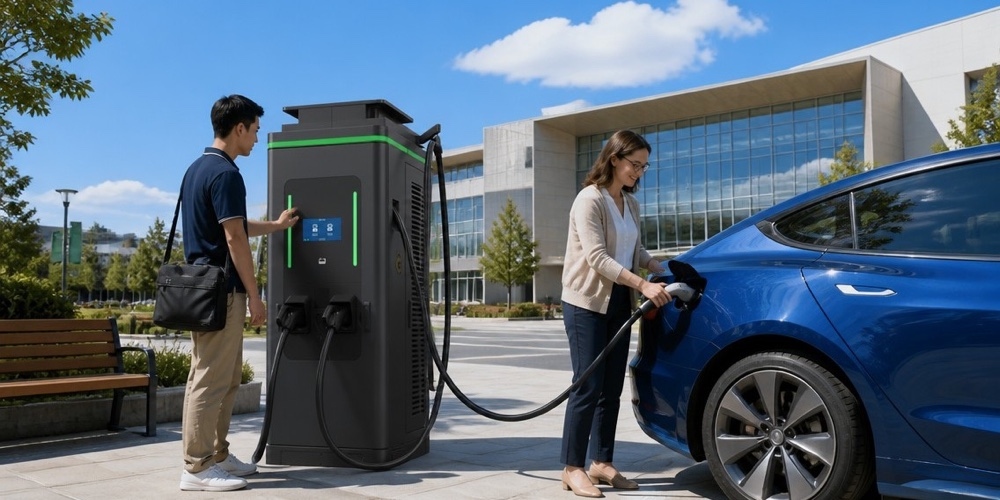
A common bottleneck in charger maintenance is the wait time for spare parts. Manufacturers with a strong global presence maintain regional parts warehouses to ensure that critical components like cables, connectors, and power modules can be delivered within 24-48 hours. Inquire about their spare parts strategy—do they keep stock in your country? What is their policy on “end-of-life” support for older models?
8.4 Remote Support and Diagnostics
In 2026, the first line of support is digital. The manufacturer’s technical support team should be able to remotely access the charger’s logs, perform diagnostics, and even push firmware fixes without sending a technician to the site. This “Level 1″ remote support can resolve up to 70-80% of common issues, drastically reducing maintenance costs and improving uptime.
Chapter 9: Regional Compliance and Market-Specific Certifications (UL, CE, UKCA)
Navigating the global regulatory landscape is one of the most significant challenges for commercial EV charging manufacturers. A manufacturer that is successful in one region may struggle in another due to the vastly different safety and technical standards.
9.1 The North American Standard: UL 2594 and UL 2231
For any deployment in the United States or Canada, Underwriters Laboratories (UL) certification is the gold standard. UL 2594 covers the safety of EV supply equipment, while UL 2231-1 and 2231-2 cover personnel protection systems for EV charging circuits. These standards are incredibly rigorous, involving tests for fire safety, electrical shock protection, and mechanical durability. Manufacturers must also comply with the National Electrical Code (NEC) Article 625. A manufacturer that lacks these certifications is essentially locked out of the North American market, as local building inspectors will not permit the installation of non-certified equipment.
9.2 The European Landscape: CE, UKCA, and Calibration Law (Eichrecht)
In Europe, the CE mark is the baseline, indicating compliance with health, safety, and environmental protection standards. However, specific countries have additional requirements. For example, in Germany, the “Eichrecht” (Calibration Law) is a significant barrier. It requires that all public charging stations provide a transparent and verifiable billing process, ensuring that the energy measured by the meter is exactly what the user is billed for. This involves complex cryptographic signing of meter data. Manufacturers that have successfully navigated the Eichrecht requirements have demonstrated a high level of technical and regulatory maturity. In the UK, the UKCA mark has replaced the CE mark, and manufacturers must comply with the “Electric Vehicles (Smart Charge Points) Regulations 2021,” which mandate smart functionality and cybersecurity features.
9.3 Emerging Markets and Local Standards
As the EV market expands into Southeast Asia, India, and Latin America, new local standards are emerging. For example, India’s AIS 138 standard is crucial for AC and DC charging stations. A global manufacturer must show agility in adapting their hardware to meet these local requirements, which may include specific connector types (like the GB/T standard in China) or unique grid stability requirements.
9.4 Accessibility Standards: ADA and Beyond
In the commercial and public sectors, accessibility is a legal and ethical requirement. In the US, the Americans with Disabilities Act (ADA) provides guidelines for the height of the screen, the weight of the cable, and the space around the charging station. Similar regulations exist in Europe (e.g., EN 301 549). Manufacturers that design their stations with “Universal Design” principles—ensuring they can be used by everyone, regardless of their physical ability—are preferred partners for government and public-facing projects.
Chapter 10: Future-Proofing for 2030: V2X, Wireless Charging, and AI Load Balancing
Investing in EV infrastructure is a 10-year decision. Therefore, you must look ahead to the technologies that will dominate the late 2020s and early 2030s. A manufacturer that is not already prototyping these technologies will leave you with obsolete assets in just a few years.
10.1 Vehicle-to-Everything (V2X) and Bi-directional Charging
V2X encompasses Vehicle-to-Grid (V2G), Vehicle-to-Building (V2B), and Vehicle-to-Home (V2H). This technology allows the EV battery to act as a mobile energy storage unit, discharging power back to the grid or a building during peak demand. This can generate revenue for fleet operators and provide critical backup power. However, V2X requires hardware that can handle bi-directional power flow and software that supports the latest ISO 15118-20 standards. Evaluate a manufacturer’s roadmap for V2X—do they have pilot projects? Is their hardware “V2G Ready”?
10.2 Wireless (Inductive) Charging
While still in the early stages for commercial use, wireless charging is the ultimate goal for convenience and automation. It is particularly relevant for autonomous vehicle fleets and transit buses. Leading manufacturers are already partnering with wireless technology providers to integrate induction pads into their product offerings. While you may not deploy wireless charging today, choosing a manufacturer involved in its development ensures you stay at the forefront of the industry.
10.3 AI-Driven Energy Optimization
In 2026, “smart charging” is moving toward “AI charging.” Instead of simple rule-based load balancing, advanced systems use machine learning to predict vehicle arrival times, energy needs, and electricity price fluctuations. The AI can then optimize the charging schedule for an entire city or a national logistics fleet to minimize costs and maximize grid stability. Inquire about the manufacturer’s data science capabilities—are they building AI models into their cloud platforms?
10.4 Modular and Upgradable Hardware
The pace of change in battery technology is rapid. A charging station that is 100kW today might need to be 200kW in four years. Modular manufacturers design their stations so that additional power modules can be added easily, or cables can be swapped for higher-current versions without replacing the entire unit. This “future-proof” design protects your capital investment and allows for incremental upgrades as demand grows.
Chapter 11: Total Cost of Ownership (TCO) and ROI Analysis
When choosing a manufacturer, the purchase price (CAPEX) is just the tip of the iceberg. A deep-dive TCO analysis reveals the true cost of the partnership over the lifetime of the asset.
11.1 Installation Complexity and Site Preparation
Some manufacturers design their stations for “easy install,” with integrated foundations and pre-wired components. This can save thousands of dollars in electrical contractor fees and civil works. Conversely, a “cheap” station that requires complex custom mounting and extensive onsite wiring may end up costing more in the long run.
11.2 Operational Expenditure (OPEX): Maintenance and Energy Costs
Maintenance is the largest variable in the TCO equation. A manufacturer with high reliability (high MTBF – Mean Time Between Failures) and low repair times (low MTTR – Mean Time To Repair) is essential. Furthermore, the electrical efficiency of the station itself matters. A 2% difference in efficiency in a 350kW DC charger can result in thousands of dollars of wasted electricity over its lifetime.
11.3 Software Subscription and Licensing Fees
Most commercial chargers require a subscription to a management platform. These fees can vary widely. Some manufacturers charge a flat monthly fee per connector, while others take a percentage of the charging revenue. Be sure to model these costs over 10 years. Are there hidden fees for API access or firmware updates? Is there a “platform lock-in” that makes it expensive to switch to a different software provider later?
11.4 Residual Value and End-of-Life Disposal
As the market matures, a secondary market for used EV charging equipment is developing. High-quality brands hold their value better than generic alternatives. Additionally, consider the environmental impact and cost of decommissioning the station at the end of its life. Manufacturers that use recyclable materials and have a clear “circular economy” policy for their products are increasingly favored by corporate ESG (Environmental, Social, and Governance) mandates.
Chapter 12: Supply Chain Ethics and Sustainability (ESG)
In 2026, corporate responsibility is no longer optional. When selecting a commercial EV charging station manufacturer, their Environmental, Social, and Governance (ESG) performance is a major factor in procurement decisions, especially for government contracts and large public corporations.
12.1 Conflict Minerals and Ethical Sourcing
EV charging stations contain a variety of metals and minerals, including copper, aluminum, and various rare earth elements in their electronics. Top manufacturers conduct thorough audits of their supply chains to ensure that these materials are not sourced from conflict zones or produced using child labor. Look for manufacturers that are members of the Responsible Minerals Initiative (RMI) or provide annual Conflict Minerals Reports.
12.2 Carbon Footprint of Manufacturing
Sustainable infrastructure should be built sustainably. Leading manufacturers are now tracking and reporting the “embodied carbon” of their products—the total greenhouse gas emissions generated during the manufacturing and transportation process. Some companies have committed to “Net Zero” production lines, powered by 100% renewable energy. Choosing a manufacturer with a low carbon footprint helps you meet your own corporate sustainability goals.
12.3 Circular Economy and Design for Disassembly
What happens to a charging station after 15 years of service? Forward-thinking manufacturers design their products for the circular economy. This means using recycled plastics and metals where possible and ensuring that the station can be easily disassembled at the end of its life for component recovery and recycling. A manufacturer’s “Take-Back” program for old equipment is a strong indicator of their commitment to long-term environmental stewardship.
12.4 Social Responsibility and Labor Practices
Finally, consider the manufacturer’s internal labor practices. Do they provide fair wages and a safe working environment? Are they committed to diversity and inclusion in their workforce? Manufacturers that treat their employees well tend to have lower turnover and higher quality control, which directly impacts the reliability of the products you receive.
Chapter 13: User Experience (UX) and Human-Machine Interface (HMI) Design
The charging station is the physical touchpoint between your brand and the EV driver. A poor user experience can reflect poorly on your business. Therefore, the manufacturer’s focus on HMI design is a critical, though often overlooked, evaluation point.
13.1 Screen Visibility and Interaction
In public and commercial settings, the charger’s screen must be readable in all lighting conditions, from direct sunlight to pitch darkness. High-brightness, anti-glare capacitive touchscreens are the current industry standard. The interface should be intuitive, supporting multiple languages and providing clear instructions on how to start and stop a charging session. Evaluate the manufacturer’s software UI—is it clean and modern, or does it look like a 1990s industrial computer?
13.2 Cable Management and Ergonomics
Dealing with heavy, high-voltage cables can be difficult, especially for people with limited mobility or in inclement weather. Manufacturers that offer advanced cable management systems—such as retractable reels or balanced counterweights—provide a significantly better user experience. The weight and flexibility of the cable itself are also important; some manufacturers use advanced materials to keep their cables thin and easy to handle even at high power levels.
13.3 Payment Versatility and Compliance
The way users pay for charging is evolving. While RFID cards were once the norm, 2026 drivers expect to pay with credit cards, mobile wallets (Apple Pay, Google Pay), and via “Plug & Charge.” The charging station should have a secure, PCI-compliant payment terminal. Furthermore, in many jurisdictions, laws now require that public chargers show the price per kWh clearly on the screen before the session begins. A manufacturer’s ability to handle these diverse and changing payment requirements is a major asset.
13.4 Brand Integration and Customization
For many commercial clients, the charging station is an extension of their brand. Top-tier manufacturers offer extensive customization options, from custom paint colors and vinyl wraps to branded splash screens on the HMI. This allows you to integrate the charging stations seamlessly into your corporate identity.
Chapter 14: Grid Integration and Demand Response Strategies
As the number of EVs grows, their impact on the electrical grid becomes more significant. A “smart” manufacturer designs their stations to be an asset to the grid, not a liability.
14.1 Active Power Management and Frequency Control
Advanced charging stations can respond to grid signals in milliseconds. They can participate in “Demand Response” programs, where they temporarily reduce their power output to help stabilize the grid during a frequency excursion or peak load event. This capability can be a source of revenue for the CPO, as utilities are willing to pay for this “load shedding” capability.
14.2 Harmonic Distortion and Power Quality
High-power DC chargers can introduce electrical noise (harmonics) into the local grid, which can damage other sensitive equipment in a building. Manufacturers with a strong electrical engineering background design their power modules with active power factor correction and low total harmonic distortion (THD). This ensures that your charging infrastructure doesn’t interfere with your building’s elevators, computers, or HVAC systems.
14.3 Integration with Building Management Systems (BMS)
In a commercial building, the EV chargers should not operate in a vacuum. They should be integrated with the Building Management System (BMS) via standard industrial protocols such as Modbus TCP, BACnet, or OCPP-based APIs. With this integration, the building’s energy manager sees real-time charging load on the same dashboard as HVAC and lighting, caps the station’s aggregate draw during demand-response events, and sheds charging load automatically when the building’s elevators or chillers need priority. The result is a single, coherent energy picture instead of two systems fighting each other.
- Demand-Response Ready: The chargers should accept external curtailment signals — via OCPP 2.0.1 smart-charging messages or a direct Modbus register — so the building can shave peaks without a site visit or manual override.
- Metering Alignment: Sub-metering the chargers separately from the building feed simplifies tenant billing and lets the owner verify demand-charge savings month over month.
- Occupancy-Aware Modes: When the BMS knows the building is empty (weekends, holidays), it can authorize a “free green charging” mode during solar peaks — a cheap loyalty feature that costs nothing to run.
14.4. Cybersecurity: The Hidden Integration Requirement
Every new integration surface is a new attack surface. Require encrypted TLS communications, per-device certificates, secure firmware signing, and auditable remote-access logs. A manufacturer that treats security as an afterthought will eventually cost more in remediation than it saved in procurement — and a compromised charger is a fire-safety and data-privacy liability no building owner should accept.
Finally, ask for the integration documentation before you sign: published register maps, example Modbus/BACnet objects, sample OCPP message flows, and a reference architecture for a building of your size. Vendors that cannot produce these documents on request are asking you to discover the integration costs during commissioning — the most expensive time to find them. A credible manufacturer will share them freely, because integration depth is precisely where their engineering quality shows.
15. Conclusion: Selecting a Grid-Friendly, Building-Friendly Manufacturer
The vendors that win in 2026 will be those that treat the building, the grid, and the charger as one engineered system rather than three separate purchases. When you evaluate manufacturers for a commercial installation, add these principles to your scoring matrix:
- Power quality is a spec, not a slogan. Demand published THD <5% and power factor >0.98 at full load, and ask how the design achieves them.
- Integration is what makes charging invisible. A charger that speaks the building’s language — Modbus, BACnet, OCPP — costs less to operate than one that requires custom middleware.
- Demand response turns chargers into revenue assets. Frequency control and load-shedding programs can pay the CPO while making the grid more stable.
- Security must be engineered in from day one. Certificates, signed firmware, and access control are baseline requirements in 2026, not upgrades.
Call to Action: Engineer Your Building’s Charging with MIDA Power designs its commercial charging platforms with native BMS integration, active power-factor correction, THD below 5%, and OCPP 2.0.1 security built in. Whether your project is a Class A office tower, a shopping center, or a mixed-use development, our applications engineers will map the integration architecture and grid-connection strategy for your site. Contact sales@midapower.com for technical documentation and a building-integration consultation.
Post time: Aug-09-2026
