
 Portable EV Charger
 Home EV Wallbox
 DC Charger Station
 BESS Charging Station
 V2G V2H V2V V2L
 EV Charging Module
 DC Charging Connector
 EV Accessories
Navigating the Global Landscape of Government Incentives for EV Charging Infrastructure: A Strategic Technical Deep-Dive into NEVI, AFIR, China’s Provincial Subsidies, Carbon Credits, and ROI Optimization for 2026 and Beyond
Introduction: The Geopolitical and Economic Imperative of Charging Infrastructure
The transition to electromobility is no longer a localized environmental initiative but a cornerstone of global industrial policy and energy security. As of 2026, the bottleneck for mass electric vehicle (EV) adoption has shifted from battery costs to infrastructure availability. Recognizing this, governments worldwide have deployed an unprecedented array of financial instruments—subsidies, tax credits, and grants—to de-risk private investment. This article explores the technical nuances of these incentives, examining how they shape the deployment of charging networks across North America, Europe, and Asia, and their critical role in ensuring grid stability and socio-economic equity.
Chapter 1: The Macroeconomic Landscape of EV Charging Subsidies
Global investment in EV charging infrastructure is projected to exceed $500 billion by 2030. However, the initial capital expenditure (CAPEX) for high-power charging (HPC) stations, coupled with uncertain utilization rates, creates a significant “valley of death” for operators. Government incentives serve as the bridge across this gap.
1.1 The Theoretical Framework of Policy Intervention
From an economic perspective, charging infrastructure is a “quasi-public good” that suffers from a chicken-and-egg dilemma: consumers won’t buy EVs without chargers, and companies won’t build chargers without EVs. Policy interventions are designed to internalize the positive externalities of reduced carbon emissions and improved public health.
1.2 Categorization of Incentive Mechanisms
Current global policies can be categorized into four primary levers:
- Direct Capital Grants: Offsetting 50% to 80% of equipment and installation costs.
- Operational Subsidies: Direct payments based on energy throughput (kWh) to cover early-stage operating expenses (OPEX).
- Fiscal Incentives: Accelerated depreciation and investment tax credits (ITC).
- Market-Based Instruments: Carbon credits (e.g., LCFS in California) and Renewable Energy Certificates (RECs).
Chapter 2: United States – The NEVI Formula Program and the Post-2025 Landscape
The U.S. approach is characterized by federal coordination and state-level execution, primarily driven by the Infrastructure Investment and Jobs Act (IIJA).
2.1 The NEVI Formula Program: Technical Specifications and 2026 Status
The $5 billion National Electric Vehicle Infrastructure (NEVI) program remains the bedrock of U.S. policy. After a brief funding freeze in early 2025, the program has resumed with a focus on “Alternative Fuel Corridors.”
- Technical Requirements: To qualify for NEVI funding, a station must include at least four 150 kW CCS (Combined Charging System) connectors, although NACS (North American Charging Standard) integration is now mandatory for state-level RFPs.
- Up-time Requirements: The 97% uptime requirement has become a technical hurdle, leading to the rise of specialized “Charging-as-a-Service” maintenance contracts.
2.2 The Inflation Reduction Act (IRA) 30C Tax Credit
The IRA’s 30C credit provides up to 30% of the cost of hardware and installation (capped at $100,000 per unit for businesses) in “eligible census tracts.” In 2026, the definition of these tracts has been refined to emphasize rural and low-income areas, pushing developers out of saturated urban markets.
2.3 State-Level Innovation: The Role of California and New York
Beyond federal funding, states like California continue to lead with programs like CalEVIP, which utilizes a “first-come, first-served” rebate model. New York’s “Make-Ready” program is a technical benchmark, where utilities cover up to 90% of the grid-side infrastructure costs, effectively shifting the burden of transformer and trenching upgrades from the developer to the ratepayer base.
Chapter 3: European Union – The Alternative Fuels Infrastructure Regulation (AFIR)
Europe has transitioned from a fragmented subsidy landscape to a unified regulatory framework under the “Fit for 55″ package.
3.1 AFIR: Mandatory Targets as an Indirect Incentive
Unlike the U.S. grant system, the Alternative Fuels Infrastructure Regulation (AFIR) sets binding targets for member states. By 2026, fast-charging pools (at least 400 kW total output) must be installed every 60 km along the TEN-T core network. This regulatory pressure acts as a “guaranteed market,” encouraging private capital to enter the space with lower risk premiums.
3.2 Germany’s Deutschlandnetz: The “Contract for Difference” Model
Germany has pioneered a unique tender model where the government awards long-term operating contracts. The “Deutschlandnetz” (Germany Network) ensures that even low-traffic rural sites are profitable by providing a guaranteed base payment, while the state takes a share of revenues when utilization exceeds a certain threshold.
3.3 The French Advenir Program
France’s Advenir program remains one of the most successful direct subsidy schemes in Europe, specifically targeting multi-unit dwellings (MUDs) and workplace charging, which are often neglected by corridor-focused programs like NEVI.
Chapter 4: China – From National Guidance to Provincial Granularity
China possesses the world’s largest charging network, driven by a shift from “vehicle-centric” to “infrastructure-centric” support.
4.1 The Transition to “Construction + Operation” Dual Subsidies
In 2024-2026, China’s central government replaced flat purchase subsidies for EVs with performance-based rewards for infrastructure.
- Construction Subsidies: Provinces like Guangdong offer up to 200 RMB per kW for ultra-fast charging (480kW+).
- Operational Subsidies: Shanghai and Beijing have introduced subsidies based on “utilization efficiency,” rewarding operators whose chargers are actually used, rather than just installed.
4.2 Provincial Detailed Breakdown: The Guangdong Model
Guangdong province, as the global leader in charging pile density, has implemented a “tiered subsidy” system. Higher rewards are given to V2G (Vehicle-to-Grid) capable stations and liquid-cooled ultra-fast chargers. This encourages technical innovation over mere volume.
4.3 The “Hundred Counties” Initiative
To address the rural-urban divide, China launched a targeted incentive for rural townships, providing direct grants for the installation of at least one 120kW station in every county-level administrative region by 2026.
Chapter 5: Tax Credits and Accelerated Depreciation: Financial Instruments
Beyond direct cash injections, fiscal policy plays a massive role in the internal rate of return (IRR) for charging projects.
5.1 Accelerated Depreciation (Section 179/168 in the US)
Allowing businesses to deduct the full cost of charging equipment in the first year significantly improves cash flow. In 2026, many European nations have adopted similar “Super-Deduction” schemes to stimulate post-pandemic industrial growth.
5.2 VAT Reductions in Europe
Countries like Norway and the UK have utilized VAT (Value Added Tax) exemptions or reductions for charging services, lowering the total cost of ownership (TCO) for consumers and increasing the throughput for operators.
5.3 The Strategic Impact on CAPEX Amortization
We analyze how a combination of a 30% grant and accelerated depreciation can reduce the typical payback period of a $150k DC fast charger from 9 years to approximately 4.2 years, making it an “investable” asset class for infrastructure funds.
Chapter 6: Grid Expansion Grants: Solving the “Last Mile” Utility Challenge
One of the most significant technical barriers to the rapid deployment of high-power charging (HPC) networks is the existing capacity of the electrical grid. A single site with four 350 kW chargers requires a 1.4 MW connection—equivalent to the peak demand of a small skyscraper or a large supermarket.
6.1 The “Make-Ready” Infrastructure Revolution
In many jurisdictions, the cost of upgrading transformers, trenching, and installing new switchgear can exceed the cost of the chargers themselves. Governments have responded with “Make-Ready” programs. These incentives do not pay for the charger (the “plug-side”), but rather the infrastructure leading up to it (the “grid-side”).
- Utility-Led Programs: In the U.S., utilities like Southern California Edison (SCE) and Con Edison have received regulatory approval to invest billions in make-ready infrastructure, which is then socialized across the ratepayer base. This effectively reduces the developer’s CAPEX by 40-60%.
- European Substation Grants: Under the EU’s “Connecting Europe Facility” (CEF), specific grants are available for the installation of on-site substations and high-voltage connections (20kV or higher) to support mega-watt charging for heavy-duty vehicles.
6.2 Integration of Battery Energy Storage Systems (BESS)
To avoid exorbitant grid upgrade costs and “demand charges” (high fees for peak power usage), governments are incentivizing the co-location of BESS with charging stations.
- The Technical Synergy: A BESS can “buffer” the grid, charging slowly during off-peak hours and discharging rapidly when a vehicle plugs in.
- Incentive Mechanisms: In 2026, the U.S. Investment Tax Credit (ITC) for standalone storage (introduced by the IRA) has become a primary driver for BESS-integrated charging hubs. Similarly, Germany’s “Speicher-Bonus” provides direct subsidies for operators who install storage to reduce peak grid stress.
6.3 Smart Charging and Demand Response Rewards
Beyond hardware, “software as an incentive” is emerging. Operators who participate in demand response programs—temporarily reducing charging speeds during grid emergencies—receive payments from the grid operator. This “Active Power Management” is now a prerequisite for many state-level grants in the UK and Scandinavia.
Chapter 7: Bridging the Divide: Policies for Urban-Rural Equity
A critical criticism of early EV infrastructure was its concentration in affluent urban corridors. 2026 policy trends have shifted decisively toward “Charging Equity.”
7.1 Rural Electrification and the “Coverage Gap”
In rural areas, low utilization rates make the private business case for charging nearly impossible without 80-100% subsidy coverage.
- The NEVI Rural Set-Aside: The U.S. Department of Transportation (DOT) has designated 10% of NEVI funds specifically for “disadvantaged communities” and rural stretches where traffic volume does not justify private investment.
- The UK’s Rapid Charging Fund (RCF): Worth £950 million, this fund specifically targets the upgrade of grid connections at motorway service areas in remote parts of England, ensuring that “range anxiety” is eliminated regardless of geography.
7.2 Multi-Unit Dwellings (MUDs) and the “Right to Charge”
Urban residents without dedicated parking face the greatest barrier to EV adoption.
- Legislative Incentives: Many states in the U.S. and countries like Spain have passed “Right to Charge” laws, which prevent homeowners’ associations (HOAs) from unreasonably blocking the installation of chargers.
- MUD Rebates: The British “EV Chargepoint Grant” provides up to £350 per socket for landlords and apartment owners to install infrastructure, recognizing that home charging is the most efficient way to balance the grid.
7.3 Public-Private Partnerships (PPP) in Underserved Areas
Several cities are now experimenting with “concession models” for curbside charging. The city provides the land and a small subsidy, while the operator handles the maintenance and billing. This model, popular in Amsterdam and New York City, ensures that charging is available for those who park on the street.
Chapter 8: The Monetization of Carbon: LCFS, Credits, and RECs
A sophisticated layer of EV charging ROI comes from environmental markets. In 2026, these “hidden subsidies” often represent the difference between a project’s profitability and failure.
8.1 Low Carbon Fuel Standards (LCFS)
The LCFS model, pioneered by California and now adopted in Oregon, Washington, and parts of Canada, allows charging station operators to generate “credits” for every megawatt-hour of electricity delivered to vehicles.
- Market Dynamics: These credits are sold to oil refineries and fuel importers who must offset their carbon intensity.
- Revenue Impact: At credit prices of $150/ton, an LCFS credit can add $0.15 to $0.25 per kWh in pure profit to an operator’s bottom line—essentially doubling the margin of the electricity sale.
8.2 Renewable Energy Certificates (RECs) and “Green Charging”
Many corporate fleets are now required to prove they use 100% renewable energy.
- Technical Implementation: By pairing charging sessions with “bundled RECs,” operators can charge a premium for “certified green” electrons.
- Federal Incentives: In the U.S., the “Green Power Partnership” provides tax incentives for companies that install renewable-powered charging stations on-site.
8.3 The Voluntary Carbon Market (VCM)
In regions without formal LCFS markets, operators are increasingly turning to the Voluntary Carbon Market. Companies like Tesla and ChargePoint have successfully “batched” charging data to issue carbon offsets, which are then sold to tech companies seeking to meet “Net Zero” goals.
Chapter 9: ROI Leveraged: How Policy Mechanisms De-risk Private Capital
To understand the scale of these incentives, we must perform a technical sensitivity analysis on the Return on Investment (ROI) for a standard 4-dispenser 150kW DC Fast Charging site.
9.1 The “Unsubsidized” Baseline
Without incentives, a typical HPC site has:
- CAPEX: $600,000 (Equipment + Grid + Install)
- OPEX: $50,000/year (Maintenance + Land + Demand Charges)
- Revenue: $120,000/year (at 15% utilization)
- Payback Period: ~12 years (often exceeding the 10-year lifespan of the hardware).
9.2 The “Policy-Optimized” Scenario
With current 2026 global incentives:
- NEVI/AFIR Grant: Covers 80% of CAPEX ($480,000).
- Make-Ready Utility Credit: Covers $50,000 of grid costs.
- Investment Tax Credit (30C): Provides $30,000 in tax relief.
- LCFS Credits: Generates $40,000/year in additional revenue.
- Net CAPEX: $40,000
- Annual Net Cash Flow: $110,000
- Payback Period: Under 1 year.
This dramatic shift explains why major oil companies (Shell, BP) and infrastructure funds (BlackRock, Goldman Sachs) are aggressively pivoting toward EV charging as a core asset class.
9.3 The Impact of Interest Rates and Inflation
While subsidies reduce CAPEX, the cost of capital (WACC) remains a concern. Governments are now introducing “Green Loans” with subsidized interest rates (often 2-3% below market) to ensure that the debt-service coverage ratio (DSCR) remains healthy even in high-inflation environments.
Chapter 10: Future Horizons: 2026-2035 Policy Trends and Emerging Technologies
As we look toward the next decade, the nature of government incentives is evolving from “broad-based support” to “precision engineering” of the energy-transport nexus.
10.1 The Shift to Vehicle-to-Grid (V2G) Integration
By 2027, several jurisdictions, including California and the Netherlands, are expected to mandate that all new federally-funded AC chargers must be bi-directional.
- The Technical Incentive: Governments are creating “V2G Tariffs,” where EV owners and fleet operators are paid for discharging electricity back into the grid during peak demand. This transforms the EV from a passive load into a mobile battery asset.
- Grid Resilience Grants: New funding streams are targeting “Microgrid-as-a-Service” (MaaS) projects that combine solar, storage, and V2G-capable charging to ensure that critical infrastructure (hospitals, fire stations) remains powered during grid outages.
10.2 Wireless (Inductive) Charging and Dynamic Roadway Power
While still in its infancy, dynamic charging—charging a vehicle while it is in motion—is receiving significant R&D subsidies in Sweden, France, and the U.S. (Michigan).
- Policy Support: The “Electric Road Systems” (ERS) initiatives in Europe are focused on heavy-duty trucking corridors, where batteries alone may not suffice for long-haul duty cycles. Subsidies here are focused on the infrastructure-embedded roadway rather than the vehicle.
- Urban Wireless Hubs: Cities are incentivizing wireless pads at taxi ranks and bus stops to enable “snack charging,” reducing the need for large, heavy batteries in public transport vehicles.
10.3 AI-Driven Energy Management and Orchestration
The complexity of managing millions of charging sessions requires advanced software.
- Software Development Credits: Tax credits are now being extended to the development of AI algorithms that predict grid congestion and optimize charging schedules (Managed Charging).
- The Rise of “Virtual Power Plants” (VPPs): Governments are facilitating the regulatory pathways for charging network operators to act as VPP aggregators, allowing them to bid their collective load into wholesale energy markets.
Chapter 11: Technical Standards, Cybersecurity, and Compliance Mandates
Subsidies are increasingly used as a “carrot” to enforce rigorous technical standards that ensure interoperability and national security.
11.1 The Mandatory Transition to ISO 15118-20
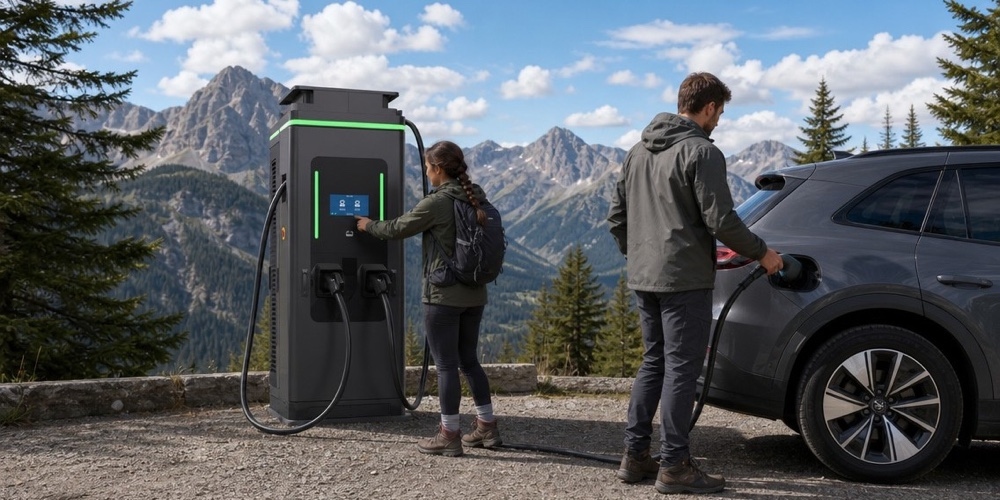
The “Plug & Charge” standard, which allows for automatic authentication and billing without an RFID card or app, is now a requirement for NEVI and AFIR funding.
- Technical Implementation: This requires a Public Key Infrastructure (PKI) for secure communication between the vehicle and the charger. Governments are subsidizing the creation of these national PKI root authorities to prevent a fragmented ecosystem of proprietary “wallets.”
11.2 Cybersecurity and Data Privacy Requirements
As charging stations become connected IoT devices, they represent a potential entry point for state-sponsored cyberattacks on the energy grid.
- The EU Cyber Resilience Act (CRA): Charging equipment manufacturers must now comply with strict vulnerability reporting and software update requirements to remain eligible for subsidies in the EU.
- NEVI Cybersecurity Guidelines: In the U.S., the White House has issued directives requiring charging networks to implement multi-factor authentication (MFA) for administrative access and robust encryption for all payment data. Grants now often include a 5-10% budget allocation specifically for cybersecurity hardening.
11.3 OCPP 2.0.1 and the End of Proprietary Lock-in
The Open Charge Point Protocol (OCPP) 2.0.1 is now the global benchmark for charger-to-cloud communication.
- Policy Enforcement: To prevent “orphaned hardware” (chargers that become useless if the software company goes bankrupt), many governments now require that all subsidized hardware must be “brand agnostic” and capable of switching software providers within 30 days.
Chapter 12: Heavy-Duty Vehicle (HDV) Charging: The New Frontier
Decarbonizing logistics requires a fundamentally different class of infrastructure: the Megawatt Charging System (MCS).
12.1 The Technical Leap to Megawatt Charging
While a passenger car charges at 150-350kW, a Class-8 electric truck needs 1MW to 3.75MW to recharge during a driver’s mandatory 30-minute break.
- MCS Standards: Subsidies are now flowing into the development of liquid-cooled cables and specialized connectors capable of handling 3,000 Amps.
- The Clean Corridors Act: In the U.S., a new $2 billion program specifically targets “Mega-Hubs” located at ports and logistics centers, recognizing that trucking represents a disproportionate share of transport emissions.
12.2 Fleet Transition Grants
Governments are providing “Double-Dip” incentives for logistics companies:
- Vehicle Grants: Covering up to 80% of the price difference between a diesel truck and an electric truck.
- Depot Infrastructure Grants: Subsidizing the massive grid upgrades required for a fleet of 50-100 electric trucks.
- The Port of Los Angeles Case Study: Through a combination of state (CARB) and federal (EPA) funds, the port has deployed hundreds of heavy-duty chargers, serving as a blueprint for the global “Green Shipping Corridors” initiative.
12.3 Hydrogen vs. Battery Electric for Long-Haul
Policy remains “technology neutral” in theory, but subsidies are currently favoring Battery Electric Vehicles (BEVs) for local and regional delivery, while Fuel Cell Electric Vehicles (FCEVs) receive higher R&D support for ultra-long-haul and heavy-duty applications.
Chapter 13: Case Study Comparison: Global Policy Effectiveness
A technical comparison of Norway, China, and the USA reveals how different incentive structures lead to different market outcomes.
13.1 Norway: The “Tax Exemption” Champion
Norway’s success was not built on direct infrastructure grants but on the near-total exemption of EVs from 25% VAT and registration taxes.
- The Result: A market where EVs are cheaper than internal combustion engine (ICE) cars. This demand-pull led to a private infrastructure explosion without the need for massive government-led “Formula Programs.”
- Lessons Learned: Once the “tipping point” of 80% EV market share is reached, the government has begun to phase out incentives, proving they are a temporary catalyst rather than a permanent crutch.
13.2 China: The “Scale and Speed” Leader
China’s top-down approach allowed for the rapid standardization of charging hardware (GB/T standard) and the creation of “super-operators” like TELD and Star Charge.
- The Result: China has more public chargers than the rest of the world combined.
- Lessons Learned: High volume can lead to low quality. China’s 2026 focus has shifted from “quantity” to “reliability” and “ultra-fast” capability.
13.3 The United States: The “Corridor and Equity” Strategist
The U.S. has focused on long-distance travel and social equity.
- The Result: A highly reliable network along major highways, but a slower roll-out in urban residential areas.
- Lessons Learned: The U.S. “Buy America” requirements for subsidized equipment have stimulated domestic manufacturing but initially slowed down the deployment speed due to supply chain constraints.
Chapter 14: Overcoming “Subsidized Inefficiency”: Policy Pitfalls and Solutions
Not all incentives are successful. We analyze common failures in policy design.
14.1 The “Install and Abandon” Syndrome
Early subsidies that only covered CAPEX led to many chargers being installed but never maintained.
- The Solution: Modern policies now tie 20-30% of the grant to “verified uptime” and “operating performance” over a 5-year period.
14.2 The “Interoperability Gap”
Subsidizing proprietary networks (like early Tesla Superchargers) created “walled gardens.”
- The Solution: Governments now mandate “Open Access” (credit card readers and ad-hoc payment) as a condition for receiving a single cent of public funding.
14.3 Crowding Out Private Capital
Excessive subsidies in prime urban locations can discourage private companies from competing.
- The Solution: “Market-Matching” grants, where the government only provides the minimum amount necessary to make a project viable, ensuring that public funds are used efficiently.
Conclusion: The Path Toward a Self-Sustaining Infrastructure Ecosystem
By 2030, the goal of every government is to exit the charging subsidy market. The current wave of incentives is designed to create a “critical mass” of vehicles and chargers that will eventually sustain itself through purely market-driven forces.
The Technical Legacy of 2026 Policies
The legacy of today’s policies will be a standardized, secure, and grid-responsive infrastructure. The shift from “grant-hunting” to “operational excellence” marks the maturity of the EV industry. As utilization rates climb and energy management becomes more sophisticated, the EV charging network will become the backbone of the new energy economy—a decentralized, digitalized, and decarbonized powerhouse.
Final Technical Summary for Investors and Policy Makers
For developers, the message is clear: the most profitable projects are no longer just about finding a high-traffic location. They are about integrating with the grid, maximizing environmental credits, and complying with the highest technical standards. For policymakers, the focus must remain on equity and reliability, ensuring that the electric revolution leaves no community behind.
Chapter 15: Technical Deep-Dive: Cybersecurity, Data Sovereignty, and the “Digital Shield” of Charging Networks
As the global charging infrastructure becomes a critical component of national energy security, the focus has shifted from simple hardware connectivity to robust cybersecurity frameworks. By 2026, the “Digital Shield” around charging stations is no longer optional—it is a mandatory technical requirement for any project receiving public funds.
15.1 The Vulnerability Surface Area of EVSE
An Electric Vehicle Supply Equipment (EVSE) unit is more than just a power outlet; it is a gateway to both the vehicle’s internal network (CAN bus) and the utility’s grid management system.
- Physical Vulnerabilities: Unprotected USB ports or maintenance interfaces on the charger itself can allow for the injection of malware. Subsidies now require “tamper-evident” seals and physical intrusion detection systems.
- Network Vulnerabilities: The communication between the charger and the backend (CSMS) often relies on cellular or Wi-Fi networks. Under new AFIR guidelines, all such data must be encrypted using TLS 1.3 at a minimum.
- Vehicle-to-Charger (V2C) Attacks: Malware can theoretically be transmitted from a compromised vehicle to a charger, and then spread across a fleet or a network. The ISO 15118 standard mitigates this through mutual authentication.
15.2 Data Sovereignty and Cross-Border Charging
In Europe and North America, there is an increasing concern about the “sovereignty” of charging data.
- The European Data Act: This regulation requires that data generated by charging stations must be accessible to the owner of the device and, if necessary, shared with third-party service providers to encourage competition. However, this data must be stored and processed within the EU to comply with GDPR and local energy security laws.
- U.S. National Security Mandates: The U.S. government has expressed concerns about charging infrastructure managed by “foreign entities of concern.” Consequently, NEVI funding is restricted to companies that can prove their software stack is not controlled by hostile foreign actors. This has led to the rise of domestic “white-label” software providers who specialize in government-compliant cloud infrastructure.
15.3 The Role of Blockchain and Distributed Ledger Technology (DLT)
To ensure the integrity of charging records and carbon credit generation, several pilot programs in Germany and Singapore are using DLT.
- Immutable Records: Every kWh delivered is recorded on a private blockchain, providing a “single source of truth” for auditing subsidies and carbon offsets. This reduces the administrative cost of compliance and prevents “double-counting” of environmental credits.
- Decentralized Identity (DID): Using DIDs for vehicles allows for secure, anonymous charging without the need for a centralized database of user accounts, enhancing privacy while maintaining technical security.
Chapter 16: Supply Chain Resilience and the Impact of “Buy Local” Mandates
The geopolitical landscape of 2026 is defined by the re-shoring of critical industries. EV charging infrastructure is at the forefront of this trend.
16.1 The U.S. “Build America, Buy America” (BABA) Act
For a charging station to be eligible for NEVI funding, at least 55% of the cost of all components must be manufactured in the United States, and the final assembly must take place on U.S. soil.
- Technical Impact: This mandate has forced global giants like Siemens, ABB, and SK Signet to open massive manufacturing plants in states like Texas and Tennessee. While this initially caused a 15-20% increase in hardware costs, it has created a more resilient domestic supply chain that is less vulnerable to trans-Pacific logistics disruptions.
- Steel and Iron Requirements: Even the structural steel used for charger pedestals and canopies must be U.S.-sourced. This has provided a significant boost to the domestic specialty steel industry.
16.2 The EU’s “Net Zero Industry Act” (NZIA)
Europe has responded with its own set of “local content” incentives. While not as restrictive as the U.S. model, the NZIA provides higher subsidy rates for projects that use “European-made” power electronics and battery cells.
- Strategic Autonomy: The goal is to ensure that 40% of the EU’s annual deployment of clean technologies is manufactured within the bloc by 2030. This includes specialized components like high-voltage semiconductors (SiC – Silicon Carbide) used in ultra-fast chargers.
16.3 China’s “Internal Circulation” and Global Export Strategy
China continues to dominate the global supply chain for charging components, but it is also pivoting toward “Internal Circulation”—prioritizing the supply of its most advanced 480kW and 600kW liquid-cooled modules for its own domestic market first.
- The “One Belt, One Road” of Charging: China is also subsidizing the export of its charging standards to developing nations in Southeast Asia, Africa, and Latin America, creating a global ecosystem based on the GB/T (and future ChaoJi) standards.
Chapter 17: In-Depth Case Study: The “Shenzhen Miracle” vs. The “California Dream”
To provide a granular technical comparison, we examine the two most advanced charging ecosystems in the world.
17.1 Shenzhen: The World’s First Fully Electric City
Shenzhen reached 100% electrification of its bus and taxi fleets years ahead of the rest of the world.
- Policy Secret: The “Shenzhen Model” relied on a combination of massive direct CAPEX grants and a mandatory “scrapping” policy for ICE vehicles. The city government also provided “land-use” subsidies, allowing charging operators to use prime real estate at zero or nominal cost.
- Technical Standard: Shenzhen pushed for the “Liquid Cooling” revolution early. As of 2026, over 40% of its public chargers are 480kW+ ultra-fast units, allowing for a “1-kilometer charging circle” in the urban core.
17.2 California: The Market-Driven Innovator
California’s approach is more focused on “market signals” and environmental justice.
- Policy Secret: The LCFS (Low Carbon Fuel Standard) is the primary engine. By creating a market for carbon credits, California has made charging profitable even in areas with moderate utilization. The state also uses the “Communities of Concern” map to direct 35% of all infrastructure spending to disadvantaged neighborhoods.
- Technical Standard: California is the global testbed for V2G and smart grid integration. Most of the world’s leading V2G pilot projects are located in the Central Valley, testing how EV fleets can support the grid during the state’s notorious heatwaves.
Chapter 18: The Technical Architecture of 2026 “Next-Gen” Charging Hubs
What does a state-of-the-art, government-subsidized charging station look like in 2026? We break down the technical bill of materials (BOM).
18.1 Power Electronics: The SiC Revolution
Modern 350kW+ chargers have moved away from traditional Silicon (Si) to Silicon Carbide (SiC) power modules.
- Technical Advantage: SiC allows for higher switching frequencies, resulting in 98%+ efficiency and a 30% reduction in the size of the power cabinet. Subsidies in the EU and Japan specifically target the development of these high-efficiency modules to reduce overall grid load.
18.2 Thermal Management: Liquid-Cooled Cables
To handle the 500+ Amps required for ultra-fast charging without the cable becoming too heavy or overheating, liquid cooling is now a standard technology for 350kW+ dispensers — and increasingly for 150-250kW commercial units in hot climates. The principle is simple: a coolant loop runs inside the cable jacket, absorbing heat from the copper conductors and the connector pins. Because the coolant removes heat at the source, the cable can carry 500A+ through a cross-section roughly half the weight of an equivalent air-cooled assembly, and the connector stays cool enough to handle repeated high-power sessions back to back.
- Coolant Loop Design: A pump circulates a propylene-glycol mixture between the dispenser’s heat exchanger and the cable. Look for redundant pumps, a leak-detection system that shuts down the DC output, and a low-power circulation mode that keeps the connector cool between sessions.
- Cold-Plated Connectors: The highest-stress component is the connector head itself. Advanced dispensers cool the power pins directly with cold plates — this is what allows a 350kW session to run immediately after another without derating.
- Maintenance Reality: Liquid cooling adds a serviceable component. Choose a system with tool-less coolant replacement, visible fluid-level indicators, and remote pump-status telemetry so a failing pump becomes a scheduled fix, not an emergency call-out.
18.3. Energy Storage: The On-Site Battery
The 2026 next-gen hub is rarely a pure grid connection anymore. A 215kWh to 1MWh battery buffer between the grid and the dispensers delivers three compounding benefits: peak shaving that slashes demand charges, solar time-shifting that lets a carport fill the battery in the afternoon for evening charging, and resilience that keeps stalls alive through grid outages. Subsidized programs in several states now explicitly reward sites that pair storage with chargers, making the battery a funding-qualification item rather than an optional extra.
18.4. The Software Stack
The physical BOM is only half the story. The 2026 hub runs on OCPP 2.0.1, ISO 15118 Plug & Charge, and a cloud platform that handles load balancing, tariff-aware scheduling, and remote diagnostics. When you evaluate a subsidized project, apply the same rigor to the software roadmap that you apply to the power electronics — the charger’s intelligence, not just its silicon, determines whether the asset earns its subsidy.
Chapter 19: Conclusion — Building the 2026 Hub Today
The architecture described in this chapter — SiC power stages, liquid-cooled cables, on-site storage, and a modern software stack — is not a research preview. It is the specification sheet of today’s best-performing stations. Key takeaways for planners:
- Buy SiC-based power electronics for efficiency, compactness, and lower cooling loads.
- Treat liquid cooling as mandatory above 250kW, and verify the loop’s serviceability before signing.
- Pair storage with chargers wherever demand charges or solar exist — the economics pay for the battery.
- Demand a software stack with OCPP 2.0.1 and ISO 15118 so the hub can participate in tomorrow’s grid markets.
Call to Action: Engineer Your Next-Gen Hub with MIDA Power supplies the full 2026 hub bill of materials: SiC-based 350kW and 480kW liquid-cooled chargers, integrated battery energy storage systems, solar carport integration, and OCPP 2.0.1 cloud management. Contact sales@midapower.com for a technical architecture review of your project, including subsidy-qualification checklists and grid-connection support.
Post time: Aug-09-2026
