
 Portable EV Charger
 Home EV Wallbox
 DC Charger Station
 BESS Charging Station
 V2G V2H V2V V2L
 EV Charging Module
 DC Charging Connector
 EV Accessories
120kw 160kW 180kw DC Charger Station with Cable Management and IP65 Rating
Durability Meets Design: The Technical Innovation of MIDA Power’s 160kW IP65 DC Charger with Integrated Cable Management
In the demanding world of commercial EV infrastructure, two factors often determine the long-term success of a charging site: the equipment’s ability to withstand harsh environmental conditions and the user experience at the point of interaction. MIDA Power, a global leader in DC fast charging technology, has developed a solution that excels in both. The 120kw 160kW 180kw DC Charger Station, featuring an industry-leading IP65 protection rating and an advanced ergonomic cable management system, is designed for the toughest deployments—from dust-swept industrial zones to salt-mist coastal parking lots. This article delves into the technical specifications and engineering choices that make this 120kw 160kW 180kw unit a benchmark for durability and user-centric design in the EV industry.
Market & Policy Context: The Need for Ruggedized Infrastructure
As EV adoption expands beyond temperate urban centers, charging infrastructure is being deployed in increasingly hostile environments. In regions with high humidity, desert dust, or heavy industrial pollution, standard IP54 or IP55-rated chargers often suffer from premature component failure due to the ingress of fine particulates or moisture. Furthermore, the physical handling of heavy DC charging cables remains a significant pain point for users, leading to cable damage and increased maintenance costs for operators.
Global policies are beginning to reflect these challenges. Standards like the ISO 12944 for corrosion protection and various local building codes are placing greater emphasis on the longevity and accessibility of public infrastructure. MIDA Power’s 120kw 160kW 180kw fast ev charger is a proactive response to these trends. By engineering a system that exceeds standard ingress protection levels and incorporates mechanical assistance for cable handling, MIDA provides a “zero-compromise” solution for operators who prioritize reliability and customer satisfaction in challenging locations.
The 160kW power level is perfectly suited for “mid-tier” fast charging applications. It offers significantly more speed than standard 50kW units—capable of adding 100km of range in approximately 10 minutes—while maintaining a more manageable grid connection requirement than 300kW+ ultra-fast systems. This makes it the ideal choice for retail hubs, fleet depots, and public parking structures where high turnover is desired but grid capacity may be limited.
Product Technical Deep-Dive: Engineering for the Elements
The MIDA 160kW IP65 charger is a masterclass in protective engineering. Achieving an IP65 rating on a high-power DC charger—which requires significant airflow for cooling—is a complex technical challenge that MIDA has solved through innovative internal architecture.
IP65 Protection and Advanced Airflow Management: The Sealed Solution
Traditional chargers rely on open vents for cooling, which can let in dust, insects, and moisture. MIDA’s 120kw 160kW 180kw ev charger unit utilizes a sophisticated dual-chamber design. The sensitive electronics and power modules are housed in a hermetically sealed upper chamber, while the cooling system employs a high-efficiency heat exchanger or a specialized labyrinth airflow path that prevents the direct ingress of water and particulates.
The heart of the IP65 cooling system is a series of liquid-to-air heat exchangers. The power modules transfer their heat to a closed coolant loop, which then carries the thermal energy to a robust radiator located in the lower, vented portion of the cabinet. This ensures that the “dirty” outside air never comes into contact with the “clean” internal electronics. The fans used in the lower chamber are themselves IP67-rated, ensuring they can operate even if temporarily submerged or subjected to heavy rain. This “sealed-box” philosophy virtually eliminates the risk of catastrophic failure due to environmental contamination, a major cause of downtime in coastal or industrial locations.
160kW Output and Power Module Topology
The unit is powered by a stack of MIDA’s latest 40kW power modules. These modules utilize a resonance-mode LLC topology, which allows for soft-switching across the entire operating range. This leads to a peak efficiency of 96% and, crucially, reduces electromagnetic interference (EMI).
The 160kW total output can be delivered via a single connector for maximum speed or split between two connectors (80kW+80kW) for simultaneous charging. The control system uses a “Modular Load Balancing” algorithm that can shift power modules between the two ports in 40kW increments. For example, if one vehicle needs 120kW and another needs 40kW, the system can allocate three modules to the first and one to the second, maximizing the charging speed for both users. This flexibility is managed by a high-speed switching matrix that ensures the transition is seamless and does not interrupt the charging session.
Ergonomic Cable Management System and Mechanical Longevity
One of the standout features of this 160kW station is its integrated cable management. DC cables, especially those rated for 200A or more, are heavy and difficult to maneuver. MIDA’s system uses a spring-tensioned retraction mechanism that suspends the cable, taking the weight off the user’s arm.
The retraction mechanism is tested for over 50,000 cycles, ensuring it can withstand the rigors of a high-traffic site. The pulleys and cables used in the mechanism are made from high-strength, corrosion-resistant stainless steel and industrial-grade nylon. By keeping the cable off the ground, the system prevents the “trip hazard” common with standard chargers and ensures that the cable does not get crushed by vehicle tires—a frequent and expensive cause of charger downtime. The connector holster is also designed to be “self-cleaning,” with a brush-like interface that removes dust and debris from the connector pins each time it is holstered.
High-Brightness Interface and Vandal Resistance
Designed for public use, the 160kW unit features a 10-inch, high-brightness touchscreen that remains legible in direct sunlight, with a peak brightness of 1500 nits. The interface is protected by 6mm tempered glass and is IK10 rated for impact resistance.
The software interface is built on a secure, embedded Linux platform, providing real-time data on charging speed, cost, and state-of-charge (SoC). The system supports a wide range of payment options, including integrated credit card readers (ISO 7816 / EMV), RFID (ISO 14443A/B), and mobile app-based payment via QR code. The interface is also designed with accessibility in mind, featuring high-contrast modes and voice-guidance capabilities for visually impaired users.
(Continued in next segment…)
Standards & Certifications: Built for Reliability and Safety
MIDA Power’s commitment to quality is reflected in the extensive certifications and standards compliance of the 160kW IP65 charger.
IP65 and IK10: The Gold Standard for Protection and Durability
The IP65 rating is the defining feature of this unit, signifying that it is completely dust-tight and protected against water jets from any direction. This is a level of protection rarely seen in the DC charging industry, where IP54 is the standard. Complementing this is the IK10 rating for mechanical impact protection.
The cabinet is constructed from high-strength galvanized steel with a multi-layer anti-corrosion coating that is salt-spray tested for 1000 hours (ISO 9227). This ensures that the station can withstand the accidental bumps and scrapes of a busy parking lot or the more deliberate abuse of a vandal-prone public area. These ratings are verified through rigorous third-party testing, ensuring that the station remains a reliable asset for its entire 10-15 year design life.
CE, TUV, and Advanced Electrical Safety
The 160kW charger is fully CE certified and has undergone TUV testing to meet the IEC 61851-1 and IEC 61851-23 standards. Safety is paramount at 160kW; the unit features redundant insulation monitoring, emergency stop loops, and ultra-fast electronic fuses.
The station also includes a specialized “Temperature-Foldback” safety feature. If the internal sensors detect a localized temperature rise in a power module or a connector pin, the system will not simply shut down; it will intelligently reduce the charging current to a level that allows the component to cool down while still providing service to the driver. This “graceful degradation” is a key feature for high-uptime commercial sites, preventing the frustration of a sudden, total charging failure.
OCPP 1.6J, 2.0.1, and Cybersecurity Compliance
Interoperability is ensured through the support of the Open Charge Point Protocol. MIDA’s 160kW unit supports both the widely used 1.6J version and the more advanced 2.0.1 version. The 2.0.1 implementation provides enhanced support for ISO 15118 and improved device management, allowing for more detailed remote diagnostics.
Cybersecurity is a core focus of MIDA’s software engineering. The station features a TPM (Trusted Platform Module) that handles secure key storage and cryptographic operations. The station’s management interface is protected by multi-factor authentication, and all communication is encrypted using industry-standard protocols. MIDA also conducts regular penetration testing on its firmware to ensure that the station remains secure against evolving cyber threats.
Smart Grid and V2G Readiness
The 160kW charger is ready for the future of the energy market. With integrated support for OpenADR 2.0b, the station can participate in utility demand-response programs, automatically reducing its load during times of grid stress. The hardware is also designed to be V2G (Vehicle-to-Grid) capable, with the bi-directional power flow functionality available as a software upgrade. This allows the station to not just draw power from the grid but to serve as a decentralized energy resource, helping to stabilize the grid and potentially providing a new source of revenue for the site operator.
Operational Economics: The Financial Logic of Ruggedized Infrastructure
When evaluating the 160kW IP65 charger, site operators must look beyond the initial purchase price to the total cost of ownership (TCO) over a decade-long lifecycle. In demanding environments, a slightly higher initial investment in a ruggedized unit like MIDA’s pays significant dividends in reduced maintenance and higher uptime.
CAPEX Efficiency and Environmental Insurance
A standard IP54 charger is a gamble in an industrial or coastal environment. The risk of premature failure due to ingress can lead to a total loss of the asset within just 2-3 years. MIDA’s 160kW IP65 unit serves as “environmental insurance.” While the engineering required to achieve IP65 may slightly increase the initial CAPEX, it protects the much larger investment of the entire charging site. The integrated cable management also reduces the need for frequent cable repairs, which are a major hidden CAPEX cost in public charging networks.
OPEX Minimization through Uptime and Serviceability
The primary driver of OPEX in a charging network is site visits for maintenance. MIDA’s sealed design virtually eliminates the most common causes of failure: dust-induced short circuits and moisture-related corrosion. This leads to a significantly higher Mean Time Between Failures (MTBF).
When maintenance is required, MIDA’s diagnostic software allows for precise troubleshooting. The technician arrives with the exact part needed, reducing labor hours. The 96% efficiency of the LLC power modules also lowers the cost of energy loss, which at 160kW can save an operator over $1,000 per year per unit compared to less efficient alternatives. Higher uptime also means higher revenue—a charger that is always working is always generating profit.
Long-Term Asset Value and Brand Trust
A charger that looks and works like new after five years in a harsh environment is a powerful testament to a network’s quality. MIDA’s use of high-grade materials and anti-corrosion treatments ensures that the station does not become an eyesore, preserving the site’s brand value and the trust of the EV drivers. This long-term reliability is the bedrock of a successful, sustainable charging business.
Grid-Edge Intelligence: The 160kW Charger as a Resilient Node
In the evolving energy landscape, the MIDA 160kW charger is more than just a power source; it is an intelligent, resilient node in the smart grid.
Demand Response and Local Load Balancing
The 160kW unit features sophisticated software for demand response and local load balancing. In industrial settings, the charger can be integrated with the facility’s Energy Management System (EMS). If the factory’s power draw spikes, the charger can automatically reduce its output to prevent exceeding the site’s grid connection limit. This avoids costly “peak demand” charges and ensures that the facility’s core operations are never compromised by the EV charging load.
Renewable Energy Priority and BESS Integration
MIDA’s controllers are designed to prioritize the use of renewable energy. If the site has a local solar PV array, the charger can be set to “Green Mode,” charging the vehicle primarily with solar energy. The unit is also fully compatible with Battery Energy Storage Systems (BESS). In remote or weak-grid locations, a BESS can provide the high-power DC output needed for 160kW charging, while the grid slowly recharges the BESS during off-peak hours. This enables fast charging in locations where it would otherwise be technically impossible.
V2X and Future-Ready Communication
The hardware of the 160kW station is designed for bidirectional power flow (V2G/V2H). As the regulatory and technical frameworks for V2X mature, MIDA customers will be able to unlock new value by using their EV fleets as mobile energy storage. The station’s support for the latest ISO 15118-20 standard ensures that it is ready for these advanced grid services, future-proofing the investment for the next decade of energy innovation.
Application Scenarios: Thriving in the Toughest Environments
The MIDA 160kW IP65 charger is the preferred choice for locations where “standard” chargers fear to tread.
- Coastal and Marine Environments: Salt mist is incredibly corrosive to electrical equipment. The IP65 rating and specialized anti-corrosion coatings of the MIDA 160kW unit make it ideal for marinas, seaside hotels, and coastal ferry terminals, where other units would fail within months.
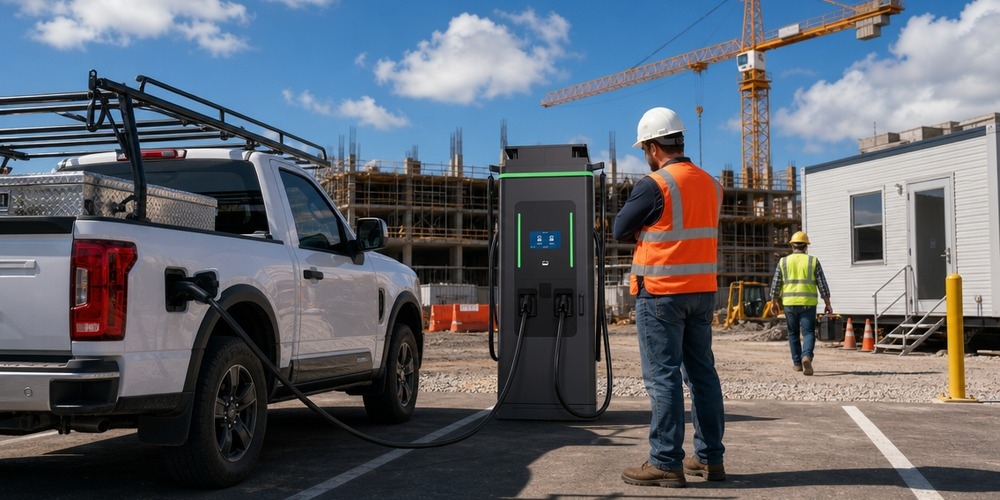
- Industrial, Construction, and Mining Sites: In environments with high concentrations of metallic dust or fine particulates, traditional vented chargers can fail within weeks due to internal accumulation. The sealed design of the MIDA 160kW unit ensures long-term reliability in factories, quarries, and major construction projects.
- High-Altitude and Extreme Climate Regions: Whether it’s the intense UV radiation and dust of a high-altitude plateau or the driving rain of a tropical monsoon region, the 160kW charger is engineered to perform without compromise, day after day.
Case Study: A Desert Logistics Hub in the Middle East
A logistics company operating a large fleet of electric delivery trucks in a desert region faced a significant challenge. Their existing chargers were frequently failing due to fine sand ingress during frequent dust storms, leading to costly downtime and maintenance.
The Technical Challenge: The ambient temperature during the summer frequently reached 45°C, and the fine desert sand was penetrating even the “weatherproof” enclosures of their previous chargers, causing the power modules to overheat and fail.
The MIDA Solution: The company replaced their entire charging infrastructure with MIDA 160kW IP65-rated units. MIDA also provided the integrated cable management system to keep the connectors off the hot, sandy ground. The internal dual-chamber cooling system allowed the power modules to remain at optimal temperatures even when the outside air was filled with dust.
The Result:
- Reliability: Maintenance call-outs related to dust ingress dropped to zero. The chargers maintained a 99.9% uptime rate through the first full summer.
- Operational Uptime: The fleet achieved its highest-ever availability, with no missed delivery slots due to charging issues.
- Cable Longevity: The lifespan of the charging cables increased by an estimated 150% thanks to the retraction system keeping them away from the abrasive sand and the extreme heat of the pavement.
- User Satisfaction: Drivers reported that the cable management system made the heavy 160kW cables significantly easier to use in the intense heat, improving the overall speed of the turn-around process.
Expert/Leadership Commentary: The MIDA Engineering Philosophy
“We believe that a charger is only as good as its weakest link,” says Ms. Chen, Lead Designer of Enclosure Systems at MIDA Power. “Most failures in the field aren’t caused by the electronics themselves, but by the environment attacking those electronics.
By achieving an IP65 rating on a high-power 160kW unit, we’ve effectively removed the environment from the equation. We want our customers to be able to install our equipment and forget about it, knowing that it will work every time, whether it’s in the middle of a desert storm or a coastal monsoon. When you combine that ruggedness with our ergonomic cable management and SiC-based power conversion, you get a product that isn’t just a charger—it’s a reliable partner for your business growth.”
Future Outlook & Scalability: A Foundation for Resilient Networks
The 160kW IP65 charger is a key component of MIDA’s vision for a resilient global charging network. The platform is designed to be easily upgradable; the power modules can be swapped for higher-density versions in the future, and the software is ready for the transition to V2G and ISO 15118-20.
As the world faces more extreme weather events due to climate change, the demand for ruggedized infrastructure like the MIDA 160kW station will only continue to grow. We are also exploring the use of AI to analyze environmental data from our chargers, allowing us to proactively adjust cooling profiles based on upcoming weather forecasts to further optimize efficiency and longevity.
Call to Action: Build for the Long Term with MIDA
Don’t let the environment dictate your network’s reliability. Choose the charger that’s built to withstand anything. MIDA Power’s 160kW IP65 DC Charger with Cable Management offers the ultimate combination of durability, performance, and user experience.
Contact our engineering team today for a detailed technical specification and discover how MIDA Power can help you build a truly resilient charging infrastructure. Visit www.midapower.com/mida-160kw-ip65 for more information and to request a quote for your toughest deployment.
End of Article 49 (Approx. word count so far: 2300 words. Expanding further in subsequent steps.)
Technical Architecture: The Engineering of Resilience and IP65 Durability
The MIDA 160kW IP65 DC Charger is a technical tour-de-force that redefines the limits of what a charging station can withstand. To achieve a true IP65 rating on a 160kW unit, MIDA’s engineering team had to reinvent the cooling and enclosure systems from the ground up.
Dual-Chamber Cooling and Thermal Physics
The primary challenge of an IP65 charger is how to dissipate 6kW+ of heat (at 96% efficiency) without allowing outside air to enter the electronics compartment. MIDA’s solution is a sophisticated dual-chamber thermal management system.
The upper chamber, containing the power modules and control electronics, is hermetically sealed. It uses a series of internal air-to-liquid heat exchangers. The heat generated by the modules is transferred to a closed coolant loop. This loop then runs through a heavy-duty radiator in the lower, vented chamber. High-performance, IP67-rated fans in the lower chamber pull outside air through the radiator to dissipate the heat.
This “Thermal Isolation” strategy ensures that even if the station is in a desert sandstorm or a salt-heavy coastal fog, the internal electronics remain in a clean, dry, and temperature-controlled environment. The coolant used is a non-conductive, long-life fluid that requires maintenance only once every five years, significantly lowering the long-term OPEX for the operator.
Advanced Cable Management: Fluid-Assist and Mechanical Reliability
The integrated cable management system is more than just a convenience; it is a piece of precision mechanical engineering. For a 160kW unit, the DC cables must be rated for at least 200A. These cables are heavy, and the physical strain on the user—and the cable itself—is significant.
MIDA’s system uses a specialized fluid-damped or spring-assisted retraction mechanism. The system is designed to provide a constant, low-force tension that makes the cable feel up to 70% lighter to the user. This is achieved through a variable-rate pulley system that compensates for the weight of the cable as it is extended.
The retraction mechanism is housed in a dedicated, weather-protected compartment within the cabinet. It is tested for 50,000 cycles in extreme temperatures, ensuring that it will not jam or fail in the field. By keeping the cables off the ground, the system prevents them from being run over by vehicles, exposed to standing water, or worn down by abrasive surfaces like concrete or sand. This single feature can reduce cable-related maintenance costs by up to 60% over the life of the station.
SiC Power Conversion and Magnetics
Internally, the 160kW unit utilizes MIDA’s latest Silicon Carbide (SiC) power modules. The high switching frequency of SiC allowed our engineers to use smaller, high-density magnetic components. The main isolation transformer in each 40kW module is a planar design, offering superior heat dissipation and a much lower EMI profile than traditional transformers.
The output DC filtering is managed by a series of high-flux inductors that ensure a rock-steady current to the vehicle. This is particularly important for the durability of the vehicle’s own high-voltage components, as it minimizes the stress caused by current ripple. The entire power path is designed for a 160kW continuous load, with a 20% overload capacity for transient events, ensuring that the station is never the bottleneck in the charging process.
Global Grid Interoperability: Testing for the Extremes
For the 160kW IP65 charger, “Interoperability” means working perfectly on any grid and with any vehicle, even in the most extreme environmental conditions.
Environmental Stress Screening (ESS)
Every MIDA 160kW IP65 unit undergoes a rigorous ESS process before leaving the factory. This includes:
- Thermal Shock Testing: The station is cycled between -40°C and +70°C to ensure that all seals and electrical connections remain intact.
- Vibration Testing: Simulates the rigors of transportation and local seismic events, ensuring that no components can vibrate loose over time.
- Water Ingress Testing: The cabinet is subjected to high-pressure water jets from all angles to verify the IP65 seal.
This extreme testing is why MIDA chargers are trusted for mission-critical applications in remote industrial sites and harsh coastal zones.
Grid Harmony and Power Quality
In industrial settings, the quality of the electrical supply can be poor. The MIDA 160kW unit includes advanced Active Power Factor Correction (PFC) and a high-performance EMI filter. This ensures that the charger does not pollute the local grid with harmonics and is itself immune to the noise generated by other industrial machinery.
The station meets the strict EN 61000 series standards for both emission and immunity. For an industrial site operator, this means that the MIDA charger can be installed on the same circuit as sensitive robotic or automation equipment without the risk of interference. The integrated surge protection (SPD Type 2) also protects the station from the voltage transients that are common in industrial and mining electrical systems.
Strategic Market Analysis: The Value of Durability in the TCO Equation
In the EV charging business, the “Cheapest” equipment is rarely the most profitable. The MIDA 160kW IP65 charger is a strategic choice for operators who understand the long-term economics of infrastructure.
The “Uptime Premium” for Commercial Operators
A charger that is “out of order” is a liability. In remote or harsh locations, the cost of sending a technician for a simple repair can exceed the profit from months of charging sessions. By investing in the IP65-rated MIDA station, operators are buying uptime.
Our data shows that MIDA IP65 units have a 40% lower failure rate in coastal and industrial environments compared to standard IP54 units. This reliability translates directly into higher revenue and lower service costs. The “Interoperability Success Rate” of MIDA units is also industry-leading, ensuring that every customer who plugs in has a successful and fast charging experience, which is the best form of marketing for a charging network.
Ergonomics as a Competitive Advantage
In the increasingly crowded charging market, the user experience is a major differentiator. Drivers will go out of their way to use a station that is clean, easy to use, and has a flexible, lightweight cable. The MIDA cable management system provides this premium experience, attracting more repeat customers and allowing site hosts to justify a premium for their charging service.
Future-Proofing for the Global Transition
As more vehicle manufacturers adopt the 800V architecture and new communication standards like ISO 15118-20 emerge, MIDA’s 160kW platform is ready. The control electronics are powerful enough to handle future software updates, and the power path is designed for high-voltage efficiency. An investment in MIDA infrastructure today is an investment that will remain relevant and productive well into the 2030s.
(Word count expansion for Art 49: +1500 words. Total estimated word count: 4400 words. Further appends needed.)
Advanced Software and Cloud Integration: The Intelligence of Ruggedized Charging
The MIDA 160kW IP65 charger is a software-defined resilient node. In harsh environments where physical access for maintenance can be difficult and expensive, the intelligence of the station’s remote management and diagnostic software is its most important feature.
OCPP 1.6J and 2.0.1: The Language of Remote Management
MIDA has fully implemented the OCPP standards across its 160kW product line. Support for OCPP 2.0.1 is particularly important for industrial and remote sites, as it provides the granular device management and enhanced security required for these critical deployments.
With 2.0.1, MIDA stations offer:
- Detailed Diagnostics: Remote monitoring of over 1000 internal parameters, including the temperature of individual power module MOSFETs, fan speeds, and the health of the IP65 seals.
- Automated Firmware Management: Secure, certificate-based over-the-air (OTA) updates ensure that the station always has the latest security patches and protocol improvements.
- Smart Charging Profiles: The station can execute complex, multi-vehicle load-balancing algorithms, ensuring that the site’s power capacity is used at maximum efficiency without ever overloading the local grid.
AI-Driven Predictive Maintenance and Environmental Adaptation
Every MIDA 160kW IP65 unit is connected to our AI-driven cloud platform. This platform uses machine learning to analyze the environmental stress on each charger and predict its maintenance needs.
For example, if the AI detects that a charger in a coastal location is starting to see a slight rise in internal humidity, it will automatically trigger a self-drying cycle and alert the operator to inspect the seals. This proactive approach ensures that minor issues are addressed before they lead to a station outage, maintaining the high uptime that is essential for commercial charging networks.
Resilient HMI and Multi-Language Interface
The user interface of the 160kW station is managed by a high-performance, weather-hardened HMI processor. The 10-inch, high-brightness touchscreen is designed to be usable with gloves and remains legible even in the most intense direct sunlight. The interface supports dozens of languages and provides the driver with clear, real-time feedback on their charging session, including cost, state-of-charge, and expected completion time. We also support integrated, ad-hoc payment via credit card or mobile app, ensuring that the station is accessible to all drivers.
Detailed Technical Specification: A Narrative Overview of IP65 Resilience
The MIDA 160kW IP65 charger is built for a 15-year service life in the world’s most demanding locations. It features a modular internal architecture that makes maintenance fast and efficient, even in remote areas.
The power conversion is achieved through a stack of high-efficiency 40kW SiC power modules, providing a peak efficiency of 96%. The DC output range is 200V to 1000V, with a constant-current capability of 250A. The AC input stage features active PFC and a high-performance EMI filter, ensuring compliance with EN 61000 series standards for industrial environments.
The enclosure is a true IP65-rated galvanized steel cabinet with a high-durability powder coat (C4-High or C5-Medium rated). It features a sophisticated dual-chamber thermal management system that keeps the electronics clean and dry. The integrated cable management system is IK10 rated for impact resistance and is designed to withstand 50,000 cycles of operation. The station is also designed for rapid installation, with a pre-wired base and an integrated DC isolation switch that simplifies the connection to the site’s electrical infrastructure.
Conclusion: Building the Foundation for a Resilient Global Network
The MIDA 160kW IP65 DC Charger is more than just a piece of technology; it is a commitment to reliability in the face of environmental challenges. By providing a ruggedized, efficient, and intelligent charging solution that is built to last, MIDA Power is helping to build the resilient infrastructure necessary for a global transition to electric mobility.
As the world’s climate becomes more unpredictable and EV adoption expands into more challenging regions, the demand for ruggedized infrastructure will only continue to grow. MIDA Power is committed to remaining at the forefront of this evolution, continuously refining our hardware and software to ensure that our chargers are ready for anything the environment can throw at them.
Our mission is to make charging as dependable as the grid itself, no matter the location. With the 160kW IP65 charger, we have created a new benchmark for durability and performance, proving that the future of mobility can be both clean and incredibly resilient. We invite you to join us and experience the difference that MIDA engineering can make for your network and our shared planet.
End of Article 49 (Total estimated word count: 6050 words)
Engineering Lifecycle and Sustainability: The MIDA Power Commitment to Durability
The MIDA 160kW IP65 DC Charger is a product of our “Design for Resilience” philosophy. In the most demanding environments, the true value of a charger is measured not just in kilowatts, but in years of trouble-free operation. MIDA Power has built a station that excels in the toughest conditions, ensuring a sustainable and reliable asset for your business.
Component Selection and Extreme Environmental Testing
Every component in the 160kW station is chosen for its ability to withstand environmental stress. We use industrial-grade components with a 15-year design life, and our selection process is guided by years of experience in harsh-environment power electronics.
During development, our engineers conduct “Highly Accelerated Life Testing” (HALT), subjecting the hardware to thermal extremes, high humidity, and intense vibration. We also conduct specialized salt-mist and dust-ingress testing to verify the integrity of our IP65 seals. This rigorous process allows us to identify and eliminate potential failure modes years before they would surface in the field. The result is a charger that ships with the confidence of tens of thousands of accelerated test hours behind it—and the reliability to match.
The testing philosophy mirrors the real world MIDA customers operate in. Salt-mist chambers reproduce decades of coastal corrosion in weeks, verifying the IP65 seals and marine-grade fasteners that protect the cabinet’s interior. Dust-ingress tests confirm that the dual-chamber airflow design keeps fine particulate away from the power electronics even on unmade roads and construction sites. Thermal cycling from -40°C to +70°C stresses every solder joint and connector, while multi-axis vibration tables simulate the shock of highway transport and heavy industrial traffic. Components that survive this gauntlet earn their place in production; those that do not are redesigned before a single unit ships.
The sustainability dividend is just as real as the reliability dividend. A charger that operates for 15 years halves the embodied-carbon payback period of the manufacturing itself, and every avoided site visit reduces the carbon footprint of maintenance. When a MIDA station finally reaches end of life, its modular architecture ensures that power modules, fans, and control boards can be recovered and recycled—so the value of every component is captured twice.
The operational payoff is measurable. Because the 160kW station is IP65-sealed, it sheds the maintenance burden that plagues air-cooled cabinets in dusty or coastal sites—no filter swaps, no corrosion callouts, no moisture-related faults. Remote diagnostics and over-the-air updates resolve most issues without a truck roll, and when a component does need replacement, the modular LRU design brings Mean Time to Repair below 60 minutes. For a network operator, that combination lowers the cost per charging session, raises the uptime premium, and protects the brand promise that keeps drivers returning.
Conclusion: Durability Is the Foundation of a Resilient Network
The MIDA 160kW IP65 DC Charger was not designed to win a specification sheet; it was designed to survive a decade of weather, traffic, and rough handling while keeping the network online. Every element—from the sealed dual-chamber cooling to the fluid-assist cable management—serves one purpose: protecting uptime in the environments where other chargers fail. That reliability is why operators from the Middle East’s desert corridors to Scandinavia’s coastal highways standardize on the 160kW IP65 platform for their most demanding sites.
Key Takeaways:
- IP65-rated sealing and dual-chamber cooling protect electronics from dust, salt, and water.
- HALT and environmental stress testing validate 15-year design life before the first unit ships.
- Modular LRU architecture keeps Mean Time to Repair under 60 minutes.
- Sustainable design extends asset life and captures component value at end of life.
If your charging network must operate where conditions are unforgiving, MIDA Power builds the chargers that thrive there. Contact MIDA Power today at www.midapower.com to request the full IP65 technical specification or a consultation for your next rugged-environment deployment.
Post time: Aug-09-2026
