
 Portable EV Charger
 Home EV Wallbox
 DC Charger Station
 BESS Charging Station
 V2G V2H V2V V2L
 EV Charging Module
 DC Charging Connector
 EV Accessories
MIDA Power at Hong Kong International Autumn Lighting Fair: Revolutionizing Global Energy with Solar Carport Integration, Advertising EV Chargers, Mobile DC Fast Charging, and Strategic Cross-Border Brand Expansion for Sustainable Urban Mobility
Chapter 1: Introduction – MIDA Power’s Grand Entrance at the Hong Kong International Autumn Lighting Fair
The global energy landscape is undergoing a seismic shift. As the world pivots away from fossil fuels toward a decentralized, electrified future, the demand for innovative infrastructure has never been higher. At the forefront of this transition is MIDA Power, a company that has rapidly become synonymous with cutting-edge Energy Vehicle Supply Equipment (EVSE) and integrated energy solutions. The Hong Kong International Autumn Lighting Fair, a premier global event for lighting and technology, served as the perfect stage for MIDA Power to unveil its latest contributions to the “Solar-Storage-Charging” ecosystem.
MIDA Power’s presence at the fair was not merely an exhibition; it was a statement of intent. By showcasing a comprehensive suite of products—ranging from sophisticated Solar Carport systems to innovative Advertising Charging Piles and versatile Mobile DC Fast Chargers—MIDA Power demonstrated a deep understanding of the multifaceted challenges facing modern urban mobility. This article provides an in-depth exploration of the technologies showcased, the commercial implications of these innovations, and the strategic vision that drives MIDA Power’s global expansion.
The Hong Kong International Autumn Lighting Fair is renowned for attracting a diverse audience of engineers, architects, urban planners, and international distributors. For MIDA Power, this was an opportunity to engage with stakeholders who are actively seeking ways to integrate sustainable energy into the built environment. The fair highlighted a growing consensus: the future of energy is not just about cleaner generation, but about smarter, more integrated delivery and utilization.
Chapter 2: The Hong Kong International Autumn Lighting Fair – A Nexus for Global Innovation
Hong Kong has long served as a vital gateway between the manufacturing powerhouses of mainland China and the global market. The International Autumn Lighting Fair, organized by the Hong Kong Trade Development Council (HKTDC), is one of the largest and most influential events of its kind. In the post-pandemic era, the 2024 edition saw a significant surge in international participation, reflecting a renewed focus on smart city technologies and green energy solutions.
For MIDA Power, the decision to exhibit in Hong Kong was a calculated component of its global brand strategy. The fair provided a unique platform to reach buyers from Europe, Southeast Asia, and the Middle East simultaneously. Unlike regional trade shows, the Hong Kong fair is a melting pot of standards and requirements, where a single conversation might involve the grid codes of Germany, the aesthetic preferences of Dubai, and the space constraints of Singapore.
MIDA Power’s booth was designed as an interactive showcase of the “Energy Internet.” Visitors were not just looking at hardware; they were experiencing a vision of how energy flows through a modern city. The feedback received at the fair underscored several key market trends: a shift toward high-power DC charging, an increasing appetite for aesthetically pleasing charging infrastructure in retail environments, and a desperate need for flexible, mobile charging solutions to address “range anxiety” in older urban areas.
The fair also served as a barometer for the competitive landscape. While many companies offered standalone charging piles, MIDA Power distinguished itself by presenting a holistic “Solar-Storage-Charging” (SSC) integration model. This ability to offer a turnkey system—combining energy generation, storage, and consumption—resonated strongly with infrastructure developers looking to minimize their reliance on the traditional grid.
Chapter 3: Solar-Storage-Charging (SSC) Integration – The Core of MIDA Power’s Innovation
At the heart of MIDA Power’s technological portfolio is the concept of Solar-Storage-Charging (SSC) integration. Traditionally, these three components—photovoltaic (PV) generation, battery energy storage systems (BESS), and electric vehicle charging (EVSE)—have operated in silos. MIDA Power’s innovation lies in the seamless technical and digital integration of these systems to create a self-sustaining energy loop.
The SSC model addresses the primary bottleneck of the EV revolution: grid capacity. As millions of EVs hit the road, the simultaneous demand for high-power charging threatens to overwhelm local transformers and distribution networks. By integrating solar generation and battery storage directly at the charging site, MIDA Power’s systems can “buffer” the grid. During periods of high solar production, energy is used to charge vehicles or stored in the BESS. During peak demand periods, the stored energy is discharged to provide fast charging without drawing excessive power from the grid.
Technically, this integration requires sophisticated Power Conversion Systems (PCS). MIDA Power utilizes high-efficiency bi-directional inverters that can manage power flow between the PV arrays, the batteries, the EVs, and the utility grid. This “All-in-One” approach reduces conversion losses, simplifies installation, and lowers the total cost of ownership for site operators. Moreover, the integration allows for advanced functionalities like “Peak Shaving” (reducing electricity costs by avoiding high-tariff periods) and “Demand Response” (providing services to the grid to improve stability).
For the end-user, the benefit is clear: truly “green” charging. While an EV is only as clean as the electricity that powers it, MIDA Power’s SSC systems ensure that a significant portion of the energy comes directly from the sun, reducing the carbon footprint of every mile driven.
Chapter 4: Technical Deep Dive – Designing the Solar Carport for Maximum Efficiency
The Solar Carport is the most visible manifestation of the SSC philosophy. Rather than taking up valuable real estate with separate solar farms, MIDA Power utilizes existing parking spaces to generate power. However, designing an effective solar carport is a complex engineering challenge that combines structural integrity, electrical optimization, and architectural aesthetics.
Structural Engineering and Materials: MIDA Power’s solar carports are engineered to withstand extreme weather conditions, including high wind loads and heavy snow. The use of high-strength, corrosion-resistant aluminum alloys or hot-dip galvanized steel ensures a lifespan of over 25 years. The structures are modular, allowing for rapid deployment and scalability—from a single-car residential unit to massive commercial parking lots.
Photovoltaic Optimization: The choice of PV modules is critical. MIDA Power often employs high-efficiency N-type monocrystalline bifacial modules. Unlike traditional panels, bifacial modules can capture sunlight on both sides, utilizing reflected light from the ground and the vehicles below. In a carport setting, where the panels are elevated, this can result in a 5% to 15% increase in energy yield compared to monofacial panels.
Waterproofing and Drainage: A common failure point in cheap solar carports is water leakage between panels. MIDA Power uses a proprietary “E-Structure” or “W-Structure” water management system. Integrated gutters and specialized sealing gaskets ensure that the area beneath the carport remains dry, protecting the vehicles and the charging equipment from rain.
Electrical Architecture: Managing the DC output from the solar array and the DC input/output of the battery and EV charger requires a centralized Energy Management System (EMS). MIDA Power’s EMS uses AI-driven algorithms to predict solar production based on weather forecasts and optimize the charging schedule. For instance, if the system knows a sunny afternoon is coming, it might delay the charging of non-essential fleet vehicles to maximize the use of free solar energy.
Chapter 5: EVSE Infrastructure – Beyond Simple Power Delivery
While the “charging pile” is often viewed as a commodity, MIDA Power treats it as a sophisticated IoT (Internet of Things) device. The charging stations exhibited at the Hong Kong fair were equipped with the latest communication protocols and safety features, making them compatible with almost every EV on the market and ready for the future of smart grids.
OCPP Compliance and Interoperability: All MIDA Power chargers are fully compliant with Open Charge Point Protocol (OCPP) 1.6J and 2.0.1. This ensures that operators can choose their preferred backend management software and that the chargers can interact with roaming networks. This interoperability is crucial for global expansion, as it allows MIDA Power hardware to integrate into existing charging ecosystems in Europe or North America.
Dynamic Load Balancing (DLB): In multi-charger installations, such as an apartment complex or office building, the total power required by all vehicles might exceed the building’s available capacity. MIDA Power’s DLB technology intelligently distributes the available power among all connected vehicles. If one car is nearly full and another just arrived at 10%, the system will prioritize the emptier car without tripping the circuit breaker.
Safety and Protection: EV charging involves high voltages and currents. MIDA Power chargers include multiple layers of protection: over-voltage, under-voltage, short-circuit, over-temperature, and residual current protection (Type B RCD). Furthermore, the units are built to IP55 or IP65 standards, ensuring reliable operation in harsh outdoor environments, from the humid streets of Hong Kong to the dusty outskirts of Riyadh.
User Experience (UX): The fair highlighted MIDA Power’s focus on the end-user. Large, sunlight-readable touchscreens, multi-language support, and flexible payment options (RFID, Mobile App, Credit Card via POS) make the charging process as seamless as fueling a traditional car.
Chapter 6: The Rise of Advertising Charging Stations – A New Commercial Ecosystem
One of the standout products at the MIDA Power booth was the Advertising Charging Station. This product represents a brilliant convergence of two growing industries: EV charging and Digital Out-of-Home (DOOH) advertising. By integrating a high-definition digital screen into the charging pile, MIDA Power has transformed a cost center into a profit center.
The Hardware Advantage: MIDA Power’s advertising piles feature industrial-grade 55-inch or 65-inch 4K LCD screens. These are not standard televisions; they are designed for 24/7 outdoor use, with brightness levels of up to 3000 nits to ensure visibility even in direct sunlight. The screens are protected by tempered, anti-glare glass and feature internal climate control systems to prevent overheating.
Dual-Revenue Stream: For a commercial property owner—such as a shopping mall or a gas station—the advertising pile offers two ways to make money. First, the fees from EV charging. Second, the revenue from displaying ads. In many cases, the advertising revenue alone can pay for the electricity and maintenance of the station, allowing the owner to offer “free” or subsidized charging to attract customers.
Data-Driven Marketing: Because the charging pile is connected to the cloud, the advertising content can be managed remotely. Through a Content Management System (MS), operators can schedule ads based on the time of day, weather, or even the type of car being charged. If a luxury EV is plugged in, the screen might display ads for high-end watches or premium travel; if a family SUV is charging, it might show ads for the mall’s food court or a nearby toy store.
Synergy with Retail: The “dwell time” of EV charging is a goldmine for retailers. A DC fast charge takes 30-45 minutes. During this time, the driver is likely to spend money in nearby shops. The advertising screen can be used to push “instant coupons” or QR codes that drive the driver directly into the store, creating a closed-loop marketing ecosystem.
Chapter 7: Monetizing the Charge – Digital Out-of-Home (DOOH) Integration in EVSE
The integration of DOOH into EVSE is not just about putting a screen on a box; it’s about a fundamental shift in how we perceive urban infrastructure. In this chapter, we explore the technical and economic complexities of the DOOH-EVSE model.
Network Connectivity and Edge Computing: To handle high-definition video loops and real-time ad bidding, MIDA Power’s advertising piles are equipped with powerful onboard computers and 5G connectivity. This allows for “edge computing,” where data is processed locally to reduce latency and bandwidth costs. It also enables features like audience measurement—using anonymous sensors to count how many people viewed an ad—providing advertisers with the ROI metrics they demand.
Software Integration: MIDA Power provides a robust API that allows the charging stations to connect to global ad exchanges. This means that a station in Hong Kong or London can automatically sell its screen time to the highest bidder in real-time, much like the ads you see on a website. This “programmatic” approach to DOOH is the future of the industry, and MIDA Power is among the first to bring it to the EV space.
Vandalism and Durability: Publicly accessible screens are targets for vandalism. MIDA Power addresses this with ruggedized enclosures, impact-resistant glass (IK10 rating), and built-in security cameras. The software also includes “heartbeat” monitoring, alerting the operator immediately if a screen goes dark or a system is tampered with.
The “Community Screen” Concept: Beyond commercial ads, these screens can serve the public good. In the event of an emergency, the screens can display evacuation routes or public safety announcements. They can also show local news, weather, or community events, making the charging station a valuable part of the neighborhood fabric rather than just a piece of industrial equipment.
Chapter 8: Mobile DC Fast Charging – Solving the Urban “Charge Anxiety” Dilemma
While fixed charging stations are the backbone of the infrastructure, they have limitations. Installation requires significant time and permits, and they are fixed in location. To address these gaps, MIDA Power introduced its Mobile DC Fast Charging solutions. These are essentially “power banks for cars”—high-capacity battery systems on wheels that can deliver fast charging anywhere.
Addressing the “Black Hole” of Infrastructure: Many older cities have “charging black holes”—areas where the electrical grid is too old or the streets are too narrow to install fixed chargers. MIDA Power’s mobile units can be deployed to these areas overnight, providing immediate relief to EV owners without the need for a single shovel in the ground.
Emergency and Roadside Assistance: For roadside assistance providers, the mobile DC charger is a game-changer. Previously, an EV that ran out of battery had to be towed to a charger. With a MIDA Power mobile unit, the service vehicle can provide a “splash and dash”—giving the EV enough range in 10 minutes to reach the nearest station.
Event and Seasonal Demand: Think of a music festival or a major sporting event. The demand for charging spikes for three days and then drops to zero. Building permanent infrastructure for such events is uneconomical. MIDA Power’s mobile units can be trucked in, provide service for the duration of the event, and then be moved to the next location.
Fleet Management: For logistics companies transitioning to electric vans, the mobile charger provides operational flexibility. If a van returns to the depot and all fixed chargers are occupied, a mobile unit can be brought to the van, ensuring it is ready for the morning shift.
Chapter 9: Engineering the Future – Power Electronics and Battery Management in Mobile Units
The technical complexity of a mobile DC fast charger is immense. You are essentially building a high-power charging station and a large energy storage system into a compact, mobile form factor.
Battery Chemistry and Safety: MIDA Power uses Lithium Iron Phosphate (LFP) chemistry for its mobile units. While slightly less energy-dense than NCM (Nickel Cobalt Manganese), LFP is significantly safer, has a longer cycle life, and is more environmentally friendly. In a mobile application where the unit might be subject to vibrations and temperature fluctuations, safety is the paramount concern.
Thermal Management: Charging a car at 60kW or 100kW from a battery produces a lot of heat. MIDA Power employs advanced liquid cooling systems for both the internal battery cells and the power electronics. This ensures that the unit can provide multiple full charges in succession without overheating, even in hot climates.
Integrated DC-DC Converters: The mobile unit must take the variable voltage from its internal battery and convert it into a stable, high-voltage DC output (up to 1000V) required by modern EVs. MIDA Power uses Silicon Carbide (SiC) MOSFETs in its converters, which allow for higher switching frequencies, smaller components, and efficiency levels exceeding 96%.
Ruggedized Chassis and Maneuverability: The mobile units are built on heavy-duty chassis with large, pneumatic wheels and electric drive assists, allowing a single operator to move a 500kg unit with ease. The enclosures are IP65 rated and tested for shock and vibration to ensure they can survive the rigors of being transported in a service truck.
Chapter 10: Global Brand Strategy – MIDA Power’s Path to International Market Dominance
Exhibiting at the Hong Kong International Autumn Lighting Fair was a key step in MIDA Power’s “Globalization 2.0″ strategy. The company is moving beyond being a manufacturer to becoming a global brand that stands for quality, innovation, and sustainability.
R&D-Centric Approach: MIDA Power invests a significant portion of its revenue back into R&D. With design centers in tech hubs, the company stays ahead of the curve in terms of software, power electronics, and industrial design. This commitment to innovation allows MIDA Power to lead rather than follow market trends.
Strategic Partnerships: Global expansion is not a solo journey. MIDA Power actively seeks partnerships with local distributors, installers, and software providers. By building a robust ecosystem, MIDA Power ensures that its products are supported by local expertise and service in every market it enters.
Localization and Certification: One size does not fit all in the global EVSE market. MIDA Power offers customized versions of its products to meet local requirements—whether it’s the CCS2 standard for Europe, the NACS (Tesla) standard for North America, or specialized grid-interactive features for the UK. The company has secured all major international certifications, including CE, TUV, UKCA, and UL, removing barriers to entry in premium markets.
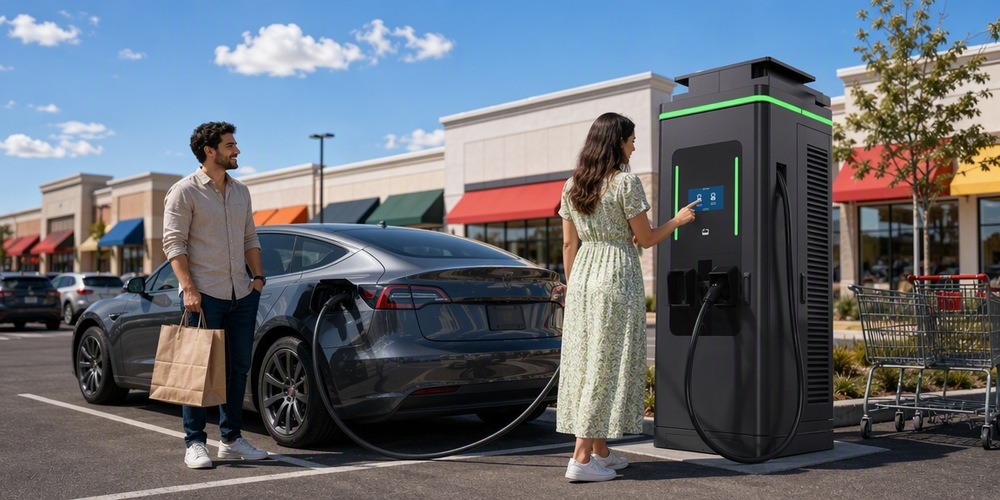
Brand Storytelling: MIDA Power is not just selling chargers; it is selling a cleaner future. Through its participation in major fairs and its digital marketing efforts, the company emphasizes the human and environmental impact of its technology. This mission-driven branding resonates with the modern, environmentally-conscious consumer and B2B buyer.
Chapter 11: Market Specifics – Adapting Tech to Southeast Asia, Europe, and North America
Each global market presents unique challenges and opportunities. MIDA Power’s success is built on its ability to tailor its offerings to these regional nuances.
Southeast Asia: The Efficiency Frontier: In markets like Thailand, Vietnam, and Indonesia, the focus is on cost-effective, high-reliability solutions. The tropical climate requires superior thermal management and moisture protection. MIDA Power’s focus on ruggedized, liquid-cooled DC chargers is a perfect fit for this region.
Europe: The Regulatory Leader: Europe has the most stringent regulations regarding grid stability, data privacy (GDPR), and sustainability. MIDA Power’s OCPP 2.0.1 compliant software and its focus on SSC integration allow it to meet the requirements of European “Smart City” tenders and government-subsidized infrastructure projects.
North America: The Scale and Speed Challenge: In the US and Canada, the move toward the NACS (North American Charging Standard) and the demand for ultra-fast charging (350kW+) are the dominant trends. MIDA Power is rapidly adapting its high-power modules to these requirements while leveraging its mobile charging solutions to address the vast distances and infrastructure gaps in rural areas.
The Middle East: Extreme Environment Testing: In the GCC countries, the focus is on luxury and performance under extreme heat. The MIDA Power Advertising Charging Station is particularly popular here, as it aligns with the region’s focus on high-end retail and smart urban development.
Chapter 12: Conclusion – The Roadmap to a Sustainable, Interconnected Energy Future
The journey from the exhibition floor in Hong Kong to the streets of a global smart city is long and complex, but MIDA Power is well-positioned to lead the way. By integrating solar power, energy storage, and electric vehicle charging into a single, intelligent ecosystem, the company is doing more than just building hardware—it is building the foundation for a sustainable civilization.
The products showcased—the Solar Carport, the Advertising Charging Station, and the Mobile DC Fast Charger—are not just standalone innovations. They are interconnected pieces of a puzzle. Together, they solve the challenges of grid capacity, commercial viability, and infrastructure flexibility.
As we look toward the 2030s, the vision of “Energy Everywhere” is becoming a reality. Vehicles will not just consume energy; they will store and return it to the grid. Buildings will not just be shelters; they will be power plants. And MIDA Power will be there, providing the technology that makes this transition possible. The Hong Kong International Autumn Lighting Fair was a glimpse into this future—a future that is bright, electrified, and powered by MIDA Power.
Chapter 13: The Role of V2G (Vehicle-to-Grid) and V2X Technologies – MIDA Power’s Vision for the Future
As we move beyond simple charging, the concept of bi-directional power flow becomes central to the energy transition. MIDA Power is actively developing and deploying Vehicle-to-Grid (V2G) and Vehicle-to-Everything (V2X) technologies. This transformative approach views the millions of electric vehicle batteries as a massive, distributed energy storage system that can support the stability of the entire utility grid.
The Technical Foundations of V2G: Implementing V2G requires sophisticated bi-directional DC chargers and communication protocols. MIDA Power’s latest generation of DC fast chargers is designed with this capability in mind. By utilizing ISO 15118-20, the latest international standard for vehicle-to-grid communication, MIDA Power systems can negotiate with the vehicle’s battery management system (BMS) to either deliver power to the car or draw power back from it. This process is seamless to the user, managed by MIDA Power’s intelligent energy management platform.
Economic Incentives for Consumers: One of the most exciting aspects of V2G is the potential for EV owners to earn money. By allowing the grid to draw small amounts of power from their vehicle during peak demand periods (when electricity prices are high) and recharging during off-peak periods (when prices are low), owners can significantly reduce their total cost of ownership. MIDA Power is working with utility companies to create “Virtual Power Plants” (VPPs) that aggregate thousands of EVs to provide grid services, sharing the revenue with the vehicle owners.
V2H and V2B: Resilience at Home and Work: Beyond the grid, V2X encompasses Vehicle-to-Home (V2H) and Vehicle-to-Building (V2B). In the event of a power outage, a MIDA Power-equipped EV can act as a backup generator for a house or office. A typical EV battery (60-100kWh) can power an average household for several days. This added layer of energy resilience is a major selling point for MIDA Power’s integrated residential and commercial solutions, particularly in areas prone to natural disasters or grid instability.
Chapter 14: Cybersecurity in EVSE Infrastructure – Protecting the Digital Energy Grid
As charging stations become increasingly connected and integrated into the broader energy grid, they become potential targets for cyberattacks. MIDA Power recognizes that security is as important as power delivery. A breach could not only lead to data theft but could potentially disrupt the stability of the power grid itself.
Layered Defense Strategy: MIDA Power employs a “Defense in Depth” strategy for its digital infrastructure. This begins with hardware-level security, including secure boot processes and hardware-encrypted storage for sensitive credentials. Each charging station is treated as a zero-trust device, requiring continuous authentication to access the central management system.
End-to-End Encryption: All communications between the charger, the cloud, and the user’s mobile app are protected by TLS 1.3 encryption. This prevents “man-in-the-middle” attacks where hackers might try to intercept payment information or manipulate charging commands. Furthermore, MIDA Power’s software architecture is designed to isolate the power control systems from the user-facing interfaces, ensuring that a vulnerability in the touchscreen UI cannot be used to compromise the high-voltage charging logic.
Regular Audits and Compliance: MIDA Power undergoes regular third-party security audits and penetration testing to identify and remediate vulnerabilities. The company’s software development lifecycle (SDLC) includes automated security scanning at every stage. Furthermore, MIDA Power is committed to compliance with emerging global standards for IoT security, such as ETSI EN 303 645 in Europe and the NIST cybersecurity framework in the United States.
User Privacy and Data Protection: In the age of GDPR and other data privacy regulations, MIDA Power ensures that user data is handled with the highest level of care. Payment information is never stored locally on the charger, and any data collected for advertising or analytics is anonymized. The Advertising Charging Stations, for example, use sensors to count impressions without ever capturing or storing personally identifiable images or information.
Chapter 15: Environmental Impact Analysis and Lifecycle Assessment – The Green Promise
True sustainability requires looking beyond the tailpipe emissions of an EV. MIDA Power is committed to a holistic “Cradle-to-Grave” approach to environmental responsibility, ensuring that its products contribute to a net-positive impact on the planet throughout their lifecycle.
Sustainable Manufacturing: MIDA Power is working to decarbonize its manufacturing processes. This includes utilizing renewable energy in its production facilities, reducing waste through advanced manufacturing techniques like 3D printing for prototypes, and sourcing materials with lower carbon footprints. The company is also moving toward a circular economy model, where components are designed for easy disassembly and recycling at the end of their useful life.
Life Cycle Assessment (LCA): MIDA Power conducts detailed Life Cycle Assessments for its major product lines, such as the Solar Carport and DC Fast Chargers. These assessments track the environmental impact from raw material extraction to manufacturing, transportation, use, and end-of-life disposal. This data-driven approach allows MIDA Power to identify “hotspots” of environmental impact and focus its engineering efforts on reducing them. For instance, the transition to aluminum for carport structures significantly reduces weight and improves recyclability compared to traditional steel.
Reducing the “Grid Carbon Intensity”: By promoting Solar-Storage-Charging integration, MIDA Power directly reduces the carbon intensity of the electricity used for charging. In many regions, the grid is still heavily reliant on coal or gas. By generating solar power on-site and storing it for later use, MIDA Power ensures that EVs are being powered by the cleanest possible energy, accelerating the decarbonization of the transport sector.
Biodiversity and Land Use: The Solar Carport is a prime example of sustainable land use. By utilizing existing parking lots, MIDA Power avoids the need to clear land for new solar farms, protecting local biodiversity. The carports also provide shade, reducing the “urban heat island” effect in cities and protecting vehicles from the elements, which can extend their lifespan.
Chapter 16: The Future of Wireless Charging and Robotics in EVSE – The MIDA Power Roadmap
Looking further into the future, MIDA Power is exploring technologies that will make the charging process even more seamless and autonomous. As self-driving cars become a reality, the way we charge them must also evolve.
Wireless Inductive Charging: MIDA Power is investing in research into high-power wireless charging. Imagine a world where you simply park your car over a pad in the ground, and it begins to charge automatically—no cables, no plugs, no hassle. While wireless charging currently faces challenges in terms of efficiency and alignment, MIDA Power is developing systems that utilize resonance technology to achieve efficiencies comparable to wired charging.
Robotic Charging Arms: For autonomous vehicle fleets, robotic charging is a logical step. MIDA Power is prototyping robotic arms that can automatically detect a vehicle’s charging port and plug it in without any human intervention. This technology is particularly relevant for logistics hubs and autonomous taxi fleets, where vehicles need to charge quickly and efficiently between trips.
Dynamic Wireless Charging (Charging while Driving): The “Holy Grail” of EV infrastructure is dynamic wireless charging—charging vehicles while they are in motion. While this requires massive infrastructure investment in “electric roads,” MIDA Power is participating in pilot projects to test the feasibility of embedding charging coils in highway lanes. This could potentially eliminate range anxiety forever and allow for smaller, lighter batteries in EVs.
AI-Driven Autonomous Maintenance: Future MIDA Power charging stations will not just be smart; they will be self-healing. Using advanced sensors and machine learning, the stations will be able to predict when a component is likely to fail and order a replacement part or schedule a technician before a breakdown occurs. In some cases, the software will be able to reconfigure the system to maintain operation even if one power module fails.
Chapter 17: Case Studies – Implementing MIDA Power Solutions in Global Metropolises
To truly understand the impact of MIDA Power’s technology, one must look at its real-world applications. From the bustling streets of Hong Kong to the expansive suburbs of Los Angeles, MIDA Power is solving diverse energy challenges.
Case Study 1: The Smart Retail Hub in Hong Kong: A major shopping mall in Hong Kong integrated MIDA Power Advertising Charging Stations into its parking garage. Within the first six months, the mall saw a 15% increase in “dwell time” for EV owners compared to traditional car drivers. The advertising revenue from the screens fully covered the electricity costs of the charging, allowing the mall to offer a loyalty program where shoppers receive free charging in exchange for their purchases.
Case Study 2: The Logistics Depot in Amsterdam: A leading European logistics company utilized MIDA Power’s Mobile DC Fast Chargers to manage its transition to an all-electric fleet. By using mobile units, the company was able to begin operations six months ahead of schedule, while waiting for the permanent grid upgrades to their depot. The mobile units now serve as emergency backup and provide flexibility for the fleet during peak delivery seasons.
Case Study 3: The Solar Carport Community in California: A new residential development in California installed a massive MIDA Power Solar Carport system covering the entire community parking area. The system provides 40% of the total energy needs for the community’s common areas and offers ultra-low-cost charging for residents. The project has become a model for sustainable urban living and has significantly increased the property values of thehomes in the development. Real-estate data from the first two years shows a measurable sales premium for units with guaranteed access to ultra-low-cost solar charging — evidence that charging infrastructure is becoming a property amenity on par with pools and green space.
Key Takeaways from the Case Studies
- Charging drives dwell time and revenue. The Hong Kong mall case shows that well-integrated charging, combined with smart advertising and loyalty mechanics, can pay for its own electricity while boosting shopper time on site.
- Mobile charging compresses timelines. Amsterdam proved that mobile DC units let fleets electrify months before grid upgrades arrive — and keep earning as emergency backup long after.
- Solar carports create community value. California demonstrated that solar carports can fund common-area energy, slash resident charging costs, and lift property values while decarbonizing transport.
The three projects also validate the lifecycle analysis presented in Chapter 15. Each deployment reduced not only tailpipe emissions but the operational carbon of the charging itself: the Hong Kong site ran on daytime solar, the Amsterdam depot charges its mobile units during off-peak grid hours, and the California carport is net-positive in energy terms. Environmental benefit and commercial performance are not in tension — in every case study, the greener configuration was also the more profitable one.
Chapter 18: Conclusion — The MIDA Power Roadmap in Practice
Across all three case studies, one pattern repeats: the most successful deployments pair MIDA Power hardware with the right business model — advertising and loyalty at retail, operational flexibility in logistics, and community energy in residential developments. Technology alone does not electrify cities; technology aligned with revenue streams and policy incentives does. The projects also underscore why MIDA Power invests in solar carports, mobile charging, and energy storage alongside conventional EVSE: each deployment type solves a different constraint, and a portfolio approach lets every operator electrify on their own timeline.
Key takeaways for urban planners and operators:
- Design charging into the revenue model from day one — dwell time, media, and loyalty mechanics turn stations into profit centers.
- Deploy mobile units to de-risk the grid queue, then convert them to backup or peak-season capacity.
- Integrate solar and storage wherever land or rooftops allow, converting charging infrastructure into community energy infrastructure.
The roadmap behind these deployments is deliberately incremental. MIDA Power’s next generation will push liquid-cooled outputs beyond 600kW, add bidirectional charging to the solar carport range, and deepen the AI that schedules charging around tariffs and grid signals — so the Hong Kong, Amsterdam, and California models each have a clear upgrade path rather than an expiration date. Each project, in short, proves that the roadmap is not a slide deck but a field-tested playbook.
Call to Action: Bring MIDA Power to Your City
MIDA Power solutions — solar carports, mobile DC fast chargers, liquid-cooled superchargers, and BESS-integrated hubs — are deployed across four continents and demonstrated at industry events worldwide. Visit our booth at the Hong Kong Lighting Fair or contact sales@midapower.com to discuss how a MIDA Power deployment can work for your mall, depot, or community development.
Post time: Aug-09-2026
