
 Portable EV Charger
 Home EV Wallbox
 DC Charger Station
 EV Charging Module
 DC Charging Connector
 EV Accessories
What is ESS solar charging system?
ESS (Energy Storage System) solar charging system uses solar panels to generate electricity, stores excess power in batteries for later use, and manages the energy flow of households or businesses, like a large mobile power source, providing electricity at night, during power outages or peak periods, thereby reducing dependence on the grid and lowering costs. These systems balance the intermittency of solar energy by storing excess electricity when there is ample sunlight and releasing it when needed, typically including components such as batteries (usually lithium-ion batteries), inverters, and management software.
Where can the energy storage charging system be used?
The ESS (Energy Storage System) charging solution integrates batteries with electric vehicle chargers for energy storage, typically from solar energy (photovoltaics) or the grid, providing faster, cheaper, and more reliable electric vehicle charging while reducing grid pressure by transferring peak loads and providing backup power during power outages. These systems use intelligent management to optimize energy usage, enabling charging stations to quickly charge vehicles by releasing stored electricity even during peak demand periods, making them an ideal choice for commercial, fleet, or off grid applications. The ESS (Energy Storage System) solar charging solution integrates solar panels, battery energy storage, and electric vehicle chargers into an intelligent ecosystem, providing reliable, cost-effective, and environmentally friendly energy for electric vehicles and homes, optimizing power usage, reducing peak demand costs, ensuring backup power, and maximizing solar energy utilization. These solutions use intelligent management to store excess solar energy and use it for charging electric vehicles or household electricity when needed, especially during periods of high grid electricity prices, ensuring energy independence and sustainability.
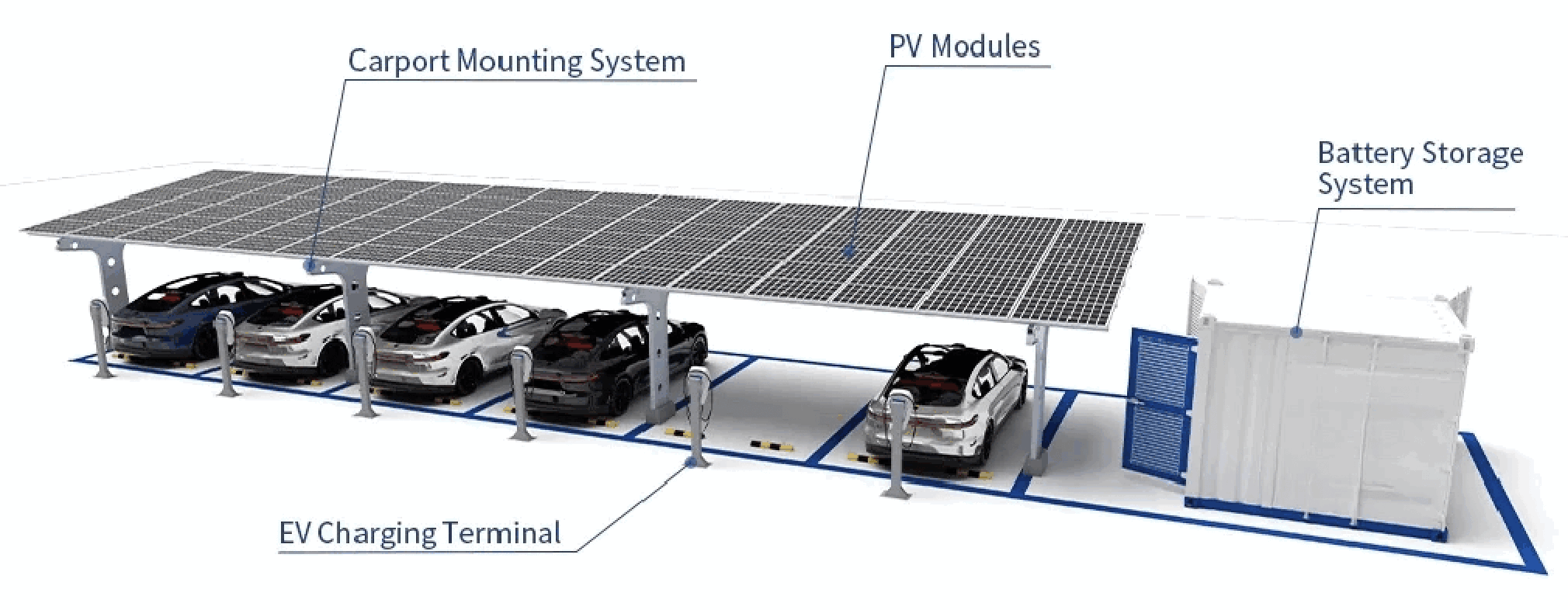
What is the working principle of ESS charging system?
Energy capture: Solar panels generate direct current or obtain electricity from the grid during off peak hours and periods of low electricity prices.
Storage: The inverter converts DC power to AC power and stores excess energy in the ESS battery system.
Intelligent management: Energy management systems (EMS) control energy flow, determining whether to charge electric vehicles, store energy, or send electricity back to the grid.
Charging: When needed, use stored energy (or grid power) to charge electric vehicles, ensuring fast and efficient charging while preventing grid overload.
main advantages
Cost saving: Store energy during low electricity prices (off peak hours/solar energy) and use it during high electricity consumption periods.
Power grid stability: reduce peak demand in the power grid, prevent overload and power outages. Faster Charging: Utilizing stored energy for high-power charging, bypassing grid restrictions.
Backup power supply: Ensure continuous charging during power grid interruptions.
Renewable energy integration: maximizing the use of solar/wind energy to charge electric vehicles.
Capacity Enhancement: Significantly increase the service capacity of charging stations.
Common applications
Public and commercial charging stations: suitable for parks, shopping malls, office buildings, and communities.
Electric vehicle fleet: suitable for garages and workplaces.
Remote areas: Provide off grid charging solutions.
Mobile solution: a portable device used for emergency situations or flexible charging.
What are the key components of an energy storage charging system?
Solar photovoltaic array: captures sunlight and converts it into direct current.
Energy Storage System (ESS): Batteries (such as lithium-ion batteries) store excess solar energy.
Inverter/charger: converts direct current to alternating current, manages energy flow, and charges electric vehicles.
Electric vehicle charger: provides power for electric vehicles.
Intelligent management system: software that controls charging/discharging based on solar energy, grid prices, and demand.
working principle
During the day, solar panels generate electricity and are prioritized for use. Any remaining electricity is stored in the energy storage system.
During peak hours/nighttime: When there is no solar energy or grid electricity is expensive, the system will extract electricity from stored battery energy to charge electric vehicles or provide power for households.
Grid interaction: It is also possible to obtain electricity from the grid during off peak hours (when electricity prices are lower) to charge batteries, thereby reducing dependence on solar energy during peak hours.
advantage
Cost saving: Reduce reliance on expensive grid electricity, especially during peak hours.
Energy independence: providing backup power during power grid outages.
Sustainability: Maximizing the use of clean solar energy and reducing carbon footprint.
Grid stability: Balance energy supply and demand, prevent grid overload.
Scalability: Modular design can meet various needs from households to large commercial venues.
application
Residential: providing power for households and electric vehicles.
Commercial/Industrial: Office parks, shopping malls, hotels.
Public charging stations: parks, communities, fleet garages.

