
 Portable EV Charger
 Home EV Wallbox
 DC Charger Station
 BESS Charging Station
 V2G V2H V2V V2L
 EV Charging Module
 DC Charging Connector
 EV Accessories

Microgrid BESS Battery Energy Storage EV Charging Infrastructure India Solar 100kW 240kWh Project Supply
Microgrid BESS Battery Energy Storage EV Charging Infrastructure India Solar 100kW 240kWh Project Supply
The Microgrid BESS Battery Energy Storage EV Charging Infrastructure India Solar 100kW 240kWh Project Supply is a CE and UL certified integrated battery energy storage and DC fast charging system that combines 240kWh of LFP storage with 100kW DC output. It buffers grid and solar energy to deliver high-power EV charging for microgrids and off-grid sites, cutting demand charges, supporting peak shaving and ensuring reliable rapid charging even on grid-constrained sites.
Core Advantages
- Integrated BESS + DC Charger – 240kWh LFP storage and 100kW DC output in one cabinet.
- Peak Shaving & Demand Charge Cut – stores cheap energy, caps costly grid spikes.
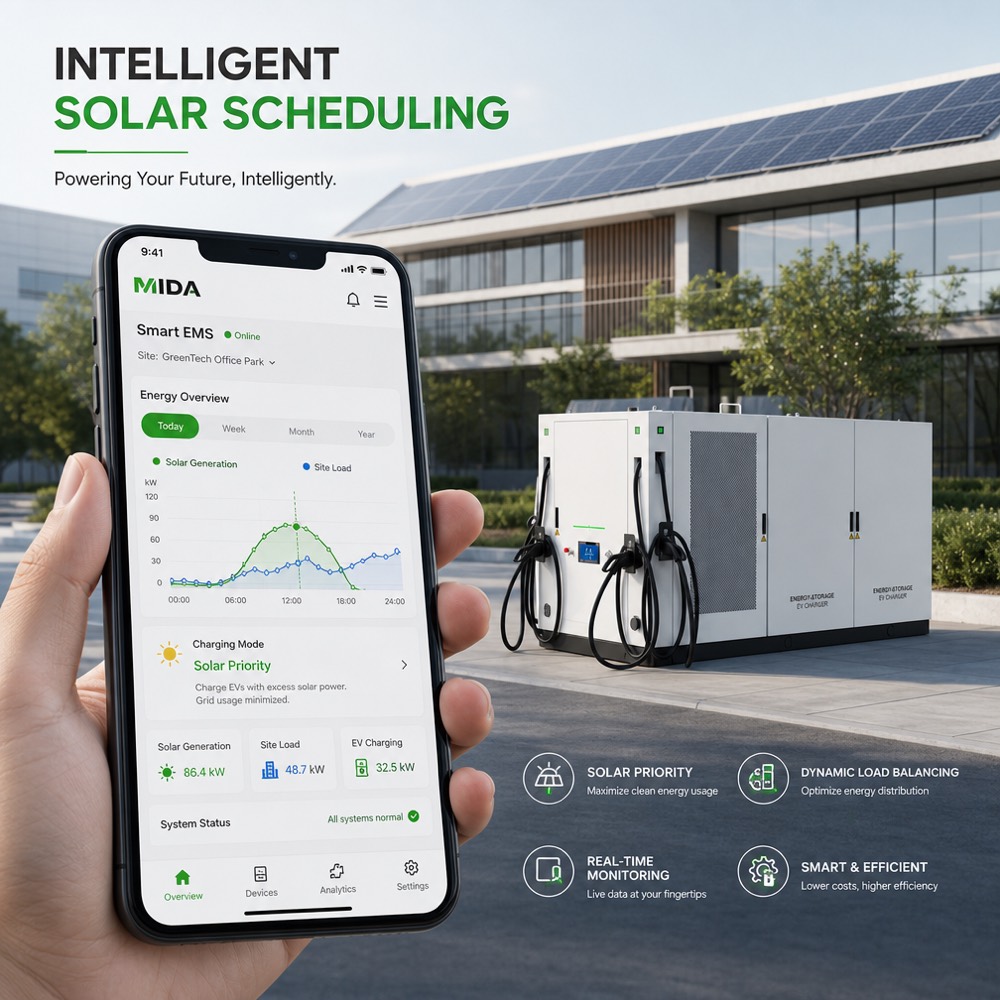
- Solar-Ready Hybrid Operation – on-grid, off-grid and solar-plus-storage modes.
- LFP Safety & Long Life – automotive-grade cells, multi-level BMS, fire protection.
- OCPP Smart Management – OCPP 1.6J/2.0.1, remote control, dynamic load balancing.
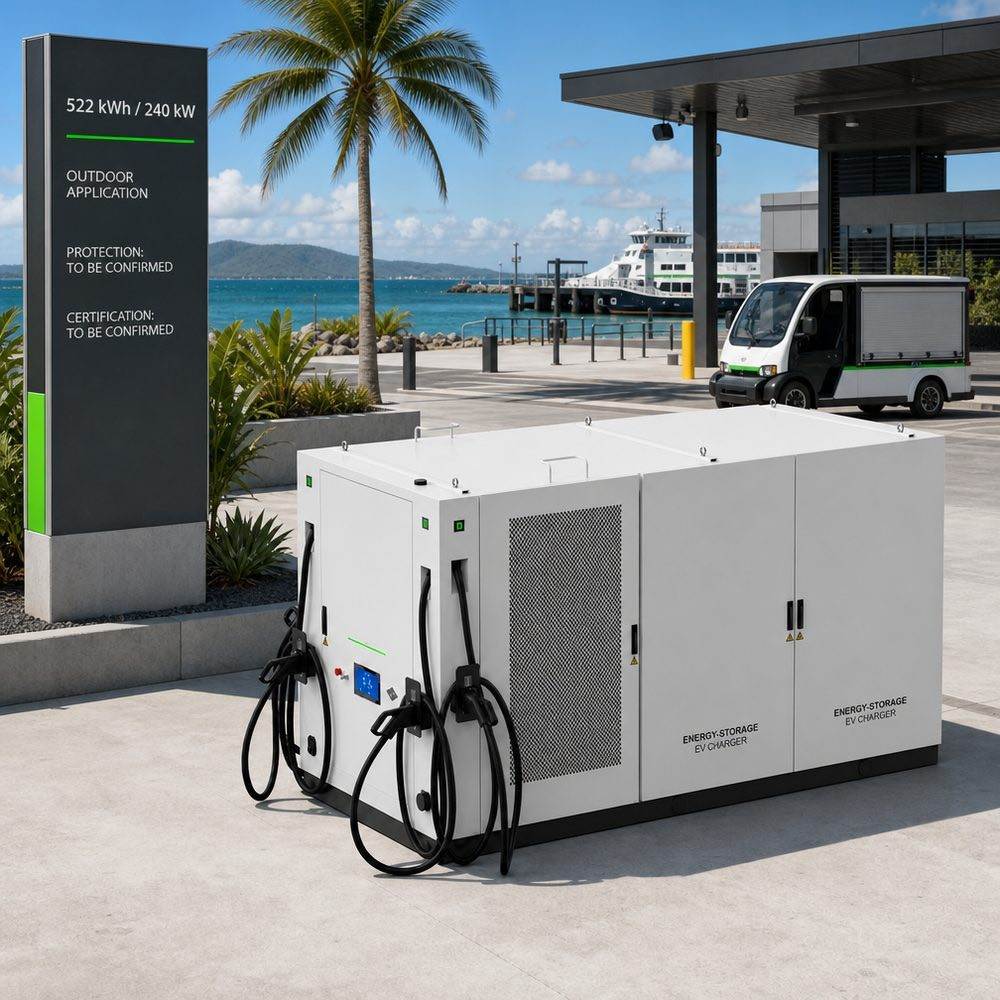
- Outdoor-Rated & Certified – IP54/IP55, wide temperature range, CE/UL/IEC.
Product Highlights
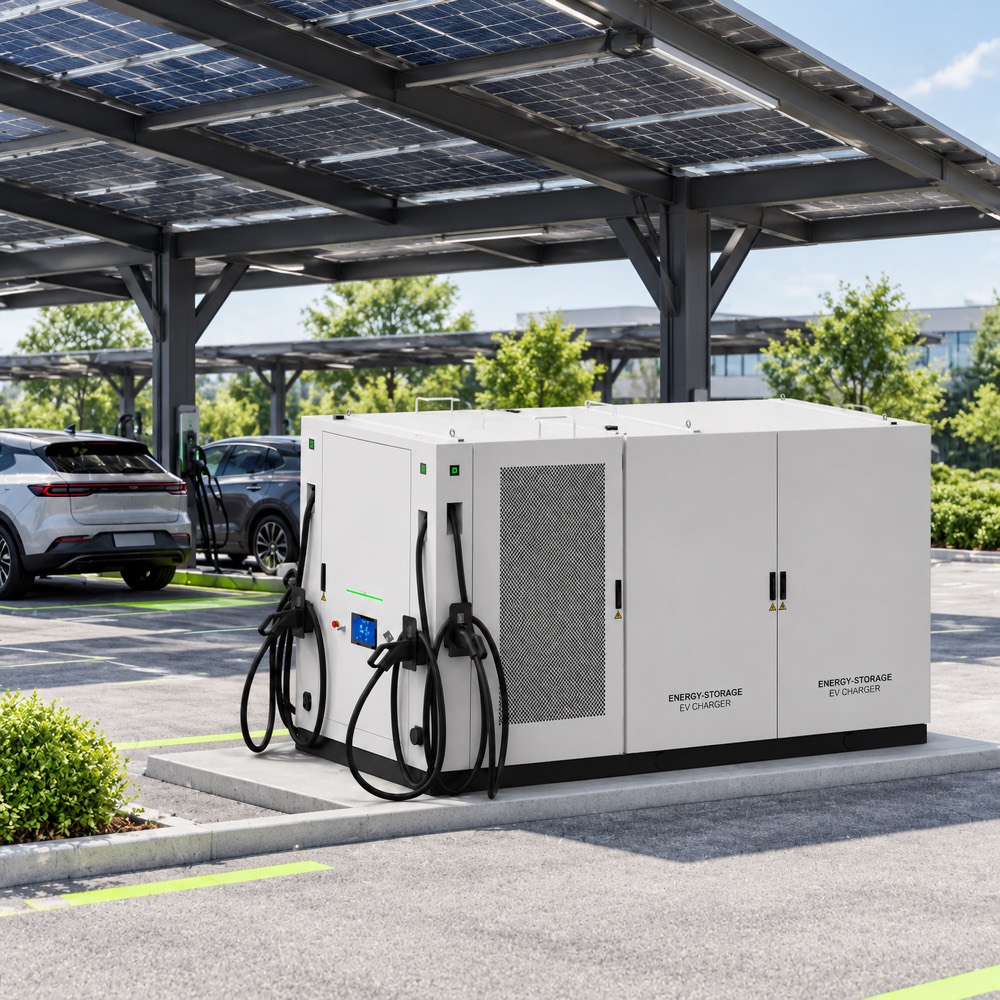
Integrated BESS and DC Charging Architecture
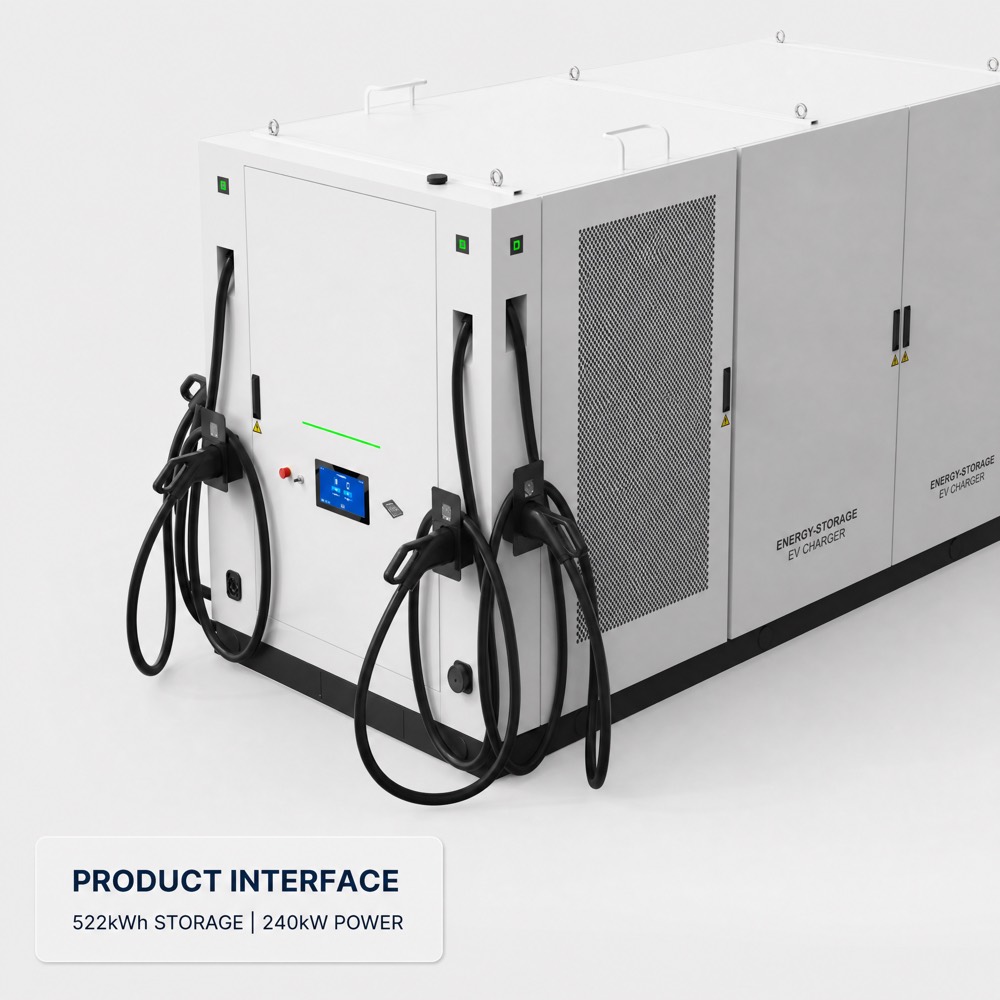
The Microgrid BESS Battery Energy Storage EV Charging Infrastructure India Solar 100kW 240kWh Project Supply merges a high-density LFP battery pack with a bidirectional power conversion system and a DC fast charging stage inside one weatherproof enclosure. By buffering grid energy in the battery, the station delivers burst charging power far above the site grid connection, so operators add fast charging to constrained locations without costly transformer upgrades. The integrated BESS smooths load, shaves peaks and stores cheap off-peak or solar energy for use during demand spikes. This architecture turns any microgrids and off-grid sites into a resilient, grid-friendly charging hub that keeps vehicles moving while protecting the local distribution network from overload.
Smart Management, OCPP and Remote Control
Every Microgrid BESS Battery Energy Storage EV Charging Infrastructure India Solar 100kW 240kWh Project Supply runs OCPP 1.6J with an upgrade path to OCPP 2.0.1, so it integrates with leading charging network platforms for authorization, billing and monitoring. Operators manage charging schedules, battery dispatch, user access and energy flows through a cloud dashboard, with real-time alerts and remote diagnostics that cut site visits. Dynamic load management shares available power between multiple connectors and the battery, while RFID, app and card payment support flexible business models. This connected intelligence lets owners of microgrids and off-grid sites operate many sites efficiently, maximize uptime and adapt tariffs as energy markets evolve.
Solar Integration and Off-Grid Resilience
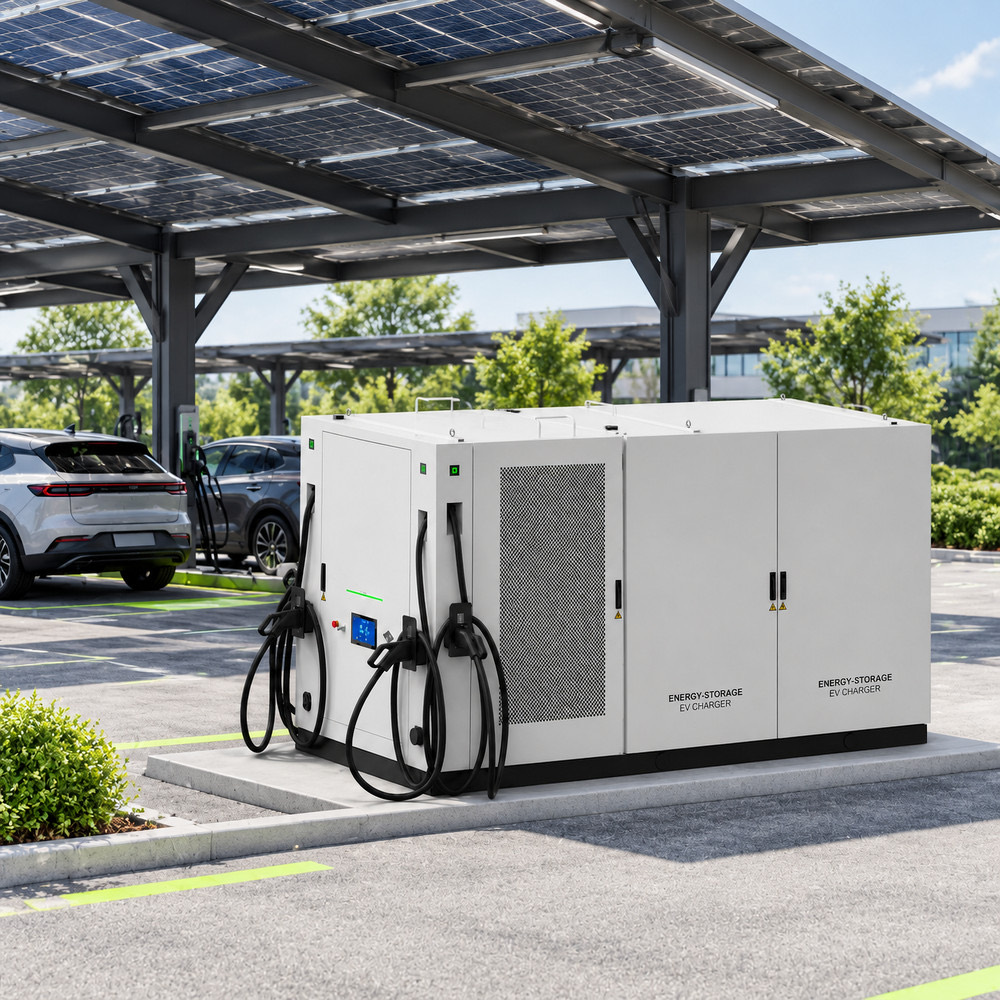
The Microgrid BESS Battery Energy Storage EV Charging Infrastructure India Solar 100kW 240kWh Project Supply is solar-ready, accepting photovoltaic input so sites charge electric vehicles directly from clean on-site generation. Surplus daytime solar is stored in the BESS and released to charge vehicles after sunset or during peak tariff windows, maximizing self-consumption and renewable usage. In grid-weak or off-grid locations the battery and solar combination guarantees continuous fast charging where mains power is limited or absent. For microgrids and off-grid sites, this hybrid operation reduces carbon footprint, cuts reliance on diesel generators and delivers energy independence while maintaining dependable DC charging output around the clock, every day.
Modular Scalability and Flexible Deployment
The Microgrid BESS Battery Energy Storage EV Charging Infrastructure India Solar 100kW 240kWh Project Supply uses a modular design so battery capacity and charging power scale to match site demand and budget. Containerized and cabinet formats support quick installation, and additional modules expand energy or power as traffic grows, protecting the initial investment. Standardized interfaces simplify commissioning, maintenance and future upgrades, while the compact footprint suits sites where space is tight. Whether deployed as a single unit or a networked fleet of stations, this scalable platform lets operators of microgrids and off-grid sites roll out charging infrastructure in phases, add capacity on demand and standardize hardware across an entire portfolio with ease.
Peak Shaving and Demand Charge Reduction
Commercial electricity tariffs punish short power spikes with high demand charges, and EV fast charging creates exactly those spikes. The Microgrid BESS Battery Energy Storage EV Charging Infrastructure India Solar 100kW 240kWh Project Supply stores energy when power is cheap and discharges it during charging sessions, flattening the site load profile and slashing demand charges. The intelligent energy management system continuously monitors grid import, battery state of charge and charging demand, dispatching stored power to cap peak draw. For microgrids and off-grid sites, this converts an unpredictable, expensive load into a controlled one, improving charging economics, protecting the grid connection and shortening the payback period of the entire storage and charging investment significantly.
Outdoor-Rated Durability and Global Certification
Built for harsh outdoor duty, the Microgrid BESS Battery Energy Storage EV Charging Infrastructure India Solar 100kW 240kWh Project Supply carries an IP54/IP55 enclosure and a wide operating temperature window from sub-zero cold to desert heat, with corrosion-resistant construction for coastal and industrial sites. The station is engineered to international standards including CE, UL, IEC and relevant grid-connection and fire-safety codes, so it qualifies for projects and incentive programs worldwide. Robust thermal management keeps the battery and power electronics within safe limits under continuous cycling. For microgrids and off-grid sites, this rugged, certified design means dependable year-round operation, straightforward permitting and long-term asset value in almost any climate on earth.
Product Specifications
| Battery Capacity | 240kWh (configurable) | DC Output Power | 100kW (configurable) |
| Battery Type | LFP (LiFePO4) | Output Voltage | 150-1000V DC |
| Connectors | CCS2 standard; CCS1/GB-T/CHAdeMO/NACS optional | Protocol | OCPP 1.6J / 2.0.1 |
| Grid Input | 3-phase 380/400V AC; solar PV ready | Operation Modes | On-grid / Off-grid / Hybrid |
| Protection | IP54/IP55, IK10 | Temperature | -30°C to +55°C |
| Safety | BMS, fire suppression, insulation monitoring | Certification | CE, UL, IEC, RoHS |
Application Scenarios
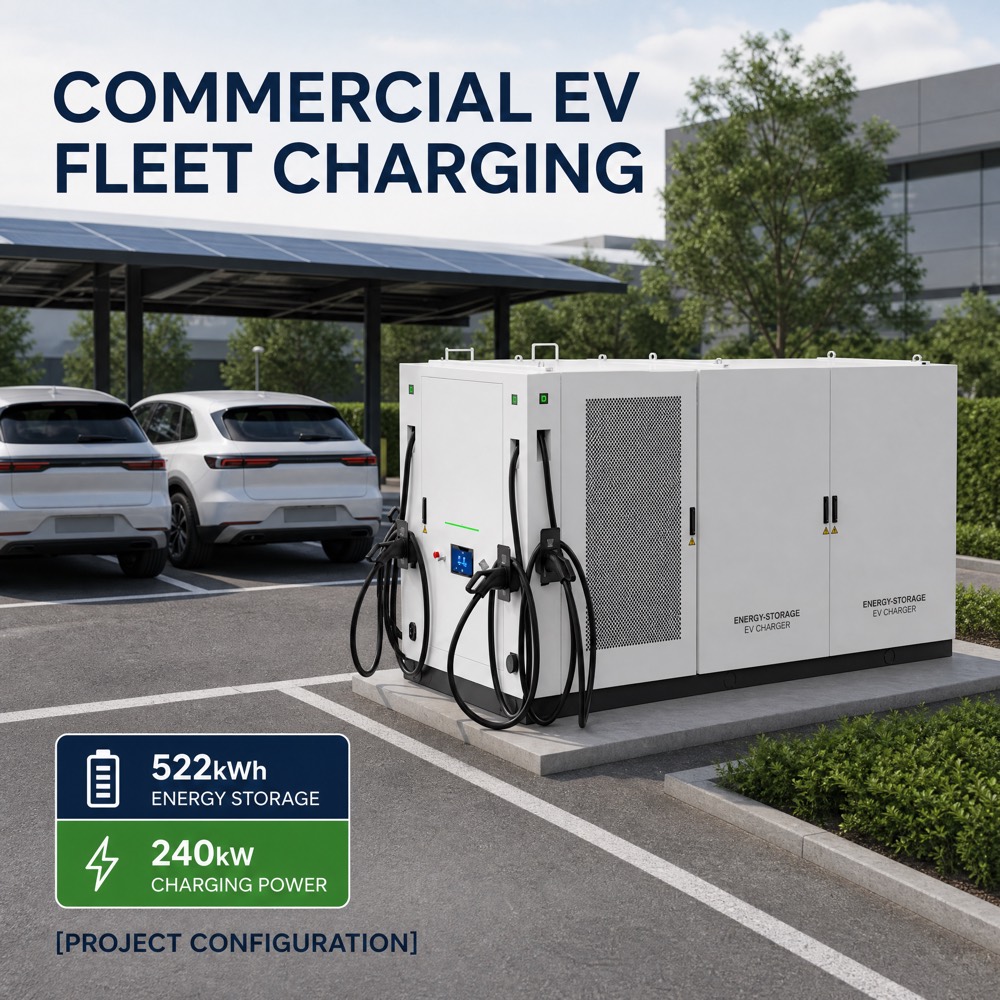
The Microgrid BESS Battery Energy Storage EV Charging Infrastructure India Solar 100kW 240kWh Project Supply is deployed across microgrids and off-grid sites, highway corridors, logistics and bus depots, commercial car parks, and renewable microgrids. Explore related MIDA storage and charging solutions: 261KWH 120KW Solar Storage Charging System With DC Charger Industrial BESS Energy Storage System 261KWH 522KWH For Grid Off Grid BESS EV Charger Combined Solar Panel PV.
Frequently Asked Questions (FAQ)
How much grid power does the 200kWh 120kW system need?
Because the 200kWh battery supplies the charging peaks, the 200kWh 120kW unit draws a much smaller, steadier load from the grid than a 120kW charger alone. It stores energy during off-peak hours or from solar and discharges it during charging sessions, so sites can add fast charging without expensive transformer or grid upgrades.
How much grid power does the 241kWh 160kW system need?
Because the 241kWh battery supplies the charging peaks, the 241kWh 160kW unit draws a much smaller, steadier load from the grid than a 160kW charger alone. It stores energy during off-peak hours or from solar and discharges it during charging sessions, so sites can add fast charging without expensive transformer or grid upgrades.
How much grid power does the 216kWh 120kW system need?
Because the 216kWh battery supplies the charging peaks, the 216kWh 120kW unit draws a much smaller, steadier load from the grid than a 120kW charger alone. It stores energy during off-peak hours or from solar and discharges it during charging sessions, so sites can add fast charging without expensive transformer or grid upgrades.
What is the configuration of the 418kWh 180kW BESS EV charging system?
The 418kWh 180kW configuration pairs a 418kWh LFP battery with a 180kW DC charging output in one integrated cabinet. The battery buffers grid and solar energy so the station delivers 180kW fast charging even where the grid connection is limited, making it ideal for peak shaving, demand charge reduction and reliable rapid EV charging at commercial and fleet sites.
How much grid power does the 1MWh 480kW system need?
Because the 1MWh battery supplies the charging peaks, the 1MWh 480kW unit draws a much smaller, steadier load from the grid than a 480kW charger alone. It stores energy during off-peak hours or from solar and discharges it during charging sessions, so sites can add fast charging without expensive transformer or grid upgrades.
How much grid power does the 100kW 240kWh system need?
Because the 240kWh battery supplies the charging peaks, the 100kW 240kWh unit draws a much smaller, steadier load from the grid than a 100kW charger alone. It stores energy during off-peak hours or from solar and discharges it during charging sessions, so sites can add fast charging without expensive transformer or grid upgrades.
What is the configuration of the 482kWh 320kW BESS EV charging system?
The 482kWh 320kW configuration pairs a 482kWh LFP battery with a 320kW DC charging output in one integrated cabinet. The battery buffers grid and solar energy so the station delivers 320kW fast charging even where the grid connection is limited, making it ideal for peak shaving, demand charge reduction and reliable rapid EV charging at commercial and fleet sites.
How much grid power does the 1000kWh 480kW system need?
Because the 1000kWh battery supplies the charging peaks, the 1000kWh 480kW unit draws a much smaller, steadier load from the grid than a 480kW charger alone. It stores energy during off-peak hours or from solar and discharges it during charging sessions, so sites can add fast charging without expensive transformer or grid upgrades.
After-Sales Advantages
MIDA supports the Microgrid BESS Battery Energy Storage EV Charging Infrastructure India Solar 100kW 240kWh Project Supply with a multi-year warranty, global spare parts, remote diagnostics and on-site service, plus full OEM/ODM customization of capacity, connectors, enclosure and software. Engineering support covers sizing, grid-connection studies and commissioning for fast, bankable project delivery.
Leave Your Message:
Related Products
-
V2G Bidirectional BESS Battery Storage EV Charg...
-
Flexible Market BESS Battery Storage EV Chargin...
-

120kWh 60kW Solar Storage Charging System With ...
-
Microgrid BESS Battery Energy Storage EV Chargi...
-
Smart BESS Battery Energy Storage EV Charging S...
-

High Power BESS Charging Station 120kWh 522kWh ...
