
 Portable EV Charger
 Home EV Wallbox
 DC Charger Station
 BESS Charging Station
 V2G V2H V2V V2L
 EV Charging Module
 DC Charging Connector
 EV Accessories


Solar Fleet DC DC 100kW 160kW 210kW Remote Highway Charging System Smart Charging Fleet
Solar Fleet DC DC 100kW 160kW 210kW Remote Highway Charging System Smart Charging Fleet
The Solar Fleet DC DC 100kW 160kW 210kW Remote Highway Charging System Smart Charging Fleet is a CE-certified solar PV DC-DC floor-standing charging station built for grid-tie and off-grid EV charging. Delivering selectable 100kW, 160kW, 210kW DC output through an efficient DC-DC stage, it feeds solar and battery energy directly to the vehicle, with CCS2 connectors, OCPP smart management and full outdoor safety protection.
Core Advantages
- Selectable 100kW / 160kW / 210kW Solar DC Power – DC-DC stage feeds PV energy straight to the battery.
- Grid-Tie & Off-Grid Ready – on-grid, off-grid or hybrid solar-plus-battery operation.
- High DC-DC Efficiency – skips DC-AC-DC conversion for more usable range per kilowatt of solar.
- CCS2 & Multi-Standard – CCS2 standard, with CCS1, GB/T and CHAdeMO by market; single or dual gun.
- Outdoor-Rated & Safe – IP54/IP55, -30 C to +55 C, full protection for rugged solar sites.
Product Highlights
Solar PV DC-DC Charging Efficiency
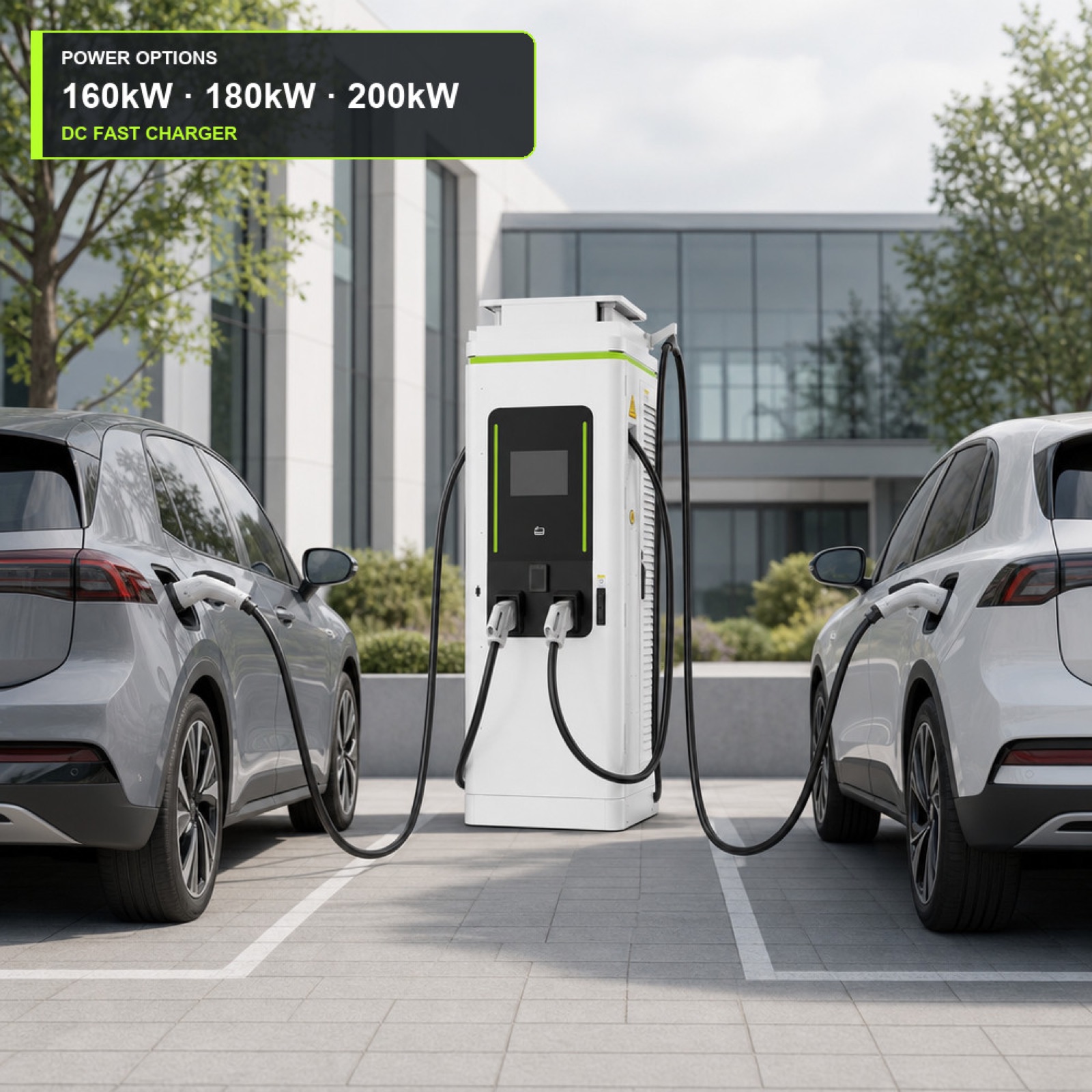
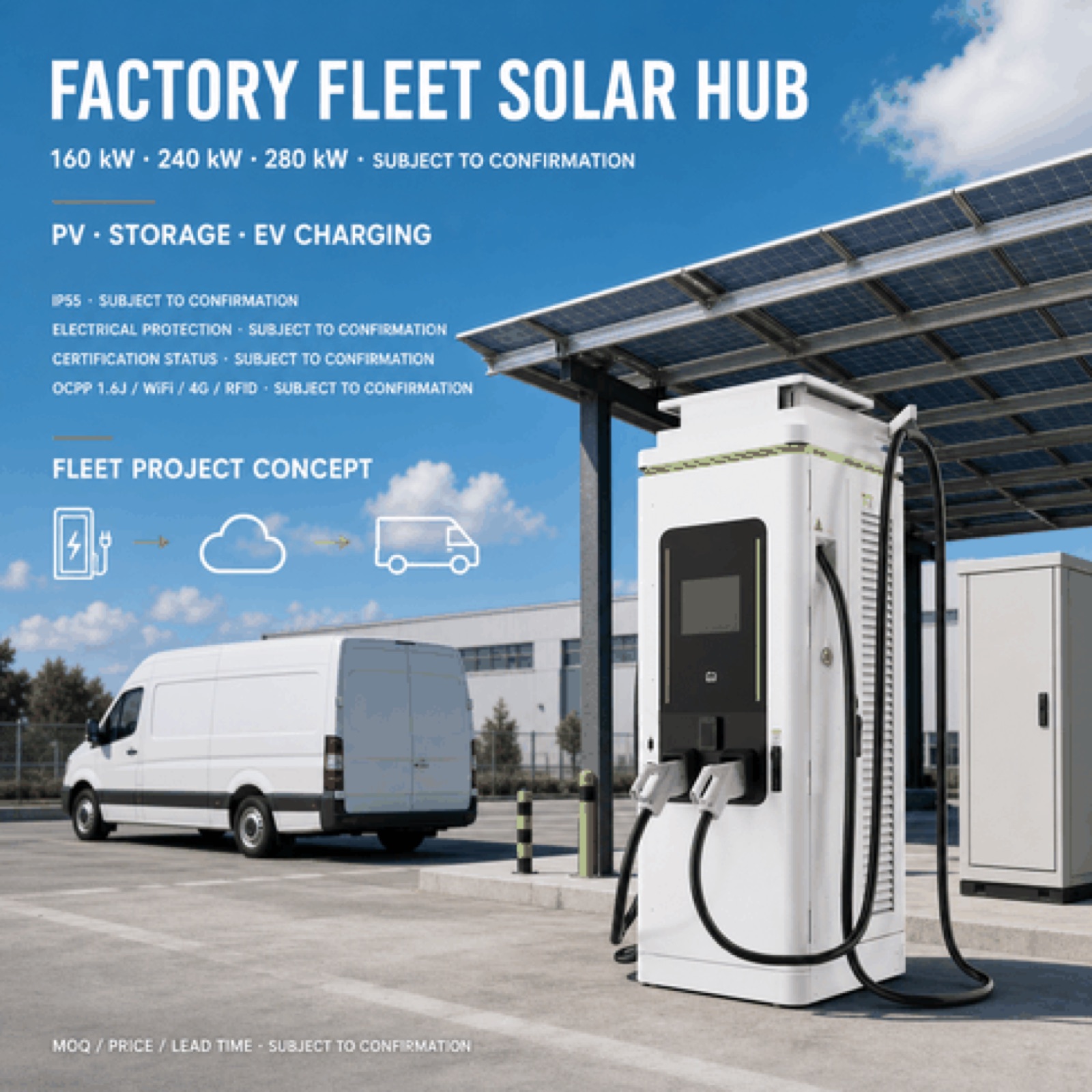
The Solar Fleet DC DC 100kW 160kW 210kW Remote Highway Charging System Smart Charging Fleet uses a DC-DC power stage to feed photovoltaic energy straight to the vehicle battery, skipping the usual DC-AC-DC conversion for higher efficiency and more usable range per kilowatt of solar. Available in 100kW, 160kW and 210kW output, this floor-standing solar charger pairs clean energy with fast DC charging. It suits solar car parks, highways and commercial sites that want to charge electric vehicles directly from rooftop or ground-mount PV while cutting grid demand, electricity bills and the carbon footprint of their charging operations, delivering dependable green fast charging at a lower long-term running cost.
Grid-Tie, Off-Grid and Hybrid Operation
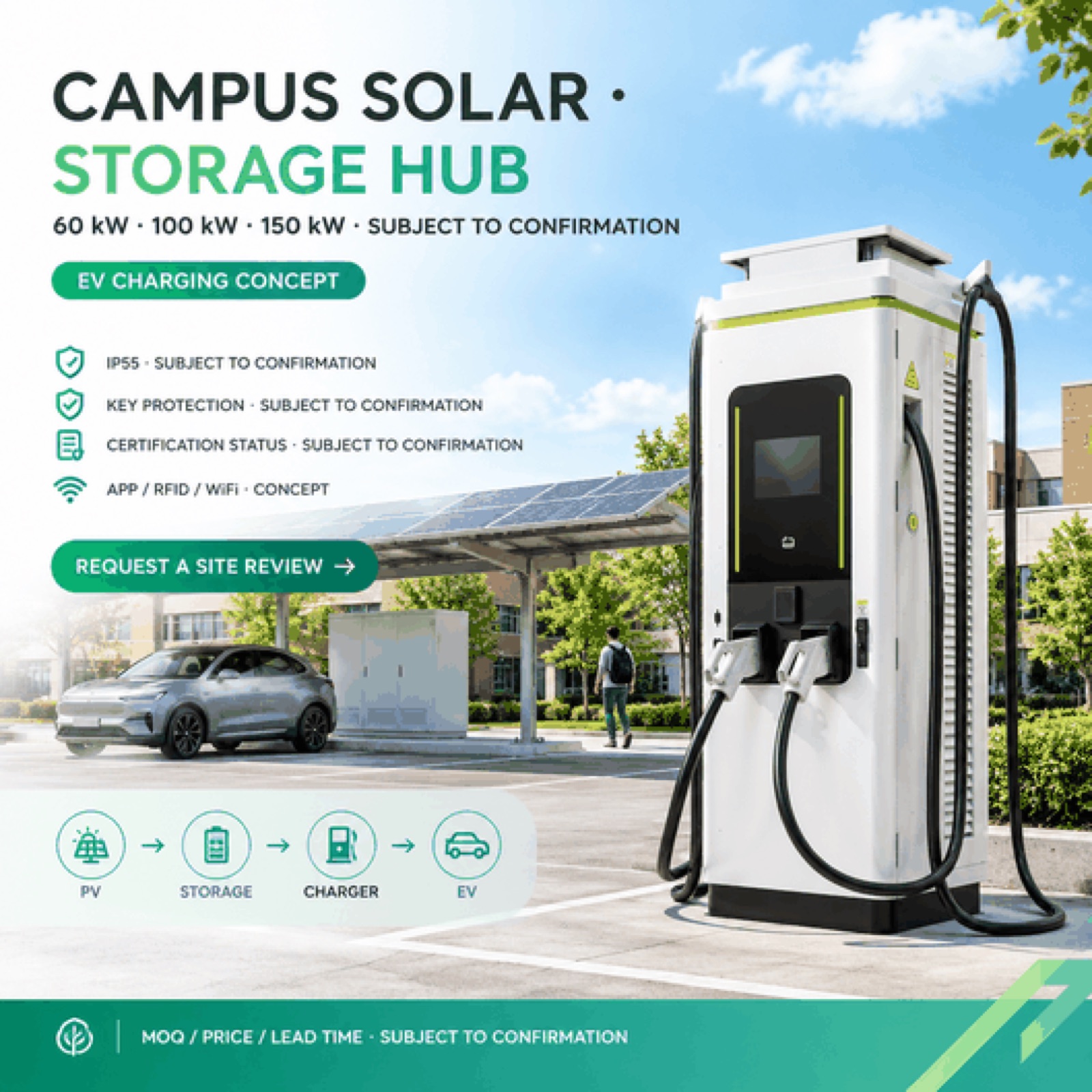
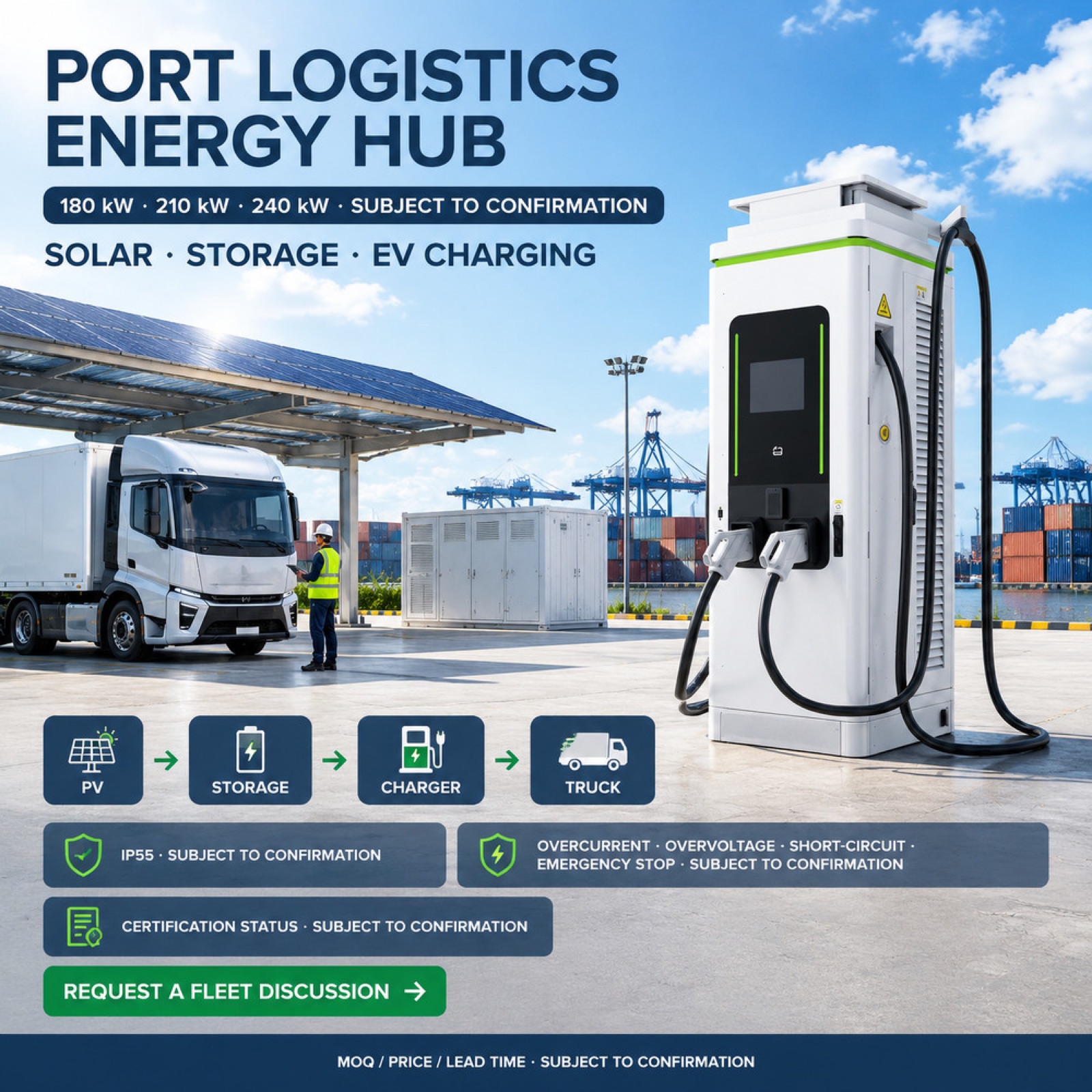
This 100kW-210kW solar DC-DC charging station supports on-grid, off-grid and hybrid modes, so operators balance solar, battery storage and grid power to suit each site and tariff. Grid-tie operation exports or imports energy as needed, while off-grid mode keeps charging available at remote or weak-grid locations. Intelligent energy management prioritises clean PV energy, uses battery buffering to shave peak demand, and falls back to the grid only when required, maximising solar self-consumption and protecting operators from costly grid upgrades at busy commercial charging sites. Flexible configuration adapts the station to almost any commercial charging site. Operators gain a dependable, high-utilisation DC fast charging asset for every bay.
Smart, Networked and Payment-Ready DC Charger
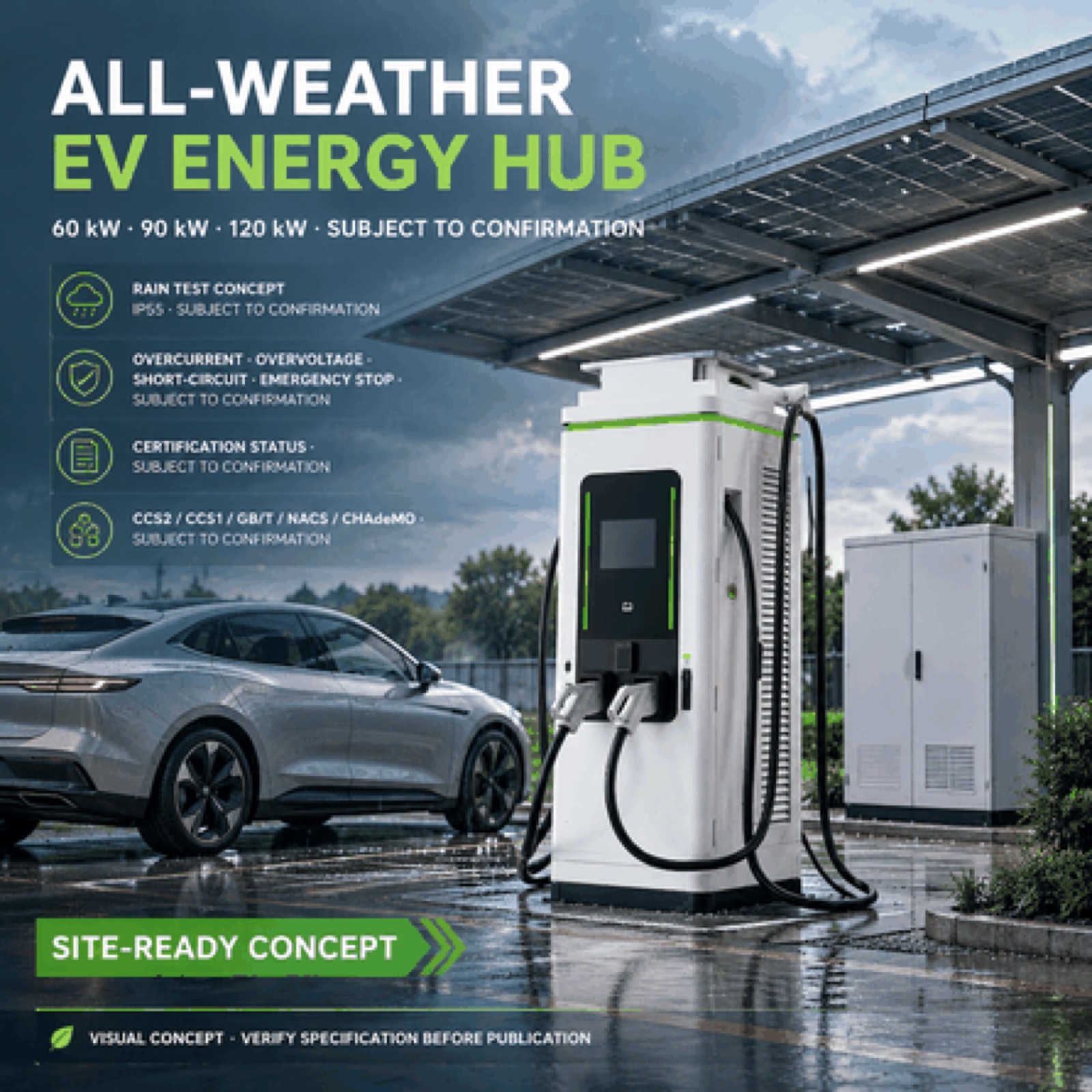
Running OCPP 1.6J with an upgrade path to 2.0.1, the solar floor-standing DC station connects to third-party charging platforms, RFID cards, credit-card terminals and mobile-app payment. 4G, Ethernet and WiFi networking enable remote monitoring, firmware updates, dynamic load balancing and scheduled charging, so operators manage authorization, metering, solar yield and billing from a single cloud dashboard. CCS2 is standard, with CCS1, GB/T and CHAdeMO available by market in single or dual-gun layouts, turning the 100kW-210kW PV charger into a fully managed, revenue-generating green charging asset. The result is higher uptime and a stronger return on each charging point.
Safety, Compliance and Long Service Life
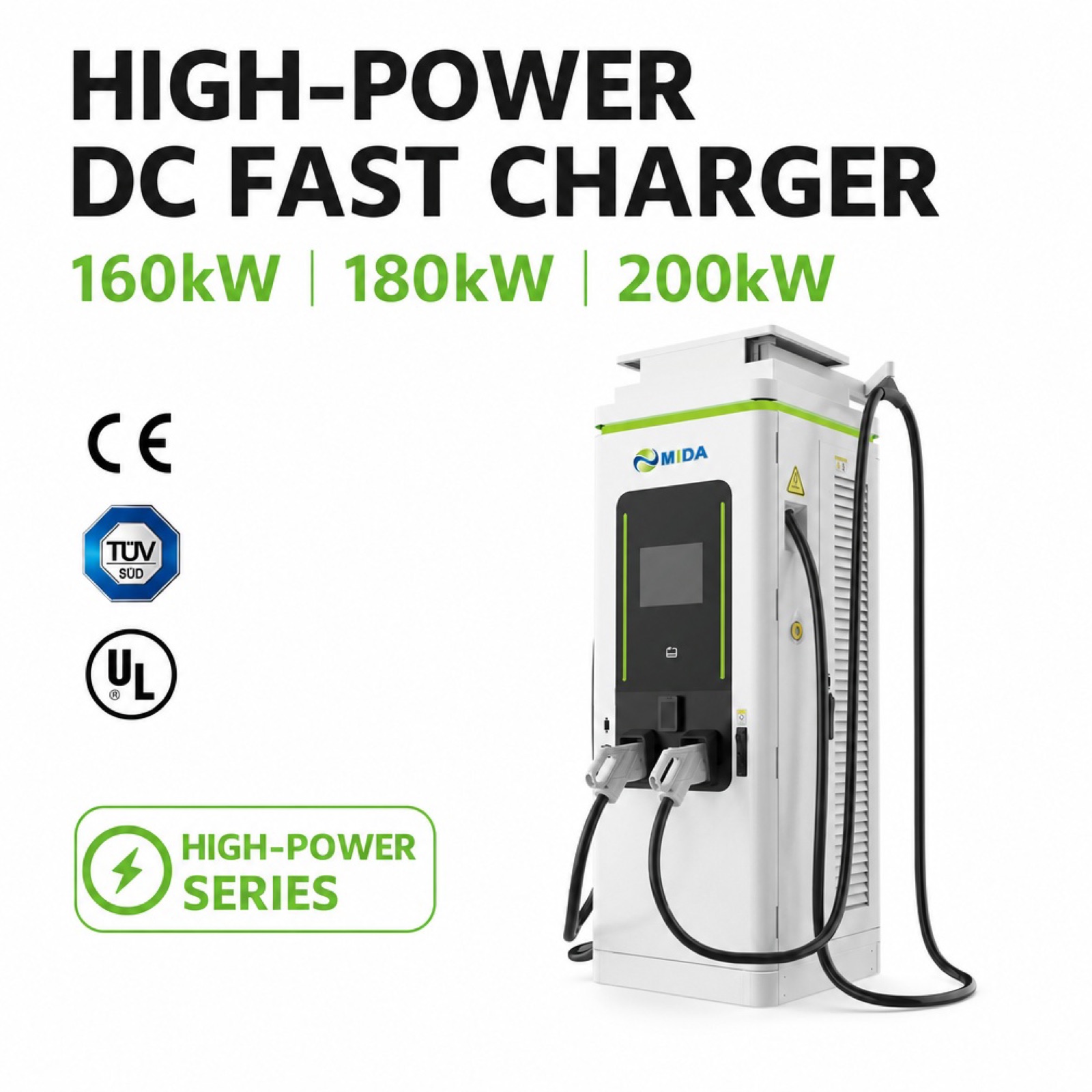
Safety and compliance are engineered into every 100kW-210kW solar DC-DC fast charger. CE and TUV certified, with PTB/MID metering optional, the station meets strict international standards for commercial and renewable EV charging. A modular power architecture lets technicians service individual modules without taking the whole unit offline, keeping availability high across large solar deployments. Remote cloud diagnostics flag faults early, robust electrical and surge protection extend outdoor service life, and MIDA's decade of EV charging and energy-storage experience ensures dependable long-term performance at demanding solar charging sites. A modular architecture simplifies service and keeps long-term availability high.
Fast Deployment at Solar and Remote Sites
The 100kW-210kW solar floor-standing DC charger uses a compact footprint and a standardized civil interface, so operators roll out consistent hardware across solar car parks, highway corridors, resorts and microgrid sites with minimal engineering. Clear drawings, foundation templates and remote commissioning shorten installation and reduce project risk. Because every unit shares the same connectors, PV interface and management platform, operators scale from a single charging point to a multi-site solar network without retraining technicians, simplifying spare-parts logistics and keeping the whole green charging operation efficient and easy to support. This proven floor-standing design keeps total cost of ownership low for operators.
High Efficiency and Lower Operating Cost
With DC-DC conversion efficiency above 96%, the 100kW-210kW solar charging station turns more photovoltaic energy into usable charge, cutting waste and running cost over the station's life. Charging directly from solar and battery reduces grid electricity purchases and demand charges, while intelligent thermal management extends component life. Off-grid and hybrid operation avoids expensive grid connections at remote sites, and energy management maximises solar self-consumption. For operators, the result is a markedly lower total cost of ownership and a faster payback on every floor-standing solar DC fast charging bay deployed. The result is higher uptime and a stronger return on each charging point.
Product Specifications
| Parameter | Specification |
|---|---|
| Rated Power | 100kW / 160kW / 210kW (selectable) |
| Output Voltage | 150V – 1000V DC |
| Input Source | Solar PV array + battery (DC-DC), grid-tie optional |
| Operating Mode | On-grid (grid-tie) / off-grid / hybrid |
| Connector | CCS2 (CCS1 / GB/T / CHAdeMO optional), single or dual gun |
| Efficiency | > 96% (DC-DC) |
| Communication | OCPP 1.6J / 2.0.1, 4G / Ethernet / WiFi |
| Protection Rating | IP54 / IP55 |
| Operating Temperature | -30 C to +55 C |
| Certification | CE / TUV |
Application Scenarios
This 100kW-210kW solar PV DC-DC floor-standing charging station is ideal for solar car parks, highway corridors, shopping malls, fleet depots and remote or microgrid sites seeking lower grid demand. By charging electric vehicles directly from photovoltaic and battery power, operators cut electricity costs and carbon emissions while delivering reliable fast charging, even where grid capacity is limited.
After-Sales Advantages
MIDA provides a comprehensive warranty, global spare-parts support, remote cloud diagnostics and full technical documentation for every floor-standing DC charging station. As a manufacturer with over a decade of EV charging and energy-storage experience, MIDA supports OEM/ODM customization of branding, power configuration, connectors and regional certification.
Related MIDA Charging Solutions
Explore related high-power EV charging equipment from MIDA: 80kW 200kW 300kW Grid Tie Solar DC Advertising, MIDA 22kW 44kW Dual Socket Floor Mounted Ac, MIDA 160kW 300kW Advertising DC Fast Charger Floor, MIDA 90kW 160kW Floor Standing DC Fast Charging, Commercial 22kW 44kW Dual Socket Pedestal Ac EV, 40kW DC Charging Module For DC EV Charging, MIDA 160kW 240kW Grid Tie DC DC Photovoltaic, MIDA 80kW 160kW Solar PV DC Floor Standing.
Frequently Asked Questions (FAQ)
What is a DC-DC solar PV EV charger and how is it different from a normal grid DC charger?
A DC-DC solar PV charger takes direct current from a photovoltaic array (and battery) and feeds it straight to the electric-vehicle battery through a DC-DC power stage. It skips the usual DC-to-AC-to-DC conversion of a grid charger, so less energy is lost and more solar power reaches the car. A standard grid DC charger instead rectifies AC from the utility. The MIDA solar DC-DC range keeps CCS2 fast charging while cutting grid demand, electricity cost and carbon emissions at solar car parks, highways and commercial sites.
What is the difference between on-grid (grid-tie) and off-grid solar DC charging?
On-grid (grid-tie) operation runs the solar DC-DC charger alongside the utility: PV and battery supply most of the energy, and the grid tops up or absorbs surplus as needed. Off-grid operation runs the station entirely from solar and battery storage, so EV charging stays available at remote or weak-grid sites with no utility connection. MIDA stations also support a hybrid mode that prioritises clean PV energy, uses battery buffering to shave peak demand, and falls back to the grid only when required, maximising solar self-consumption.
Which power levels are available across the solar DC-DC charger range (60kW to 480kW and above)?
MIDA builds solar DC-DC floor-standing chargers in a wide power ladder – 60kW, 80kW, 90kW, 100kW, 120kW, 150kW, 160kW, 180kW, 200kW, 210kW, 240kW, 280kW, 300kW, 320kW, 350kW, 360kW, 400kW, 420kW and 480kW, with higher outputs on request. Each title lists the selectable power classes so operators can match PV array size, battery capacity and traffic. Dynamic power sharing splits output between connectors so busy solar charging hubs stay productive across every bay.
How long does a 60kW, 120kW, 240kW or 360kW solar DC charger take to charge an EV?
Charging time depends on power class, battery size and state of charge. As a guide, a 60kW station adds roughly 100km of range in 15-20 minutes, a 120kW unit in about 8-12 minutes, a 240kW charger in 4-6 minutes and a 360kW charger in only 3-5 minutes for vehicles that accept high power. With sufficient solar yield and battery buffering, the DC-DC architecture sustains these high-power sessions while drawing far less energy from the grid.
What connectors, protocols and smart features do the solar DC-DC stations support?
CCS2 is standard, with CCS1, GB/T, CHAdeMO and NACS available by market in single or dual-gun layouts. The stations run OCPP 1.6J with an upgrade path to 2.0.1, plus 4G, Ethernet and WiFi networking for remote monitoring, firmware updates, dynamic load balancing and scheduled charging. Operators manage authorisation, metering, solar yield and billing from one cloud dashboard, and support RFID cards, credit-card terminals and mobile-app payment, turning each solar charger into a fully managed, revenue-generating asset.
Are the 60kW-480kW solar DC chargers suitable for outdoor and off-grid installation?
Yes. Every floor-standing solar DC-DC station carries an IP54/IP55 enclosure, IK10 impact protection and a -30C to +55C operating range, so it works reliably in open solar car parks, highway corridors, resorts and remote microgrid sites. Intelligent forced-air or liquid cooling keeps the power modules stable during continuous high-power sessions, while comprehensive over-voltage, over-current, over-temperature, leakage and surge protection safeguard both the vehicle and the station in demanding outdoor and off-grid conditions.
Can the solar DC-DC charger power two electric vehicles at the same time?
Yes. Dual-gun models charge two vehicles simultaneously and share the available PV, battery and grid power intelligently between the two connectors. When one vehicle finishes or needs less power, the station automatically shifts more output to the other gun, keeping total solar energy fully used. This makes dual-gun solar DC-DC chargers ideal for high-traffic sites such as fleet depots, shopping malls and highway service areas that need maximum charging throughput from limited grid capacity.
Related searches: Solar Fleet DC DC 100kW 160kW, 100kW 160kW 210kW solar PV DC charging station, grid tie DC-DC EV charger, photovoltaic floor standing fast charger, off grid solar DC charger manufacturer.


Leave Your Message:
Related Products
-
Liquid Cooled Ultra 360kw Charging Station RFID...
-

High Performance 60kw 80kw Pillar DC Fast Charg...
-

60kW 90kW 160kW Photovoltaic DC DC EV Fast Char...
-

Integrated Solar BESS Charging Station 120kWh 5...
-

CHAdeMO CCS2 DC 240kW 100kW Fast Charger Resili...
-

Modular Split DC Fast Charging Station 360kW 60...
