 Portable EV Charger
 Home EV Wallbox
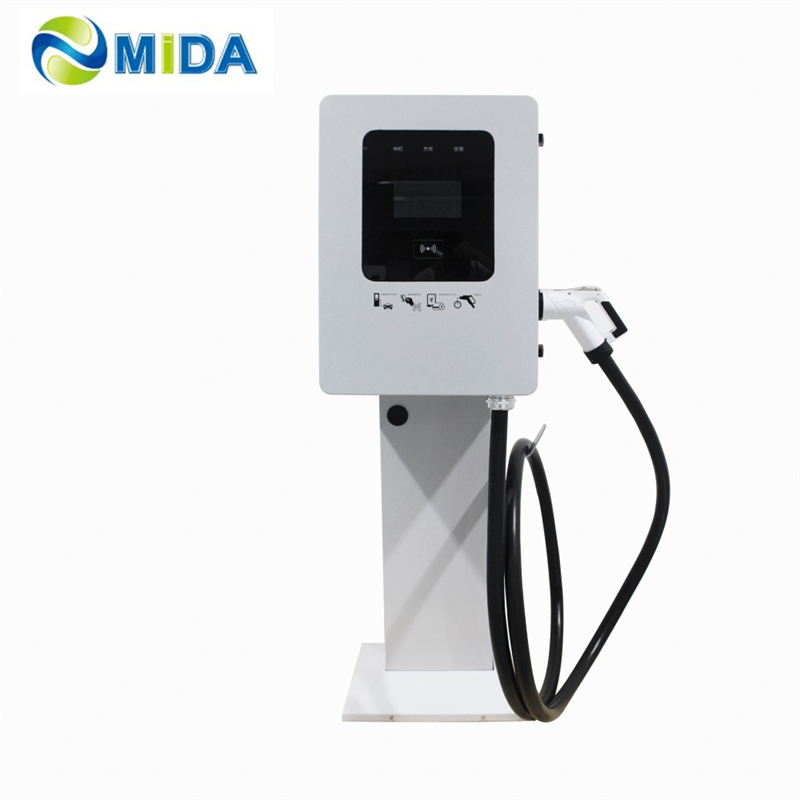
 DC Charger Station
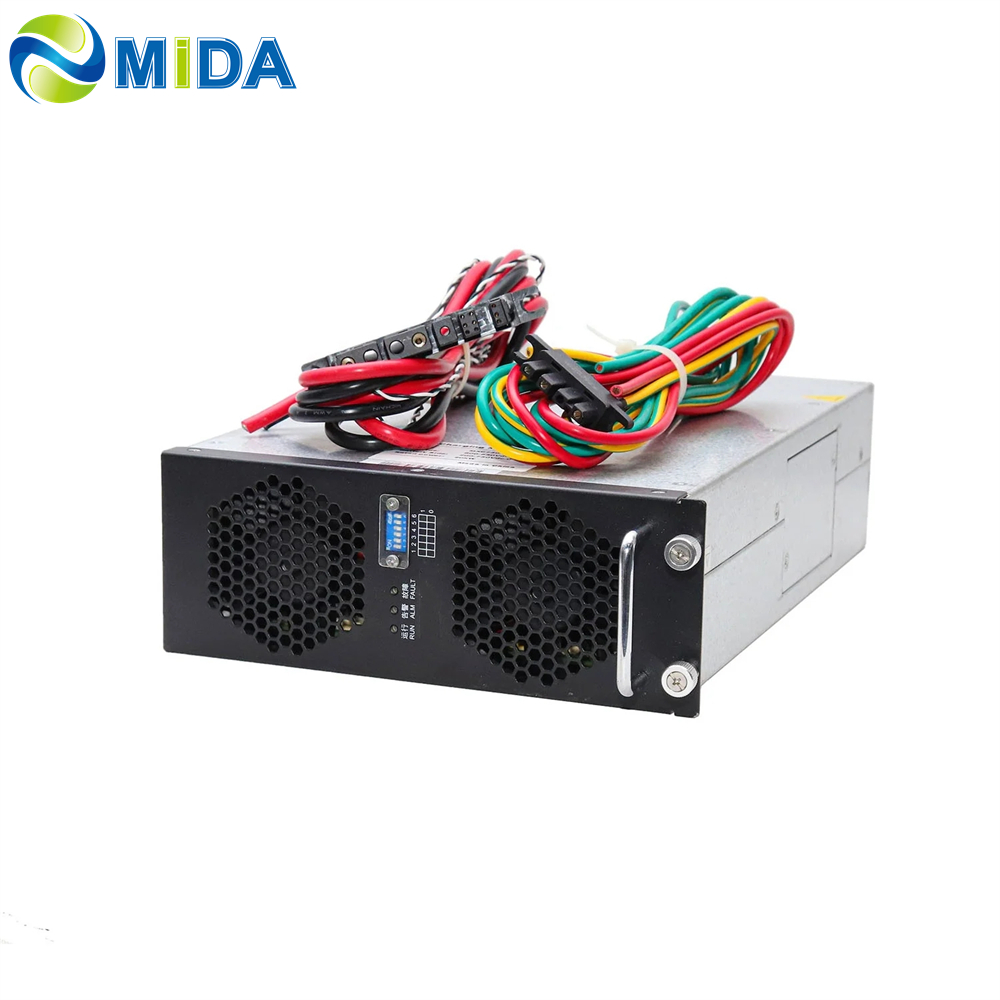
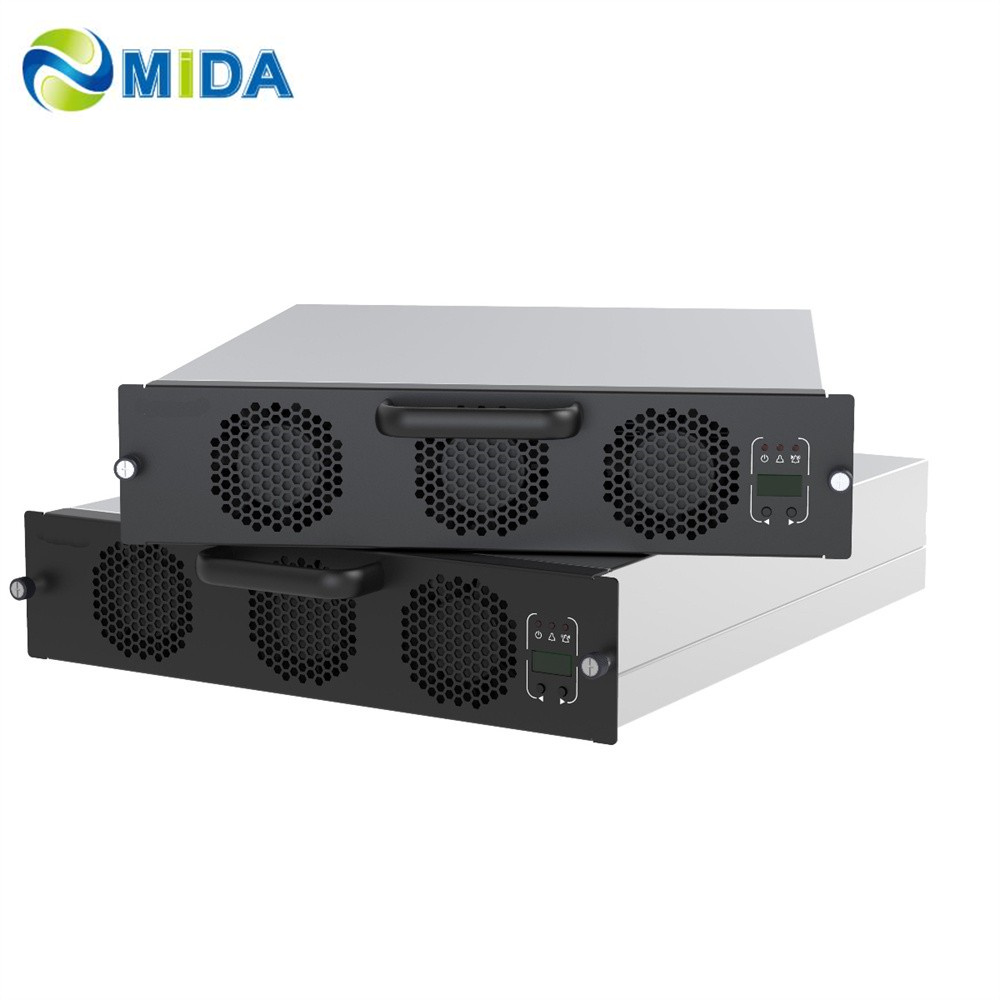
 EV Charging Module
 DC Charging Connector
 EV Accessories


EVCC EV Communication Controller CCS1 CCS2 PLC Electric Vehicle Charging Controller
Electric Vehicle Charging Controller (EVCC)
GQEVPLC-V3.3 CCS Combo1 & CCS Combo2
GQEVPLC-V3.4 CCS Combo 1 & CCS Combo 2
GQEVPLC-V4.1 CCS Type 1 & CCS Type 2
GQEVPLC-V6.1 CCS 1 & CCS 2
GQEVPLC-V6.2 CCS1 & CCS2
GQVCCU-V1.03 CHAdeMO
What is the function of the Electric Vehicle Communication Controller (EVCC)?
The Electric Vehicle Communication Controller (EVCC) ensures secure and compliant communication between electric vehicles and charging stations. It supports ISO 15118-2, ISO 15118-20, and DIN 70121 PLC standards, as well as all mainstream charging protocols, including CCS, GB/T, CHAdeMO, MWCS, NACS, and ChaoJi.
What is an electric vehicle communication controller EVCC ?
The Electric Vehicle Communication Controller (EVCC) is a device installed in rechargeable electric vehicles for communication with charging stations. DC-charging electric vehicles require communication with charging stations through the EVCC.
Overview of the EVCC Fast Charging Controller
The electric vehicle (EV) industry is rapidly advancing, with one of the key technologies driving its growth being the introduction of Combined Charging System (CCS) charging controllers. These controllers are widely popular in the EV industry, revolutionizing the way electric vehicles are charged. In this blog post, we will explore the reasons behind the popularity of CCS charging controllers in the EV sector and discuss their importance and significance.
Introduce the EVCC Controller
MIDA is presenting the latest generation Controller for charging Electric Vehicles to its extensive Electrification Portfolio. The EVCC (Electric Vehicle Communication Controller) is a solution that supports both CCS1 and CCS2 inlets and, thanks to Plug and Charge (PnC) capability, vehicles can be authenticated simply by plugging in the inlet, thus starting the charging process.
The EVCC is a standard ECU for 24V environments. It realizes electrical charging according to DIN SPEC 70121 and ISO 15118 for power line communication (PLC) with the infrastructure. Sensata’s EVCC includes an integrated flash bootloader and a modern MICROSAR stack with all relevant application modules.
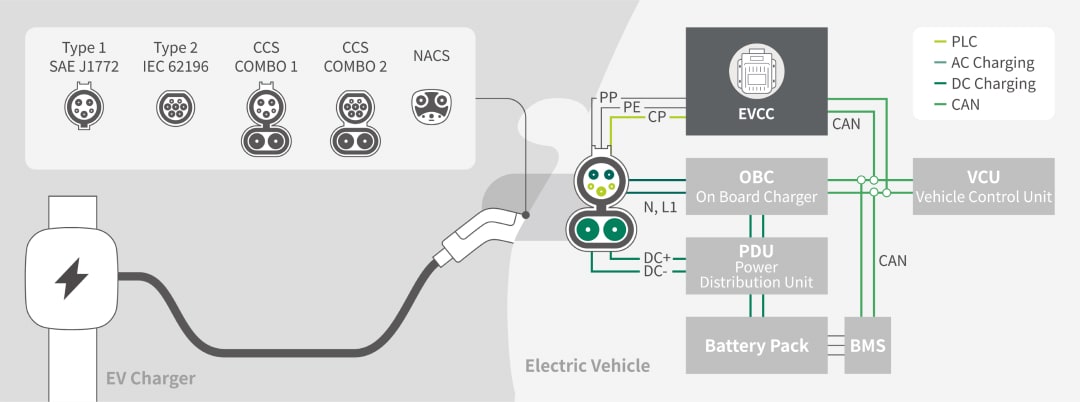
EVCC (Electric Vehicle Communication Controller) serves as a communication modem for EVs, facilitating the exchange of communication messages with EV chargers during charging. The EVCC is designed to support reliable stand-alone operation, capable of functioning with minimal control by other controllers (VCU, BMS, etc.), independently processing most communication protocols required for EV charging in accordance with DIN SPEC 70121 and ISO 15118.
The Electric Vehicle Communication Controller (EVCC) is a comprehensive solution supporting CCS1 and CCS2 inlets, Autosar-embedded software, and Plug and Charge (PnC). This cutting-edge EVCC technology ensures seamless integration and communication between electric vehicles and charging stations, enhancing efficiency and reliability for all your EV charging needs.
Fast Charging Controller Overview
The electric vehicle (EV) industry is rapidly evolving, and one of the key advancements driving its growth is the introduction of Combined Charging System (CCS) charging controllers. These controllers have gained significant popularity in the EV industry, revolutionizing the way electric vehicles are charged. In this blog post, we will explore why CCS charging controllers are trending in the EV industry and discuss their importance and significance.
EVCC CCS1 CCS2 GBT CHAdeMO Electric Vehicle Charging Controller
Key Features
HomePlug Green PHY (HPGP) 1.1
SLAC (Signal Level Attenuation
Characterization) Transmissions
DIN SPEC 70121
ISO 15118-2 AC/DC EIM/PnC
ISO 15118-20 AC/DC EIM/PnC
Bidirectional Power Transfer Communication Support (V2G)
VAS (Value Added Service) in accordance with ISO 15118, and VDV261
Pantograph & ACD (Automatic Connection Devices)
CAN 2.0B, J1939, UDS supported