
 Portable EV Charger
 Home EV Wallbox
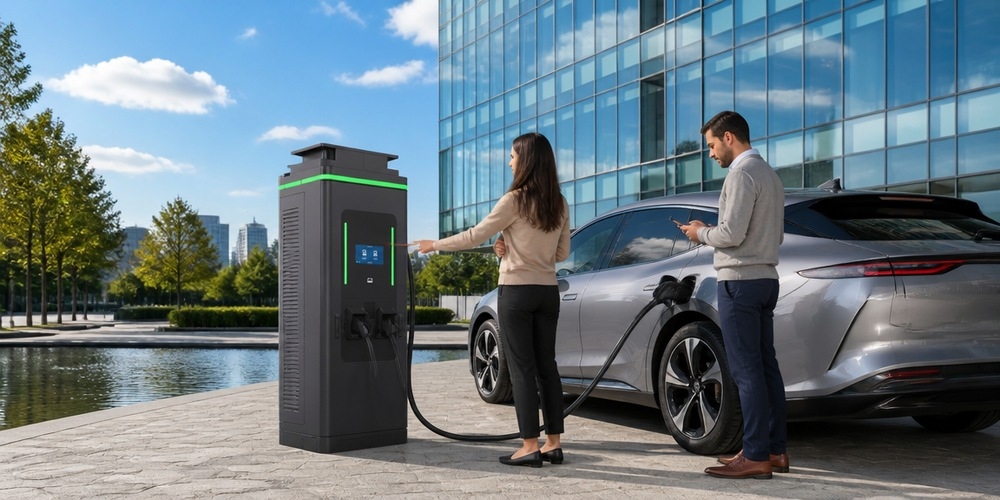
 DC Charger Station
 BESS Charging Station
 V2G V2H V2V V2L
 EV Charging Module
 DC Charging Connector
 EV Accessories
Empowering the Global Energy Shift: MIDA Power Unveils Revolutionary Smart EV Charging Ecosystem and Integrated Energy Storage Technologies at Italy’s Energy Transition Expo to Accelerate the Decarbonization of Future European Smart Cities
Chapter 1: The Rimini Convergence – A New Era for Energy Transition
The Energy Transition Expo, held in the historic and vibrant city of Rimini, Italy, has long been established as one of the most significant gatherings for energy professionals, policymakers, and innovators across the globe. In its latest edition, the expo took on an even more critical role, serving as a beacon of hope and a practical workshop for a world grappling with the dual challenges of energy security and the escalating climate crisis. As attendees walked through the expansive halls of the Rimini Expo Centre, the air was thick with the scent of innovation and the hum of high-power machinery. It was here that MIDA Power, a leader in the electric vehicle (EV) charging and energy storage sector, chose to make a statement that would resonate throughout the industry.
Rimini, with its blend of ancient Roman heritage and modern industrial capability, provided a symbolic backdrop. The city represents the transition from the old to the new—a theme that mirrored the very essence of the expo. For MIDA Power, this event was not just about displaying hardware; it was about presenting a holistic vision for the future of human mobility and energy consumption. The company’s booth was a focal point of the event, drawing in crowds of engineers, municipal planners, and investors, all eager to see how the next generation of charging infrastructure would look and behave.
The significance of the Energy Transition Expo lies in its ability to bridge the gap between high-level policy discussions and the “boots on the ground” implementation of technology. While ministers discussed carbon tax frameworks and renewable energy subsidies in the conference rooms, companies like MIDA Power were on the floor, demonstrating the physical components that would make those policies a reality. The 2026 edition of the expo was particularly notable for its focus on the “sector coupling” of transport and energy, a concept that MIDA Power has championed for years. By integrating EV charging directly with energy storage and smart grid management, MIDA Power showed that the car of the future is not just a vehicle, but a mobile battery that can stabilize the entire energy system.
As the expo progressed, it became clear that the “Italian Energy Transition” is not just an Italian story, but a European and global one. Italy’s unique geography—with its sunny south and industrial north—makes it a perfect laboratory for testing the integration of solar power with heavy-duty EV infrastructure. MIDA Power’s presence in Rimini underscored the company’s commitment to this laboratory, showcasing products that were specifically designed to handle the high temperatures of the Mediterranean sun while meeting the rigorous efficiency standards demanded by the northern European markets. The expo served as a catalyst, sparking hundreds of conversations that would eventually lead to the deployment of thousands of new charging points across the continent.
Chapter 2: Decoding the European Regulatory Landscape – The Green Deal and AFIR
To truly appreciate the engineering marvels showcased by MIDA Power at the Rimini Expo, one must delve into the complex web of regulations that govern the European energy and transport sectors. The European Union has set some of the most ambitious climate targets in the world, and these targets are not merely aspirational; they are backed by a robust legal framework that mandates action from both member states and private industry. At the heart of this framework is the European Green Deal, a comprehensive roadmap designed to transform the EU into a modern, resource-efficient, and competitive economy where there are no net emissions of greenhouse gases by 2050.
Within the Green Deal, the “Fit for 55″ package is a set of proposals to revise and update EU legislation and to put in place new initiatives with the aim of ensuring that EU policies are in line with the climate goals agreed by the Council and the European Parliament. For the EV industry, the most critical component of this package is the Alternative Fuels Infrastructure Regulation (AFIR). Unlike a Directive, which requires transposition into national law, a Regulation like AFIR is directly applicable across all EU member states, ensuring a harmonized approach to infrastructure deployment.
AFIR sets out mandatory targets for the deployment of recharging and refueling infrastructure. For example, by 2025, member states must ensure that fast-charging stations (with at least 150kW of power) are installed every 60 kilometers along the Trans-European Transport Network (TEN-T) core network. By 2030, these requirements become even more stringent. Furthermore, AFIR addresses the user experience by mandating that all public charging stations must allow for ad-hoc payment via common payment instruments like credit cards or contactless devices, without the need for a subscription or a specific app.
MIDA Power’s product development cycle is intrinsically linked to these regulations. When MIDA Power engineers design a new DC Fast Charger, they aren’t just thinking about power delivery; they are thinking about compliance with AFIR’s transparency and accessibility requirements. The chargers showcased in Rimini featured integrated payment terminals that meet the highest security standards, and user interfaces that provide real-time information on pricing, charging speed, and session status, as required by the law.
Moreover, the Green Deal emphasizes the concept of the “Circular Economy.” MIDA Power has embraced this by implementing a “Design for Disassembly” philosophy in its manufacturing process. This means that at the end of a charger’s life—which MIDA Power aims to extend to 15 years or more through high-quality component selection—the unit can be easily broken down, and its materials recycled. This alignment with the broader goals of the Green Deal makes MIDA Power a preferred partner for European municipalities and energy companies that are increasingly being judged on their ESG (Environmental, Social, and Governance) performance.
Chapter 3: MIDA Power’s Strategic Philosophy – Intelligence, Connectivity, and Sustainability
The philosophy behind MIDA Power is one of radical integration. In the early days of the EV industry, a charger was often viewed as a “dumb” electrical appliance—essentially a glorified extension cord. MIDA Power, however, recognized early on that for the EV transition to be successful, the charging station must be an intelligent, connected, and highly sustainable node within a larger digital ecosystem. This philosophy is built on three core pillars that were prominently featured in every demonstration at the Energy Transition Expo.
The Pillar of Intelligence
Intelligence, in the MIDA Power context, starts at the edge. Every charger is equipped with a high-performance industrial controller that runs a proprietary operating system. This allows for sophisticated local decision-making. For instance, MIDA Power’s “Dynamic Load Management” (DLM) technology can sense the total power draw of a facility and adjust the output of the chargers in real-time to prevent the main circuit breaker from tripping. This is particularly crucial for commercial sites and multi-unit dwellings where the grid connection may be limited. By using intelligence to manage power rather than expensive grid upgrades, MIDA Power provides a massive economic advantage to its customers.
The Pillar of Connectivity
Connectivity is the lifeblood of modern infrastructure. MIDA Power chargers are designed to be “always on” and “always connected.” Utilizing a variety of communication protocols—including Wi-Fi, Ethernet, and 4G/5G cellular—the chargers stay in constant contact with the MIDA Power Cloud Management Platform. This connectivity enables a range of high-value services. Over-the-air (OTA) updates allow MIDA Power to push new features, security patches, and protocol updates to its entire global fleet simultaneously. If a new version of the OCPP (Open Charge Point Protocol) is released, MIDA Power chargers can be updated without a technician ever setting foot on site. This ensures that the hardware remains future-proof for a decade or more.
The Pillar of Sustainability
Sustainability is the ultimate goal, and it informs every decision MIDA Power makes, from the supply chain to the end-of-life process. At the Rimini Expo, MIDA Power highlighted its use of low-carbon materials and its commitment to reducing the energy intensity of its manufacturing. But the sustainability story goes deeper than the hardware. By enabling “Smart Charging,” MIDA Power allows users to synchronize their charging sessions with the availability of renewable energy on the grid. When the wind is blowing and the sun is shining, electricity is often at its cleanest and cheapest. MIDA Power chargers can automatically ramp up power during these times, helping to balance the grid and reduce the overall carbon footprint of every mile driven.
This philosophy of integration was best exemplified at the expo by a demonstration of the MIDA Power “Energy Hub.” This system ties together EV charging, solar PV inverters, and battery storage into a single, unified interface. By centralizing the intelligence and connectivity, MIDA Power provides a “plug-and-play” solution for the energy transition, removing the complexity that has traditionally acted as a barrier to entry for businesses and homeowners.
Chapter 4: Technical Deep Dive – The Full Spectrum Power Coverage (L2 to DCFC)
The sheer technical diversity of the MIDA Power portfolio was perhaps its most impressive feature at the Energy Transition Expo. The company understands that a “one size fits all” approach is doomed to fail in the complex world of electric mobility. A residential user needs a simple, reliable, and aesthetically pleasing unit, while a highway operator needs a high-power beast that can handle 24/7 operation in the most demanding conditions. MIDA Power meets both ends of the spectrum and everything in between.
Level 2 AC Charging: Excellence in Every Detail
For residential, workplace, and “destination” charging (such as hotels and shopping malls), MIDA Power offers its flagship AC series. These chargers are typically available in 7.4kW (single-phase) and 11kW/22kW (three-phase) configurations. But the beauty of the MIDA Power AC charger lies in the details. The internal architecture uses high-grade contactors rated for over 50,000 switching cycles, far exceeding the industry standard. The units feature built-in Type B RCD (Residual Current Device) functionality, providing protection against both AC and DC leakage currents, which eliminates the need for expensive external protection devices.
At the expo, MIDA Power showed off its “Smart Home” integration, where the AC charger communicates with the home’s smart meter via the HEMS (Home Energy Management System). This allows for “Solar Peak Charging,” where the charger uses only the excess energy generated by the rooftop solar panels, meaning the car is literally running on sunshine.
DC Fast Charging (DCFC): Engineering for the Fast Lane
When the discussion turns to public and commercial infrastructure, the MIDA Power DC range takes center stage. In Rimini, the company unveiled its latest 360kW “Ultra-Fast” charger. This unit is built on a modular architecture, utilizing 30kW or 40kW power modules. This modularity is key to reliability; if one module fails, the charger can continue to operate at a slightly reduced power level, ensuring that the driver is never left stranded.
The thermal management of these high-power units is a feat of engineering. As power levels increase, so does heat generation. MIDA Power utilizes a patented air-cooling system for the power modules and a sophisticated liquid-cooling system for the charging cables. The liquid-cooled cables are significantly thinner and lighter than traditional air-cooled cables of the same rating, making them much easier for the average driver to handle. The charger also features an advanced noise-reduction system, ensuring that it can be installed in urban areas without disturbing residents.
Furthermore, MIDA Power DC chargers are designed for multi-vehicle charging. A single 360kW unit can dynamically distribute its power between two or even four vehicles simultaneously. If one car is capable of taking the full 360kW, it gets it. If two cars arrive, the system splits the power based on each car’s state of charge and maximum intake capability. This “Dynamic Power Allocation” maximizes the utilization of the hardware and the revenue for the charge point operator.
Chapter 5: The Intersection of Smart Connectivity and User Experience (UX)
In the early years of the EV revolution, the “user experience” was often an afterthought. Chargers were difficult to find, payment systems were unreliable, and the interfaces were confusing. MIDA Power has made it its mission to change this, treating the charging session as a premium digital experience. This focus on UX was a major theme at the Energy Transition Expo, where MIDA Power demonstrated how its hardware and software work in harmony to make charging as easy as using a smartphone.
The Physical Interface
It starts with the hardware. MIDA Power chargers are equipped with high-brightness, sunlight-readable touchscreens. These screens provide clear, step-by-step instructions in multiple languages. During the charging session, they display a wealth of data: current power level, total energy delivered, elapsed time, and even a real-time estimate of when the battery will reach 80% or 100%. For the vision-impaired, MIDA Power has incorporated voice prompts and tactile buttons, ensuring that its technology is inclusive.
The Seamless Payment Revolution
Payment has historically been one of the biggest pain points for EV drivers. MIDA Power’s response is the “Universal Payment Terminal.” This integrated module supports credit and debit cards, Apple Pay, Google Pay, and a variety of regional payment methods. But the real game-changer is the implementation of ISO 15118 “Plug & Charge.” With this technology, the driver simply plugs the cable into the car, and the car and charger communicate directly to authenticate the session and process the payment. No apps, no cards, no hassle. MIDA Power demonstrated this flawlessly in Rimini, using a fleet of modern EVs to show how the “invisible” transaction of the future works today.
The Mobile Ecosystem
For users who prefer a more digital-first approach, the MIDA Power Mobile App provides a comprehensive set of tools. Drivers can find available chargers, reserve a plug in advance, and monitor their charging session from the comfort of a nearby cafe. The app also provides detailed historical data, allowing users to track their energy consumption and carbon savings over time. For fleet managers, MIDA Power offers a specialized version of the app that integrates with telematics systems, allowing for efficient management of hundreds of vehicles across multiple sites.
Backend Intelligence for Operators
While the driver sees a simple interface, the Charge Point Operator (CPO) sees a powerful data engine. The MIDA Power Cloud Platform provides a “single pane of glass” view of the entire network. Operators can see the status of every charger in real-time, diagnose issues remotely, and adjust pricing dynamically based on time of day or occupancy levels. The platform’s analytics engine can even predict future maintenance needs, alerting the operator to a potential component failure before it actually happens. This shift from reactive to proactive maintenance is a key factor in MIDA Power’s industry-leading uptime statistics.
Chapter 6: Energy Storage Systems (ESS) – The Revolution of Decentralized Power
One of the most profound shifts in the energy landscape is the move from centralized power generation (large coal or nuclear plants) to decentralized generation (millions of rooftop solar panels and wind turbines). However, this decentralization brings a major challenge: volatility. The sun doesn’t always shine, and the wind doesn’t always blow. At the Energy Transition Expo, MIDA Power showcased its Energy Storage Systems (ESS) as the essential “missing link” that makes a decentralized, renewable energy system viable.
The Chemistry of the Future
MIDA Power’s ESS units utilize Lithium Iron Phosphate (LiFePO4) chemistry. While other lithium chemistries might offer slightly higher energy density, LiFePO4 is the clear winner for stationary storage due to its exceptional safety profile and long cycle life. MIDA Power’s battery modules are rated for over 6,000 cycles at 80% depth of discharge, meaning they can provide reliable service for 15 to 20 years. The lack of cobalt in LiFePO4 also makes it a more ethical and sustainable choice, aligning with MIDA Power’s corporate values.
The Brain: Battery Management Systems (BMS)
A battery is only as good as the system that manages it. MIDA Power’s proprietary BMS is a masterpiece of electronic engineering. It monitors every individual cell in the system, tracking voltage, temperature, and internal resistance. If a cell begins to deviate from the norm, the BMS can isolate it or adjust the charging profile to prevent damage. This level of granular control ensures that the battery operates at peak efficiency for its entire life and, more importantly, remains safe under all conditions.
The BMS also incorporates advanced algorithms for “State of Health” (SoH) and “State of Charge” (SoC) estimation. Traditional methods often rely on simple voltage measurements, which can be inaccurate for LiFePO4 batteries due to their flat discharge curves. MIDA Power uses a combination of Coulomb counting and Kalman filtering to provide a precision of ±1% in SoC estimation. This accuracy is critical for grid services like frequency regulation, where the system must respond with exact amounts of power in sub-second intervals.
Thermal Runaway Prevention and Fire Safety
Safety is the non-negotiable prerequisite for any large-scale energy storage deployment. MIDA Power ESS units are designed with multi-layered safety systems to prevent thermal runaway. This includes physical separators between modules, integrated aerosol fire suppression systems, and a “Gas Sensing” network that can detect the early venting of gases from a compromised cell before any smoke or heat is visible. The internal architecture is designed so that even if a single cell fails, the failure is contained and cannot propagate to adjacent modules. This “Passive Propagation Resistance” (PPR) is a key reason why MIDA Power systems are trusted for installation in high-density urban areas and sensitive industrial sites.
ESS in the EV Context: The “Buffer” Effect
The synergy between ESS and EV charging is where MIDA Power truly shines. A high-power DCFC site can put a massive strain on the local grid. If four cars all plug in at 350kW at the same time, the site needs 1.4 megawatts of power. In many locations, the local grid simply cannot provide this. The traditional solution is a multi-million dollar grid upgrade that can take years to complete.
MIDA Power offers a better way. By installing a large-scale ESS alongside the chargers, the site can “buffer” the power. The battery slowly charges from the grid (or from onsite solar) throughout the day. When a car plugs in, the power comes from both the grid and the battery. This allows for ultra-fast charging even on a relatively weak grid connection. At the expo, MIDA Power demonstrated a “Grid-Neutral” charging station that could deliver 150kW of charging power while drawing only 20kW from the grid, with the rest coming from an integrated ESS. This technology is a game-changer for rural areas and urban locations with constrained infrastructure.
Peak Shaving and Grid Services
Beyond EV charging, MIDA Power’s ESS provides significant economic value through “Peak Shaving.” For many businesses, a large portion of their electricity bill is based on their “peak demand”—the highest amount of power they used at any one time during the month. The ESS can detect when the building’s power usage is about to hit a new peak and automatically discharge to keep the demand below a certain threshold, saving the business thousands of dollars in demand charges. Furthermore, MIDA Power’s systems are “Grid-Interactive,” meaning they can participate in frequency regulation markets, helping the grid operator maintain stability and earning revenue for the system owner in the process.
Chapter 7: Engineering for Resilience – High Protection Ratings (IP/IK) and Durability
The world of EV charging is not a sterile laboratory; it is the real world, and the real world is messy. Chargers are subjected to driving rain, blowing sand, extreme heat, sub-zero temperatures, and, occasionally, vandalism. At the Energy Transition Expo, MIDA Power dedicated a significant portion of its display to the “Science of Durability,” explaining how they engineer their products to survive and thrive in the harshest environments on Earth.
Ingress Protection (IP): Keeping the Elements Out
MIDA Power chargers are built to an IP65 or higher standard. This means they are completely dust-tight and can withstand powerful water jets from any direction. To achieve this, MIDA Power uses high-precision silicone gaskets and specialized cable glands that maintain their seal even after years of thermal expansion and contraction. During the Rimini Expo, MIDA Power had a live demonstration where a charger was subjected to a continuous high-pressure water spray while simultaneously charging an EV, proving that weather is no obstacle for their technology.
Impact Resistance (IK): Defending Against the Physical
Public infrastructure is often a target for physical abuse. Whether it’s an accidental bump from a car or a deliberate act of vandalism, a charger needs to be tough. MIDA Power’s enclosures are rated to IK10, the highest level of impact resistance. This is achieved through the use of high-strength materials like 2.5mm thick galvanized steel or reinforced polycarbonate. The screens are protected by chemically strengthened glass that can withstand the impact of a 5kg steel ball dropped from a height of 40cm. This ruggedness ensures that a MIDA Power charger remains operational even in the most challenging urban environments.
Thermal Management: The Silent Guardian
Heat is the enemy of electronics. In the blazing sun of an Italian summer, the internal temperature of a charger can easily exceed 70°C (158°F). Without proper cooling, the components would fail prematurely. MIDA Power uses a multi-stage cooling strategy. At the lower power levels, passive heat sinks and clever airflow design are used to minimize noise and maintenance. At higher power levels, intelligent, variable-speed fans are employed, which only run when needed. For ultra-fast DC chargers, MIDA Power uses a closed-loop liquid cooling system for the power modules, ensuring they operate within their optimal temperature range even during back-to-back charging sessions in extreme heat.
Corrosion Resistance: The Coastal Challenge
Many of the world’s most important transport hubs are located near the sea. Salt-laden air is incredibly corrosive to both metals and electronics. MIDA Power addresses this by using C5-M rated coatings (the highest category for marine and coastal environments) on all external metal parts. The internal circuit boards are treated with a “conformal coating”—a thin, protective film that prevents moisture and salt from causing short circuits or corrosion. This attention to detail ensures that a MIDA Power charger installed in a coastal town in Italy will look and function just as well as one installed in the heart of the Alps.
Chapter 8: Smart Grid Interaction – V2G, V2X, and Dynamic Load Management
We are entering the era of the “Prosumer”—where the consumer of energy also becomes a producer and a storage provider. The electric vehicle, with its massive battery, is the ultimate prosumer device. At the Rimini Expo, MIDA Power showcased how their chargers act as the intelligent gateway between the car and the grid, enabling a two-way conversation that benefits everyone.
Vehicle-to-Grid (V2G): The Grid’s Secret Weapon
V2G technology allows the grid operator to tap into the energy stored in EV batteries when the grid is under stress. Imagine a hot summer afternoon when air conditioning demand is at its peak. Instead of firing up a dirty “peaker” gas plant, the grid can signal thousands of MIDA Power-connected EVs to discharge a small amount of their energy back into the system. The car owners are compensated for this service, and the grid remains stable without the need for additional fossil fuels. MIDA Power demonstrated its latest bidirectional DC charger in Rimini, showing how it can switch from “charging” to “discharging” in a matter of milliseconds.
Vehicle-to-Everything (V2X): Energy Independence
V2X is the broader umbrella that includes V2G, V2H (Vehicle-to-Home), and V2B (Vehicle-to-Building). During a power outage, a MIDA Power V2H-enabled charger can automatically disconnect the home from the grid and use the car’s battery to keep the lights on, the fridge running, and the internet working. A modern EV with a 75kWh battery can power an average home for several days. For businesses, V2B allows them to use their employees’ EVs as a collective battery to reduce the building’s peak demand, lowering their electricity costs and increasing their resilience.
Dynamic Load Management (DLM): The Orchestrator
As more EVs hit the road, the total power demand at any given site will grow. MIDA Power’s DLM software is the orchestrator that manages this demand. It doesn’t just look at the chargers; it looks at the entire site. If the building’s elevators are running or the HVAC system kicks in, the DLM automatically throttles back the power to the EV chargers to ensure the total draw stays within safe limits. This “Local Balancing” is a sophisticated ballet of electrons, performed in real-time, that allows for the installation of more chargers without the need for expensive and time-consuming electrical infrastructure upgrades.
The Role of ISO 15118 and OCPP 2.0.1
These advanced features are only possible through standardized communication. MIDA Power has been a leader in the implementation of ISO 15118 (the “language” between the car and charger) and OCPP 2.0.1 (the “language” between the charger and the management system). These protocols allow for the exchange of complex information, such as the car’s state of charge, the driver’s preferred departure time, and the grid operator’s price signals. By adhering strictly to these open standards, MIDA Power ensures that its systems are interoperable with all current and future EVs and grid management platforms.
Chapter 9: Socio-Economic Impact – Jobs, Infrastructure, and Zero-Emission Cities
The transition to zero-emission mobility is not just about changing the way we fuel our cars; it’s about changing the way we live. The infrastructure provided by MIDA Power is a catalyst for a broader socio-economic transformation that was a major point of discussion at the Energy Transition Expo.
Job Creation and the New Green Economy
The deployment of EV charging networks at the scale required by the Green Deal and AFIR will create hundreds of thousands of jobs across Europe. From the factory workers who assemble the MIDA Power power modules to the electricians who install them and the software developers who maintain the management platforms, the “Charging Economy” is a massive engine for growth. MIDA Power is committed to supporting this growth through its “Certified Partner Program,” which provides training and certification to installers across the globe, ensuring that the local workforce is equipped with the skills needed for the new energy era.
The Vision of the Zero-Emission City
Air pollution is one of the leading causes of premature death in urban areas. By replacing noisy, polluting ICE vehicles with quiet, clean EVs, we can fundamentally transform our cities. The MIDA Power vision is a city where charging is ubiquitous and invisible. Imagine charging points integrated into park benches, streetlights, and delivery docks. By making charging easy and accessible, MIDA Power removes the last remaining barrier to mass EV adoption, leading to cleaner air, quieter streets, and a higher quality of life for all urban residents.
Social Equity and “Charging Deserts”
One of the risks of the EV transition is that it could leave behind those who do not have access to private parking or the financial means to buy a new EV. MIDA Power is actively working to prevent the creation of “Charging Deserts.” By providing cost-effective and robust public charging solutions, the company is helping municipalities ensure that every citizen, regardless of their living situation, has access to reliable charging. This is particularly important for the growth of electric car-sharing and public transit, which are essential components of an equitable and sustainable transport system.
The Psychological Shift: From Ownership to Service
As charging becomes more integrated and autonomous, the very concept of car ownership may change. In the zero-emission city of the future, mobility may be consumed as a service (MaaS). MIDA Power’s infrastructure is ready for this shift. With features like remote fleet management and automated billing, MIDA Power chargers are the perfect backbone for a world where shared, autonomous electric pods provide on-demand transportation, charging themselves at MIDA Power hubs between trips.
Chapter 10: Global Scalability and Case Studies – From Italy to the World
The Energy Transition Expo in Rimini was a showcase for the European market, but the challenges of energy transition are global. MIDA Power has built its business model on scalability, ensuring that the lessons learned in Italy can be applied in New York, Bangkok, or Nairobi. This final chapter looks at some of the real-world success stories that demonstrate the power and versatility of the MIDA Power ecosystem.
Case Study: The Nordic Highway Network
In Scandinavia, where EV penetration is the highest in the world, MIDA Power has partnered with a major energy company to deploy a network of ultra-fast charging hubs along the main highway corridors. These sites, some of which feature up to twenty 360kW chargers, have proven that EVs are perfectly capable of long-distance travel, even in the freezing temperatures of a Nordic winter. The use of MIDA Power’s liquid-cooled cables and advanced thermal management has ensured that the charging experience is fast and reliable, even when the thermometer dips to -30°C.
Case Study: The Southeast Asian Smart City
In a rapidly developing metropolis in Southeast Asia, MIDA Power has implemented a city-wide “Charging as a Service” (CaaS) model. By integrating AC chargers into existing street furniture and using DC chargers for the city’s growing fleet of electric buses, the project has significantly reduced local air pollution. The entire network is managed via the MIDA Power Cloud Platform, which allows the city government to track the carbon savings in real-time and provide incentives to citizens who use the infrastructure.
Case Study: The Mediterranean Island Microgrid
On a remote island in the Mediterranean, the high cost of imported diesel was a major burden. MIDA Power worked with the local utility to install a large-scale solar array paired with a massive MIDA Power ESS and a network of EV chargers. The system now provides 80% of the island’s energy from local renewable sources. The ESS balances the solar output and provides the high-power bursts needed for the island’s electric shuttle buses. This project is a blueprint for how remote communities can achieve energy independence and decarbonize their transport sector simultaneously.
The Path Forward: Innovation Never Sleeps
As MIDA Power looks to the future, the focus remains on relentless innovation. The company is already testing the next generation of “Mega-Watt Charging Systems” (MCS) for heavy-duty trucks and marine vessels. They are exploring the use of Artificial Intelligence to further optimize grid interaction and predict consumer behavior. And they are committed to continuing their presence at events like the Energy Transition Expo, sharing their knowledge and collaborating with others to build a cleaner, more connected energy future. The message from the Energy Transition Expo is clear: the industry has moved beyond pilot projects. Utilities, fleet operators, and property developers are now asking not whether to electrify, but how to electrify profitably — and that is exactly the question MIDA Power’s integrated ESS-plus-charging platform answers.
At the expo, MIDA Power showcased the full product family behind these deployments: liquid-cooled superchargers up to 480kW, modular energy storage cabinets from 215kWh to multi-megawatt configurations, solar-ready carports, and the MIDA Power Cloud platform that orchestrates generation, storage, and charging as a single system. Visitors from Mediterranean utilities and Southeast Asian municipalities spent hours with the engineering team — evidence that integrated, island-grade solutions resonate far beyond their first deployment site.
Key Takeaways from the Expo Lineup
- ESS is the missing link. The Mediterranean island microgrid proved that pairing storage with chargers delivers energy independence, stable high-power charging, and dramatic diesel savings — a formula that scales from islands to industrial parks.
- Mobile systems de-risk the transition. The Southeast Asian smart city demonstrated that mobile charging lets operators serve demand immediately and relocate capacity as usage patterns evolve, without stranded infrastructure.
- Hardware and software must ship together. Every successful deployment paired MIDA Power power electronics with cloud orchestration — the battery, the charger, and the management platform work as one system.
- Innovation is a discipline, not an event. MCS for trucks and marine vessels, AI-driven grid interaction, and predictive consumer analytics are not distant research projects; they are the current engineering backlog.
- Exhibitions are engineering conversations. The Expo showed that buyers increasingly arrive with load data and tariff sheets rather than brochures — MIDA Power’s engineers now spend booth time modeling storage sizing and payback curves on the spot, and we welcome the same depth of conversation at every event we attend.
Conclusion: A Partnership for the Energy Transition
Energy transitions are won in the details — in battery sizing, in charger placement, in tariff design, and in the software that ties them together. MIDA Power’s presence at the Energy Transition Expo is part of a larger commitment: to bring proven, integrated solutions to every market, from islands to megacities, and to keep innovating after the ribbon is cut. For operators, the practical takeaway is that the fastest path to decarbonization is a partner who supplies the full stack — generation, storage, charging, and intelligence. The company’s engineering roadmap — megawatt charging for trucks and marine vessels, AI-driven grid interaction, and consumer-behavior forecasting — is already shared openly with partners, because the energy transition is a systems problem that no single vendor solves alone. The invitation stands for every market: bring us your load curves and your constraints, and we will show you the system that fits them.
Call to Action: Start Your Energy Transition Project
MIDA Power designs and deploys solar-plus-storage-plus-charging systems sized from a single commercial site to an entire island grid. Contact our team at sales@midapower.com or visit www.midapower.com to speak with the engineers who built the systems behind these case studies — and to explore how MIDA Power can power your transition.
Post time: Aug-09-2026
