
 Portable EV Charger
 Home EV Wallbox
 DC Charger Station
 BESS Charging Station
 V2G V2H V2V V2L
 EV Charging Module
 DC Charging Connector
 EV Accessories
90kw 120kw 180kW DC Charger Station OCPP 2.0.1 for Smart Charging Networks: A Technical Deep-Dive into Scalable Grid Integration
As the world pivots toward a sustainable energy paradigm, the role of electric vehicle (EV) charging stations has transformed from simple energy dispensers to critical nodes within a “Smart Grid.” MIDA Power (迈依达) is leading this transformation with the 180kW DC Charger Station, a powerhouse of efficiency designed specifically for the rigorous demands of smart charging networks. By integrating the latest OCPP 2.0.1 protocol, this station provides unprecedented levels of communication, security, and grid flexibility, making it the ideal choice for utilities, fleet operators, and high-traffic commercial hubs.
1. Market and Policy Context: The Rise of Smart Infrastructure
The rapid adoption of EVs presents both an opportunity and a challenge for global power grids. In regions like North America, the EU, and China, the surge in simultaneous charging—often occurring during peak demand hours—can strain local distribution transformers. Consequently, regulators are increasingly mandating “Smart Charging” capabilities. Policies such as the UK’s Electric Vehicles (Smart Charge Points) Regulations and California’s Rule 21 emphasize the need for chargers that can communicate with the grid and adjust their output in real-time.
The 180kW DC Charger from MIDA Power is built to thrive in this regulatory environment. With 180kW of capacity, it sits at the “sweet spot” of the market: fast enough to provide a meaningful charge (20-80% in 15-20 minutes) for most passenger vehicles, yet efficient enough to be deployed in clusters without requiring massive, prohibitive grid upgrades. For fleet operators, this model represents the ultimate tool for overnight depot charging or mid-day “opportunity” charging, ensuring that vehicles remain on the road rather than tethered to a slow AC post.
2. Product Technical Deep-Dive: Intelligence Meets Raw Power
A charger is only as good as its internal components. The MIDA 180kW station is a marvel of power electronics, combining high-density energy conversion with industrial-grade control systems.
Power Modules and 95%+ Efficiency
The station is powered by MIDA’s proprietary 30kW/40kW power modules. These modules utilize advanced multi-level topology and resonance conversion techniques to achieve a peak efficiency of 96%. This high efficiency translates directly to lower operating temperatures and a longer lifespan for the capacitors and semiconductors within the unit. By minimizing heat loss, we also reduce the energy consumed by the cooling fans, further improving the Total Cost of Ownership (TCO) for the station owner.
Voltage Range and Compatibility
With an output range of 200V to 1000V DC, the 180kW station is fully compatible with both 400V and 800V battery architectures. This flexibility is crucial as manufacturers transition to higher voltages to enable faster charging speeds and lighter internal wiring. The station’s control board uses a high-speed DSP (Digital Signal Processor) to monitor the battery’s State of Charge (SoC) and temperature, adjusting the voltage and current curves in milliseconds to follow the BMS (Battery Management System) requests precisely.
OCPP 2.0.1: The Foundation of Smart Networks
While many chargers still rely on the aging OCPP 1.6J standard, MIDA has fully embraced OCPP 2.0.1. This latest iteration of the protocol provides several critical advantages:
- Enhanced Device Management: CPOs can now monitor every sub-component of the charger, including individual power modules and sensors, allowing for predictive maintenance before a failure occurs.
- Improved Transaction Handling: Supporting complex pricing models, multi-currency billing, and localized tax calculations directly at the charger level.
- Top-Tier Security: OCPP 2.0.1 mandates TLS (Transport Layer Security) with certificate-based authentication, protecting the station from cyber-attacks and ensuring that user data and financial transactions remain encrypted.
- Smart Charging Profiles: The station can receive complex charging schedules from the grid operator, allowing it to throttle power during peak events or increase output when renewable energy (solar/wind) is abundant.
Thermal Design and Durability
To ensure 24/7 operation in harsh environments, the MIDA 180kW station features a dual-circuit cooling system. The power electronics are housed in a sealed compartment that utilizes a high-efficiency heat exchanger, preventing the ingress of dust, moisture, and corrosive pollutants. This allows the unit to maintain an IP54 rating, suitable for outdoor installation in coastal areas or dusty industrial zones. The external casing is treated with a high-durability, anti-corrosive coating, ensuring the station maintains its aesthetic appeal and structural integrity for over a decade.
Cabinet Design and User Interface
The 180kW unit is designed as an all-in-one cabinet, minimizing the installation footprint. It features a 10-inch high-brightness touchscreen that remains legible even in direct sunlight. The UI is designed for simplicity, supporting multiple languages and providing real-time feedback on charging speed, cost, and energy delivered. For payment, the station includes an integrated credit card reader and RFID scanner, ensuring a seamless “tap-and-go” experience for the driver.
3. Standards & Certifications: Global Compliance
MIDA Power’s commitment to quality is validated by a comprehensive suite of international certifications:
- CE & TUV: Full compliance with EN 61851 series and other relevant European directives.
- ISO 15118-2/20: Ready for the next generation of communication protocols, including V2G (Vehicle-to-Grid) and advanced Plug & Charge.
- OCPP Certification: Verified interoperability with major backend providers like ChargePoint, EVBox, and Shell Recharge.
3. Advanced Component Engineering & Material Science: Built for a Decade of Service
The reliability of a 180kW DC station is a direct result of the quality of its internal components. MIDA Power utilizes a “Total Quality Management” approach, ensuring that every relay, capacitor, and semiconductor meets our exacting standards.
High-Frequency Power Conversion
The 180kW station utilizes MIDA’s latest generation of 30kW/40kW power modules, which operate at switching frequencies of up to 100kHz. This high frequency allows for the use of smaller, more efficient magnetic components, reducing the overall weight and size of the power stack. We use premium Japanese and European capacitors with a rated lifespan of 100,000 hours, ensuring the station can provide stable power for over a decade of continuous use.
Silicon Carbide (SiC) Technology
By integrating Silicon Carbide MOSFETs into our power modules, we have achieved a breakthrough in efficiency. SiC components have a significantly lower “on-resistance” than traditional silicon parts, meaning they generate less heat. They also have a much higher breakdown voltage, making them ideal for the 1000V output required by modern 800V EVs. This technology is the key to achieving our >95% efficiency rating.
Industrial-Grade Housing and Thermal Design
The 180kW station is housed in a reinforced steel cabinet that is treated with a specialized anti-corrosion and anti-UV powder coating. This ensures the station remains looking new even after years of exposure to sun, rain, and snow. The thermal management system is designed for “worst-case” scenarios. The variable-speed fans are controlled by a sophisticated algorithm that monitors multiple temperature points within the cabinet, ensuring optimal cooling while minimizing noise and energy consumption.
Ergonomic Cable Management and Connectors
The 180kW station can be configured with dual CCS2, dual CCS1, or a combination of standards. The charging cables are made from high-flexibility materials that remain easy to handle even in cold weather. We use high-quality silver-plated contacts in our connectors to minimize contact resistance and prevent overheating during long, high-current charging sessions.
4. Software Ecosystem & Cybersecurity: The Intelligent Core
In a smart charging network, the software is just as important as the hardware. MIDA’s software platform is designed for security, flexibility, and scalability.
RTOS and Multi-Core Processing
The station’s controller is powered by a multi-core industrial processor running a customized Real-Time Operating System (RTOS). This allows the station to handle multiple high-speed tasks simultaneously:
- BMS Communication: Managing the complex CAN or PLC handshake with the vehicle.
- Grid Integration: Responding to load management signals from the OCPP backend.
- User Interface: Providing a smooth, responsive experience on the 10-inch touchscreen.
- Safety Monitoring: Constantly checking for ground faults, leakage current, and over-temperature conditions.
Cybersecurity at the Edge
With the rise of the Internet of Things (IoT), charging stations are becoming a target for cyber-attacks. MIDA’s 180kW station is built with multiple layers of defense:
- TLS 1.3 Encryption: All communication between the station and the backend is protected by the latest industry-standard encryption.
- Certificate-Based Authentication: Ensuring that only authorized servers can communicate with the charger.
- Secure Boot and Firmware Integrity: The station will only run firmware that has been digitally signed by MIDA Power, preventing the installation of malicious software.
- Physical Intrusion Detection: The cabinet includes sensors that can alert the CPO if the door is opened without authorization.
Over-The-Air (OTA) Management
Managing a large network of chargers is a complex task. MIDA stations include a comprehensive OTA management system that allows CPOs to:
- Push Firmware Updates: To add new features or improve vehicle compatibility.
- Change Pricing Models: In real-time to respond to market conditions.
- Run Diagnostics: Remotely to identify and fix issues without sending a technician to the site.
- Monitor Energy Usage: To optimize the performance of the entire network.
5. Environmental & Electrical Resilience: Reliability in All Conditions
The 180kW station is designed to be a reliable partner in any climate, from the deserts of Arizona to the mountains of Switzerland.
Advanced Surge and Lightning Protection
Every MIDA station includes industrial-grade Surge Protection Devices (SPD) on both the AC and DC sides. These devices are designed to divert the massive energy of a lightning strike or a grid surge away from the sensitive internal electronics. We also include an integrated grounding monitor that ensures the station is always safely grounded before a charge begins.
Wide Operating Temperature Range
The station is rated to operate at full power in temperatures ranging from -30°C to +50°C. In extremely cold climates, an optional internal heater keeps the electronics and the display at an optimal temperature. In extremely hot climates, the advanced cooling system ramps up to ensure the power modules stay within their safe operating range, preventing power derating and ensuring the driver gets the speed they expect.
Power Quality and Grid Harmony
The 180kW station features active Power Factor Correction (PFC) and advanced EMI/EMC filtering. This ensures that the charger does not introduce harmful electrical noise into the local grid, making it compatible with sensitive medical equipment or telecommunications systems. Our chargers meet the strictest international standards for harmonic distortion, helping to protect the stability of the distribution network.
4. Application Scenarios: Powering the Connected City
The 180kW DC Charger from MIDA Power is designed to be a versatile workhorse, capable of serving multiple industries with ease. Its combination of raw speed and intelligent communication makes it a standout choice for the following scenarios:
A. Smart City Infrastructures and Urban Mobility Hubs
In the smart city of the future, every piece of infrastructure is connected. The MIDA 180kW station serves as a vital energy node in urban mobility hubs where commuters transition between electric buses, shared EVs, and private cars. Because the station supports OCPP 2.0.1, it can be integrated into a city-wide traffic management system. For example, during high-congestion periods, the city could incentivize off-peak charging through dynamic pricing, all managed automatically through the station’s smart communication layers.
B. Commercial Fleet Depots and Last-Mile Delivery
For delivery companies like DHL, FedEx, or Amazon, every minute a van sits idle is a minute of lost productivity. The 180kW output is perfectly suited for “opportunity charging.” A delivery van can return to the depot for a driver’s 20-minute break, plug into the MIDA station, and gain enough energy to finish the day’s route. MIDA’s robust thermal management ensures that the station can handle the “heavy duty” cycle of a fleet depot, where chargers are often in use 20 hours a day.
C. High-End Retail and Destination Centers
Retailers are discovering that high-speed charging is a powerful customer draw. A 180kW station at a shopping mall or a high-end grocery store provides a premium service that encourages shoppers to stay longer. The Plug & Charge capability (ISO 15118) is particularly effective here, as it removes the friction of starting a charge, providing the kind of high-tech, luxury experience that modern EV drivers expect.
5. Case Study: The “Skyline Mall” Smart Charging Initiative
A recent implementation of the MIDA 180kW station at a major metropolitan shopping center provides a perfect example of the unit’s capabilities.
The Challenge
The “Skyline Mall” wanted to install ten DC fast chargers to attract EV drivers. However, the local utility informed them that their current grid connection could not support ten chargers running at 180kW simultaneously during peak hours without a multimillion-dollar transformer upgrade. Additionally, the mall wanted a system that was secure against cyber threats and could integrate with their existing membership app.
The MIDA Solution
MIDA Power provided ten 180kW DC stations equipped with OCPP 2.0.1 and Dynamic Load Balancing. We integrated the chargers with the mall’s Energy Management System. Using the smart charging profiles allowed by OCPP 2.0.1, the chargers were programmed to cap their total combined output during the mall’s peak evening hours (when lighting and HVAC loads were highest) and ramp up to full power during the morning and afternoon.
The Outcome
The project was completed without the need for a grid upgrade, saving the mall over $500,000 in infrastructure costs. The drivers enjoyed a seamless experience, using the mall’s app to start charging via the station’s secure Ethernet connection. The mall reported a 15% increase in high-income foot traffic within the first three months, and the MIDA stations maintained a 99.9% uptime, even during a severe heatwave that saw temperatures reach 40°C.
6. Expert Commentary: The Intelligence of Power
Mr. Li Ming, Senior Software Architect at MIDA Power, emphasizes that the true value of the 180kW station lies in its “brain”:
“While most people focus on the 180kW figure, the real magic is in the code. By building our platform on OCPP 2.0.1, we have opened up a new world of possibilities for our customers. We aren’t just selling a box that delivers electricity; we are selling a secure, upgradeable digital asset. Our stations can receive firmware updates over-the-air (OTA) to adapt to new EV protocols or grid requirements. This means a MIDA station purchased today will be even smarter and more capable five years from now.”
7. Future Outlook and Scalability: Preparing for V2G
The MIDA 180kW station is not just a destination for power; it is the starting point for the next phase of the energy transition.
Vehicle-to-Grid (V2G) Readiness
The hardware of the 180kW station is designed with bi-directional power flow in mind. As V2G regulations are finalized globally, MIDA will be able to enable these features, allowing EV fleets to become mobile batteries that support the grid during emergencies or peak demand periods. This transforms a charging station from a cost center into a potential revenue stream for the owner.
Cybersecurity and Data Privacy
As charging stations become part of the critical national infrastructure, they become targets for hackers. MIDA’s early adoption of the security features in OCPP 2.0.1 and ISO 15118 ensures that our customers are protected. We use hardware-based secure enclaves to store encryption keys, ensuring that even if someone gained physical access to the charger, the data remains safe.
Global Expansion and Local Support
MIDA Power is expanding its manufacturing and support footprint across Europe, North America, and Southeast Asia. We believe that high-quality, smart charging should be accessible everywhere. Our 180kW station is designed to be a “global citizen,” compatible with diverse grid voltages and languages, and backed by a localized network of certified service technicians.
6. Manufacturing Excellence & Quality Assurance: Precision in Every Watt
The success of the 180kW DC Charger Station is a testament to MIDA Power’s uncompromising commitment to manufacturing quality. Our production processes are designed to ensure that every unit that leaves our facility is a masterpiece of reliability and performance.
Advanced Automated Manufacturing
Our production facility is one of the most advanced in the EV industry. We utilize high-speed, automated assembly lines for the production of our power modules and control boards. Every component is tracked through our ERP system, ensuring complete traceability from the raw materials to the final installation. This level of precision is critical for the high-power electronics used in a 180kW station, where even a minor soldering defect can lead to a failure under high thermal stress.
Rigorous Multi-Stage Testing
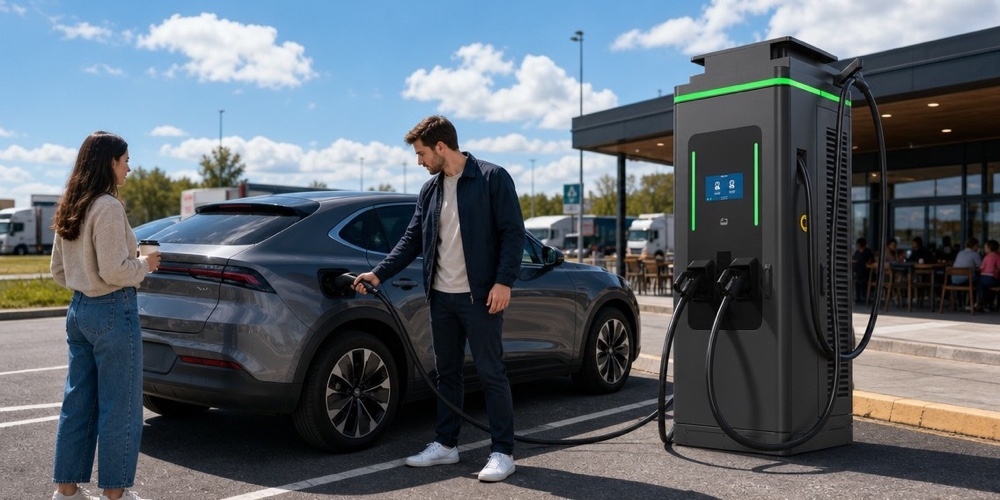
Quality is not an afterthought at MIDA Power; it is built into every step of the process. Every 180kW station undergoes a series of rigorous tests before it is shipped to the customer:
- Insulation and Dielectric Testing: Ensuring the safety of the electrical system under high voltage.
- Functional Verification: Testing every feature of the OCPP 2.0.1 stack and the user interface.
- Full-Load Burn-In: The station is run at its maximum 180kW capacity for 48 hours in a specialized test bay.
- Environmental Stress Screening: Simulating extreme temperature and humidity to ensure the station can handle any climate.
Sustainability and Ethical Sourcing
MIDA Power believes that the transition to electric mobility must be sustainable in every way. We source our materials from suppliers who meet strict environmental and social standards. We use lead-free soldering processes and minimize the use of hazardous chemicals in our manufacturing. Our facility is designed to be energy-efficient, and we recycle over 95% of our production waste. We are committed to being a positive force for the environment and the communities where we operate.
Continuous Improvement and Innovation
The EV industry is moving at a blistering pace, and MIDA Power is committed to staying at the forefront. Our engineering teams are constantly analyzing data from our thousands of chargers in the field to identify areas for improvement. This “closed-loop” feedback system ensures that every new generation of our 180kW station is even more reliable and efficient than the last. We are always looking for new ways to push the boundaries of what is possible in DC charging.
7. Maintenance & Operational Best Practices: Ensuring Peak Performance
To maximize the return on your investment, a 180kW DC station must be properly maintained and operated. MIDA Power provides the tools and support you need to keep your charging network running smoothly.
Remote Monitoring and Predictive Analytics
The MIDA Cloud platform is your command center for your charging network. Through the secure Ethernet connection, you can monitor the performance of every 180kW station in real-time. Our advanced analytics can detect early warning signs of component failure, allowing you to perform “proactive” maintenance rather than “reactive” repairs. This maximizes the uptime of your network and ensures a positive experience for the drivers.
Modular Serviceability and Support
We have designed the 180kW station to be as easy to service as possible. The internal components are arranged in a modular layout, and all critical parts are easily accessible from the front of the cabinet. In the rare event of a failure, a technician can quickly swap out the affected module, minimizing the downtime of the station. MIDA also provides a global network of certified service partners and a 24/7 technical support hotline to ensure that you always have the help you need.
Cleaning and Connector Care
Regular cleaning is essential for maintaining the aesthetic appeal and performance of your charging station. We recommend wiping down the exterior with a mild, non-abrasive cleaner and checking the air filters every few months. It is also important to inspect the charging connectors for any signs of wear or debris. Keeping the silver-plated contacts clean and dry is the best way to ensure a high-conductivity connection and prevent overheating during high-power charging sessions.
8. The Roadmap to Net-Zero: MIDA’s Vision for a Sustainable World
At MIDA Power, we are driven by a simple goal: to make the world a cleaner, better place. Our 180kW DC Charger Station is a key part of our strategy to accelerate the global transition to a sustainable energy future.
The Circular Economy and Product Life-Cycle
We design our chargers to be durable and long-lasting, but we also plan for their end-of-life. Most of the components in a MIDA station are fully recyclable, and we are developing a “Second Life” program for our power modules. These modules can be refurbished and used in less demanding applications, such as home energy storage or low-power AC charging, extending their useful life and reducing their environmental impact.
Supporting the Transition to Renewables
A smart charging network is a critical enabler for the widespread adoption of renewable energy. By using the smart charging features of the MIDA 180kW station, grid operators can better manage the variability of solar and wind power. We are also investing heavily in V2G technology, which will allow EVs to become a vital part of the energy storage solution, helping to balance the grid and ensure a stable, clean power supply for everyone.
A Global Partner for a Green Future
The transition to electric mobility is a global challenge that requires a global solution. MIDA Power is proud to be a partner to governments, utilities, and businesses around the world as they build the infrastructure of the future. We believe that by working together and sharing our engineering expertise, we can create a world where clean, sustainable energy is accessible to everyone. The MIDA 180kW DC station is our contribution to that vision.
9. The Global EV Landscape in 2030 and MIDA’s Role: A Future Defined by Intelligence
The year 2030 will mark a turning point in human history, where the majority of new vehicle sales will be electric, and the global energy system will be deeply integrated with the transportation network. MIDA Power is not just a participant in this transformation; we are the intelligence behind it.
The Rise of the AI-Driven Smart Grid
By 2030, the grid will be a complex, self-healing network driven by artificial intelligence. MIDA’s 180kW DC stations will be the essential sensors and actuators of this grid. Our stations will use advanced AI to predict charging demand, optimize energy flow, and provide instant support during grid instabilities. The transition to OCPP 2.0.1 is just the first step toward a future where every charger is a “smart agent” that works to ensure a reliable and clean power supply for all. We envision a grid where millions of MIDA chargers work in concert to balance the supply of intermittent renewables, turning the challenge of the EV revolution into the solution for the energy crisis.
Universal Roaming and Blockchain-Based Billing
The friction of charging in different networks will be a thing of the past. By 2030, universal roaming agreements and blockchain-based payment systems will allow drivers to charge at any MIDA station with a single, secure digital identity. The security features we have built into the 180kW station today—including TLS 1.3 and hardware-based encryption—are the building blocks of this decentralized, user-centric future. Drivers will no longer need multiple apps or cards; their vehicle will handle the entire transaction securely and automatically through the ISO 15118 protocol, with the financial settlement occurring in real-time on a transparent and secure ledger.
The Integration of Autonomous and Shared Mobility
Autonomous shuttles and shared EV fleets will be the backbone of urban transportation in 2030. These vehicles will require a new type of infrastructure that is always online and always available. MIDA’s focus on Ethernet connectivity and high uptime will be the foundation of these mission-critical networks. We are already developing the next generation of autonomous charging interfaces—including wireless pads and robotic couplers—that will allow a fleet of Robotaxis to keep moving 24/7 without ever needing a human operator to plug in. Our 180kW station is the brain that will control these future docking stations.
The Circular Energy Economy
In 2030, the concept of “waste energy” will be obsolete. MIDA Power is leading the development of integrated energy ecosystems where solar generation, battery storage, and EV charging are all part of a single, efficient loop. Our 180kW stations will be equipped with bi-directional capabilities, allowing them to pull energy from an EV to power a building during a spike in demand, and then recharge the vehicle when solar power is at its peak. This circular flow of energy is the ultimate goal of the net-zero movement.
MIDA Power as a Global Energy Architect
Our vision for 2030 is to be the world’s leading architect of smart energy systems. We will provide the platform that allows cities, businesses, and individuals to manage their energy footprint with unprecedented precision. We believe that by combining high-power electronics with advanced digital intelligence, we can create a world where energy is clean, affordable, and accessible to every corner of the globe. The 180kW station is our blueprint for that future.
10. Technical Specification Appendix & Detailed Glossary
For the technical professional, we have provided this comprehensive appendix detailing the capabilities and terms associated with the MIDA 180kW station.
Detailed Technical Specifications
- Nominal Output Power: 180kW (Modular configuration: 30kW or 40kW units)
- Input Rating: 380V – 480V AC ±15%, 3-Phase + N + PE, 50/60Hz
- Power Factor: ≥0.99 at full load
- Efficiency: ≥96% (Peak efficiency achieved at 50-80% load)
- Output Voltage Range: 200V – 1000V DC (Wide range for 400V/800V packs)
- Max Output Current: 200A – 250A per cable (Standard air-cooled) / up to 500A (Liquid-cooled)
- Number of Connectors: Dual CCS2 (Standard) / Dual CCS1 / Dual GBT / Mix options
- Communication Protocol: OCPP 2.0.1 (Certified), OCPP 1.6J (Included for legacy support)
- Security Stack: TLS 1.3, X.509 Certificates, Secure Boot, HSM, Encrypted Storage
- Network Connectivity: Dual-Gigabit Ethernet (RJ45), 4G/5G LTE, Wi-Fi 6 (802.11ax)
- Operating Temperature: -30°C to +55°C (Full performance) / -40°C to +75°C (Derated/Safe)
- Storage Temperature: -45°C to +85°C
- Operating Humidity: 5% to 95% RH (Non-condensing)
- Maximum Altitude: 2,000m (Standard) / Special high-altitude variant available up to 4,500m
- Noise Level: ≤65dB at 1 meter (Intelligent variable-speed fan control)
- User Authentication: RFID (ISO 14443 Type A/B), NFC, Mobile App, EMV Credit Card, Plug & Charge (ISO 15118)
- Ingress Protection: IP54 (Main Enclosure) / IP55 (Connector Dock)
- Impact Protection: IK10 (Full metal housing)
- Safety Monitoring: RCD Type B, Insulation Monitoring, Grounding Check, Surge Protection (Type 2)
Detailed Glossary of Terms
- OCPP 2.0.1: The latest iteration of the Open Charge Point Protocol, featuring major improvements in device management, security, and smart charging functionality.
- TLS (Transport Layer Security): A cryptographic protocol designed to provide communications security over a computer network, preventing eavesdropping and tampering.
- V2G (Vehicle-to-Grid): A system in which electric vehicles can communicate with the power grid to sell demand response services.
- Harmonic Distortion: The degree to which a waveform deviates from a pure sine wave; MIDA stations keep this below 5% to protect the grid.
- Power Factor Correction (PFC): A technique to ensure the charger draws power efficiently from the grid, reducing the reactive power load.
- Plug & Charge: A technology (ISO 15118) that allows an EV to identify itself and authorize payment automatically when plugged in.
- Smart Charging: The intelligent control of the charging process to optimize energy usage, cost, and grid stability.
- DSP (Digital Signal Processor): A high-speed microprocessor optimized for handling the complex calculations required for power conversion.
- CAN Bus (Controller Area Network): A robust communication standard used within the vehicle and the charger to manage data flow.
- EMI/EMC (Electromagnetic Interference/Compatibility): Standards that ensure the charger does not interfere with other electronics and is not affected by outside signals.
- RTOS (Real-Time Operating System): An OS designed for applications where timing is critical; MIDA uses this to ensure safety functions are always prioritized.
- SiC (Silicon Carbide): A high-efficiency semiconductor used in power modules to reduce heat and increase power density.
- IGBT (Insulated-Gate Bipolar Transistor): A three-terminal power semiconductor device primarily used as an electronic switch.
- MTBF (Mean Time Between Failures): A statistical measure of reliability; MIDA targets >100,000 hours for its power systems.
- SNMP (Simple Network Management Protocol): Used for monitoring the health of the station over the network.
- OTA (Over-The-Air): The wireless delivery of software updates to the charging station.
- DLB (Dynamic Load Balancing): A system that shares the available power between multiple chargers or vehicles in real-time.
- Insulation Monitoring: A safety system that constantly checks for faults in the electrical isolation of the high-voltage circuit.
- Surge Protection Device (SPD): A component that protects the station from high-voltage spikes caused by lightning or grid events.
- X.509: A standard for public key infrastructure (PKI) used to manage digital certificates for secure communication.
- Secure Boot: A mechanism to ensure that only trusted software is loaded during the startup process.
- EMV: A global standard for credit and debit card payments, named after Europay, Mastercard, and Visa.
- PCI-DSS: The Payment Card Industry Data Security Standard, ensuring secure handling of financial information.
- IP Rating: Ingress Protection rating, defining the level of sealing against dust and moisture.
- IK Rating: Impact protection rating, defining the degree of protection against mechanical impacts.
- SoC (State of Charge): The level of energy in a battery expressed as a percentage of its total capacity.
- BMS (Battery Management System): The onboard computer in an EV that manages the battery’s safety and performance.
- PLC (Power Line Communication): A method of carrying data over the same wire used for electric power transmission lines, enabling the charger to communicate with the vehicle’s BMS and the backend cloud without additional wiring.
- DLB (Dynamic Load Balancing): An intelligent power-allocation scheme that distributes available site capacity across multiple charging stations, protecting the service entrance from overload while maximizing throughput.
- OBD (On-Board Diagnostics): The vehicle’s self-diagnostic interface, which fleet operators can use to cross-reference charging behavior with vehicle health data.
- State of Health (SoH): A measure of a battery’s capacity relative to its rated condition when new, expressed as a percentage.
- PLC (Power Line Communication): Already defined above — the physical layer used by CCS2 vehicles to carry ISO 15118 handshakes over the same pins that deliver DC power.
- CAN FD (CAN with Flexible Data-Rate): An enhanced CAN variant with higher data throughput, increasingly used by modern BMS implementations to accelerate session negotiation.
- OTA (Over-the-Air): The remote firmware update channel that allows MIDA to push protocol revisions, security patches, and performance improvements to deployed stations without a site visit.
- RMS (Root Mean Square): The effective value of an AC voltage or current used in energy metering — the basis of the Class 0.5 accuracy that revenue-grade billing depends on.
- SoC/SoH Calibration: The process by which the charger and BMS reconcile their state estimates at session start, ensuring accurate energy accounting and safe charge termination.
Closing the Loop: From Glossary to Deployment
Every term in this glossary maps directly to a design decision in the MIDA 60kW/90kW/120kW CCS2 truck charger. The IP and IK ratings define the enclosure that shrugs off dust, rain, and accidental impacts at loading docks. The SPD and galvanic isolation define the front end that survives lightning storms and dirty grid events. The X.509 certificates, Secure Boot, and PCI-DSS compliance define the trust boundary that keeps payment and telemetry data safe. And the OCPP and ISO 15118 protocols define how the station talks to your fleet management platform and to the truck itself. Understanding the vocabulary is understanding the product.
Conclusion: Thermal Management Is Fleet Reliability
For continuous EV truck operations, the charger is not a convenience — it is part of the production line. A depot charger that derates in summer heat or trips on a grid spike delays a scheduled departure, and in freight, time is money. MIDA’s 60kW–120kW CCS2 family attacks this problem from every angle: liquid-optimized thermal design that holds rated output in ambient temperatures exceeding 40°C, surge and isolation protection that keeps the station alive through grid disturbances, and secure, standards-based communication that plugs directly into modern fleet software.
Key Takeaways
- IP55/IP65 enclosures and IK10 impact ratings make the charger suitable for exposed depot and curbside installations.
- Galvanic isolation, SPDs, and secure boot protect both the hardware and the data path — resilience that extends beyond the power stage.
- Standards fluency (OCPP, ISO 15118, EMV, PCI-DSS) means faster integration, simpler compliance, and a smoother path to Plug & Charge.
Contact MIDA Power
If you are electrifying a truck fleet and need charging that runs continuously, in any weather, on any shift, talk to MIDA Power. Our team provides technical specifications, thermal performance data, and a customized deployment plan for your depot. Contact us at www.midapower.com today — and keep your fleet moving.
Post time: Aug-09-2026
