
 Portable EV Charger
 Home EV Wallbox
 DC Charger Station
 BESS Charging Station
 V2G V2H V2V V2L
 EV Charging Module
 DC Charging Connector
 EV Accessories
The most obvious difference between certification in the United States and certification in other regions is the lack of a unified and specific compliance label.
In China, compliant products need to be labeled with the mandatory 3C (China Compulsory Certification) mark. Power banks without this mark are not allowed to be carried on airplanes; Products exported to Europe must be marked with the CE mark, which has strict requirements for font, size, and position, otherwise they cannot pass customs inspection; Japan also has the corresponding PSE (Product Safety of Electrical Appliances&Materials) logo, while South Korea has the KC logo.
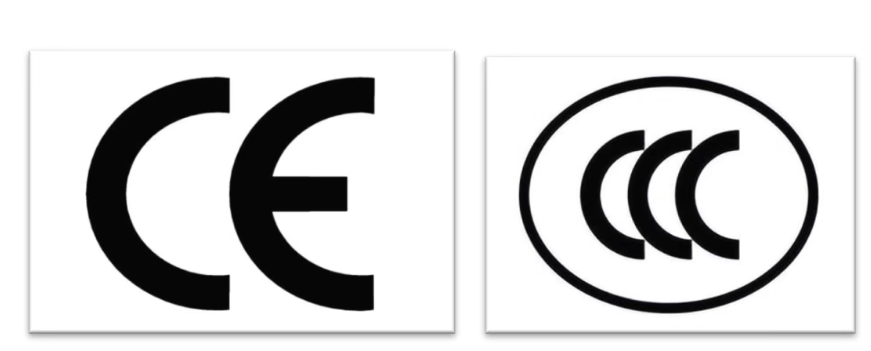
Normally, compliance labeling is determined by the government through unified decision-making and the use of administrative power to promote it.
Obviously, the United States does not have such regulations.
(1) 29 CFR
The requirement for electrical products to enter the market in the United States relies on 29 CFR regulations.
The full English name of CFR is Code of Federal Regulations, translated into Chinese as the famous “United States Federal Regulations”. It is a collection of all universal and permanent rules formulated by various departments of the US federal government, such as the Department of Labor, Department of Health, Department of Transportation, etc. For the convenience of reference, this book of Golden Jade Rules has been divided into 50 “chapters” (Title 1 to Title 50). And 29 CFR is a detailed legal regulation specifically addressing labor rights.
In the 1910 series chapters of 29 CFR, the responsibilities, enforceable rights, and applicable standards of the Occupational Safety and Health Administration (OSHA) in the United States are detailed. One of the most important regulations is that electrical products used in the workplace must be certified under the NRTL (Nationally Recognized Testing Laboratory) system before they can be used, otherwise employers will be punished.
Therefore, the core requirement for exporting charging stations to the United States is to obtain recognition from NRTL National Laboratories, otherwise they will be subject to administrative penalties.
What is NRTL National Laboratory in the United States?
Firstly, NRTL (Nationally Recognized Testing Laboratory) is a nationally recognized laboratory in the United States. Although it has a National designation, it is not a national institution but a private sector organization. Any organization and testing agency can apply to become a member of NRTL. Only the requirements of 29 CFR 1910.7 need to be met, with specific requirements including:
- ✔ Ability to test and evaluate whether equipment meets appropriate testing standards;
- ✔ Implement sufficient control over the identification of certified products and conduct subsequent inspections on actual production;
- ✔ Completely independent of the user (i.e. the employer constrained by the testing equipment requirements) and any manufacturer or supplier of certified products;
- ✔ Develop effective investigation results and procedures for handling complaints and disputes;
Currently, according to the laboratory list published on the OSHA official website, a total of 22 laboratories have obtained NRTL qualifications. Basically, well-known testing and certification agencies are on the NRTL list, such as UL and CSA, which are mainstream testing agencies in North America.
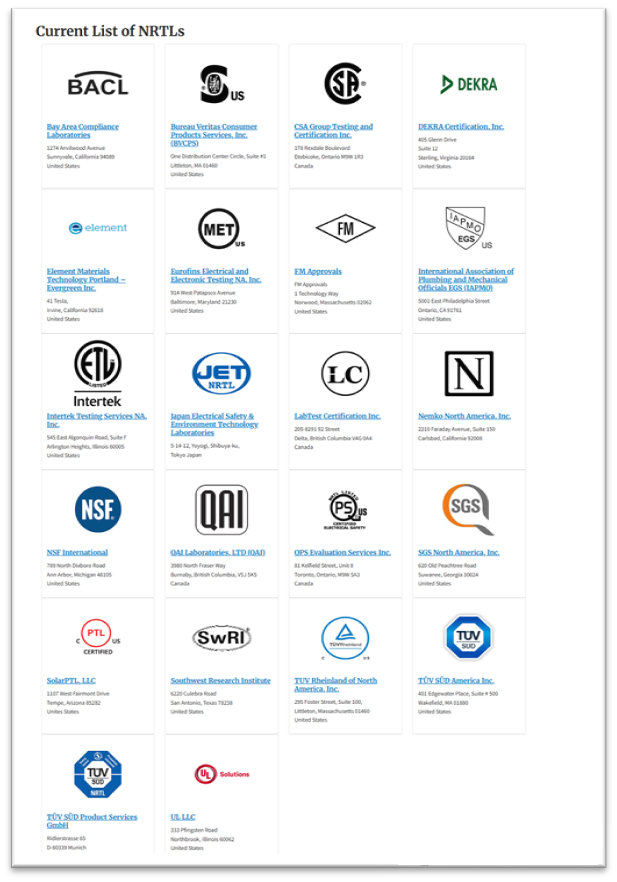
Note: It should be noted that laboratories that have obtained NRTL qualifications may not necessarily be able to certify a certain product. We also need to check if the laboratory has the ability to produce standards for this product.
(2) OSHA and NRTL
The standards listed by NRTL laboratory, which involve charging stations, are UL 2202 and UL 2594. I have checked for everyone and found that mainstream laboratories on the market are capable of producing these two standards.
For the export of charging stations, it is only necessary to find a laboratory with NRTL qualification, OSHA to check the scope of capabilities, pass their testing and accreditation, and put their logo on it to sell locally in the United States.
The certification done by UL institutions uses the UL logo, the certification done by T Ü V S Ü D institutions uses the unique octagonal logo, and the certification done by T Ü V Rheinland uses Rheinland’s North American logo. From a regulatory perspective, there is no significant difference in their labeling, as they are all recognized by OSHA.
Therefore, charging pile manufacturers are free to choose the certification agency that suits them, and there is no need to necessarily choose UL. Many people mistakenly believe that UL is the admission qualification of the United States, but in fact, UL is just a private testing and certification agency and does not have any official administrative enforcement rights.
(3) NFPA 70
Electrical products in the United States not only need to meet the certification of NRTL accredited laboratories, but also need to comply with a specification – NFPA 70.
NFPA 70(National Fire Protection Association), Also known as NEC (National Electrical Code), the Chinese name is what we are familiar with – the American Electrical Code. In the United States, almost every electrical engineer has a laptop.
Isn’t it quite strange that the electrical code in the United States has the same name as the National Fire Protection Commission?
NFPA(National Fire Protection Association), Although called the National Fire Protection Association, it is also a non-governmental organization. Just like the basketball league NBA and the football league NFL in the United States, they are commercial civil organizations. The NFPA organization was established in 1896 with the aim of unifying the diameter and water pipes of local fire protection equipment – automatic sprinkler systems.
(4) Summary
Let’s summarize the content we just discussed. If charging station products are exported to the United States:
- ● The product itself, DC piles need to comply with UL 2202 requirements, and AC piles need to comply with UL 2594 requirements;
- ● Installation and wiring must comply with the requirements of NFPA 70 625 in the United States;
- ● Testing and certification must comply with NRTL accredited laboratories, such as UL/CSA/T Ü V S Ü D, etc;
The detailed diagram is as follows:
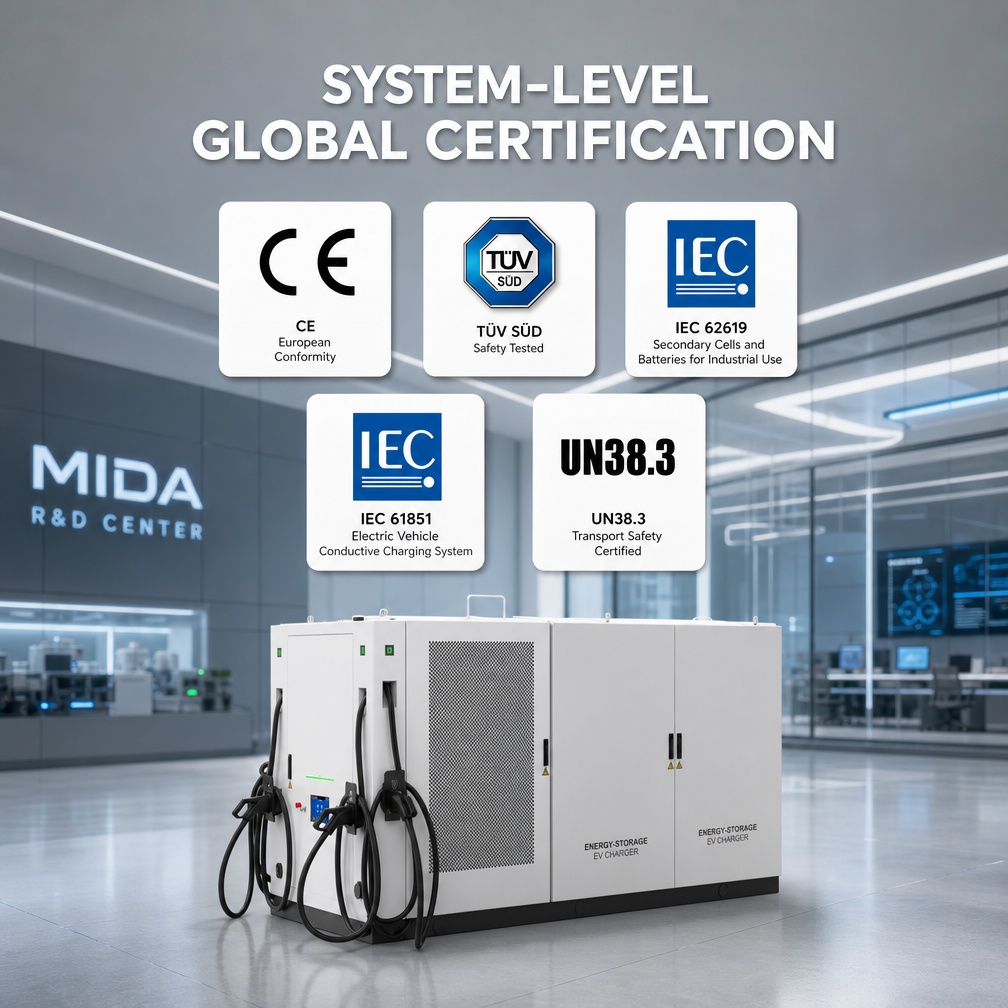
Finally, it should be emphasized that UL certification is not the only way to enter the US market. Testing and certification from other organizations also comply with US laws and regulations.
Of course, UL is an absolute old brand certification organization in the United States, with high national acceptance. Obtaining UL certification will definitely increase the market reputation. The cost is as mentioned before, both the price and the cycle are very unfriendly.
Therefore, the specific choice of certification institution for domestic pile enterprises needs to be balanced and balanced among their own budget, product positioning, and the requirements of American buyers.
Post time: Sep-21-2026
