
 Portable EV Charger
 Home EV Wallbox
 DC Charger Station
 BESS Charging Station
 V2G V2H V2V V2L
 EV Charging Module
 DC Charging Connector
 EV Accessories
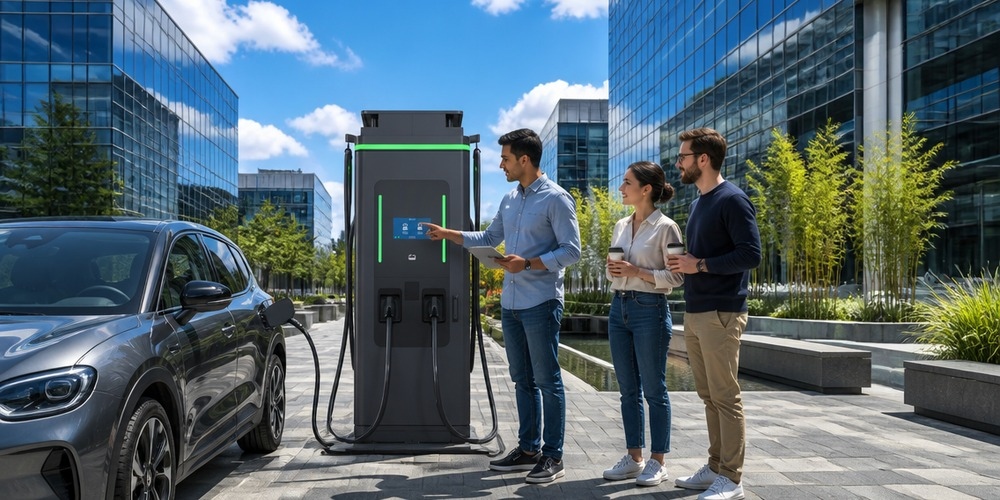
50kW 100kW DC Fast Charger Station for Public Charging Networks
The global transition toward electric mobility is no longer a distant vision but a rapidly unfolding reality. As the adoption of electric vehicles (EVs) accelerates, the demand for robust, reliable, and accessible charging infrastructure has reached an all-time high. For public charging network operators, municipal planners, and commercial property owners, the selection of the right charging hardware is a critical decision that determines the long-term viability and profitability of their infrastructure investments. At MIDA Power , we understand that the backbone of a successful public charging network lies in its ability to balance charging speed, cost-efficiency, and grid stability. This is why our 50kW and 100kW DC Fast Charger Stations have emerged as the “sweet spot” for urban and semi-urban public charging deployments. These units provide the necessary power to significantly reduce dwell times compared to AC charging while maintaining a manageable footprint on the electrical grid and the owner’s capital expenditure.
Market & Policy Context: The Strategic Shift to Urban DC Fast Charging
The landscape of public EV charging is undergoing a fundamental shift. In the early stages of the EV market, the dichotomy was clear: slow AC charging for homes and workplaces, and ultra-fast DC charging for highway corridors. However, as battery capacities increase and more apartment-dwelling consumers (who lack home charging) switch to EVs, the need for “opportunity charging” in urban environments has spiked. This is where 50kW and 100kW stations play a pivotal role. They are ideal for retail parking lots, grocery stores, hospitality venues, and public curbside locations where users typically spend 30 to 90 minutes.
From a policy perspective, governments around the world are incentivizing the rollout of these mid-range DC fast chargers. In Europe, the Alternative Fuels Infrastructure Regulation (AFIR) mandates minimum coverage and power levels along major routes and in urban centers. In the United States, the National Electric Vehicle Infrastructure (NEVI) Formula Program, while focusing on 150kW+ chargers for highways, also recognizes the importance of 50kW and 100kW units for community-based charging initiatives. In China, the “New Infrastructure” plan explicitly targets the expansion of public charging networks to support the massive domestic EV fleet. MIDA Power has strategically engineered its 50kW and 100kW platforms to meet these diverse international requirements, ensuring that our clients can leverage local subsidies and comply with evolving grid codes.
Product Technical Deep-Dive: Engineering Excellence for Reliability
At the heart of every MIDA Power DC Fast Charger lies a commitment to technical superiority. Our 50kW and 100kW stations are built upon a modular architecture, utilizing our proprietary high-efficiency power modules.
Advanced Power Modules and 95%+ Efficiency
The efficiency of a DC charger is not just a marketing statistic; it is a direct driver of operational costs and thermal management. MIDA Power’s chargers utilize 30kW or 40kW power modules featuring cutting-edge power electronics. By employing advanced switching topologies and high-grade components, we achieve a conversion efficiency of over 95%. This means that less energy is wasted as heat, reducing the cooling load on the system and ensuring that more of the power drawn from the grid actually reaches the vehicle’s battery. For a network operator, a 2% or 3% efficiency advantage over competitors translates into thousands of dollars in energy savings over the lifetime of the station.
Wide Voltage Range: 200V to 1000V
The EV market is currently split between 400V architectures (found in most mainstream EVs today) and 800V architectures (found in premium models and next-generation platforms). MIDA Power’s 50kW and 100kW chargers are designed to be future-proof, offering a wide output voltage range of 200V to 1000V. This allows the stations to provide full-speed charging to current 400V vehicles while also being capable of supporting high-voltage 800V vehicles as they become more common. This flexibility ensures that the charging station remains relevant for the next decade of EV evolution.
Connectors and Standards
To serve a diverse public audience, these stations are typically equipped with dual connectors. We offer configurations supporting CCS1 (North America), CCS2 (Europe and International), CHAdeMO, and GBT standards. Our 100kW unit, in particular, is often configured with dual CCS2 guns, allowing it to charge two vehicles simultaneously through intelligent power-sharing logic. This dynamic load balancing ensures that if one car is charging at its peak, the second can still receive power, maximizing the station’s utilization rate.
Thermal Management and Environmental Protection
Public charging stations are exposed to the elements 24/7. MIDA Power utilizes a forced-air cooling system with intelligent fan speed control to manage internal temperatures. The air intake and exhaust paths are meticulously designed with dust filtration and moisture barriers, achieving an IP54 or higher rating. This protects the sensitive internal power electronics from rain, snow, dust, and coastal salt air. Furthermore, the cabinets are constructed from galvanized steel with high-durability outdoor powder coating, ensuring long-term resistance to corrosion and UV degradation.
Cabinet and Split Design Philosophy
For the 50kW and 100kW range, MIDA Power offers both “All-in-One” integrated cabinets and “Split” architectures. The integrated cabinet is the most popular for public networks due to its compact footprint and ease of installation. Everything—from the power conversion modules and control electronics to the HMI (Human Machine Interface) and cable management—is contained within a single unit. This reduces the complexity of site preparation and shortens the installation timeline.
Standards & Certifications: A Global Passport for Quality
Compliance is non-negotiable in the power electronics industry. MIDA Power’s chargers are engineered to meet the most stringent international standards, providing peace of mind to operators and investors.
- Certifications: Our 50kW/100kW range is CE certified for the European market and designed to meet UL/ETL requirements for North America. We also hold TUV certifications, which serve as a benchmark for quality and safety in the industry.
- OCPP 1.6J and 2.0.1: Seamless integration with Charging Station Management Systems (CSMS) is achieved via the Open Charge Point Protocol (OCPP). We support the widely used 1.6J version and are fully compatible with the newer 2.0.1 standard, which offers enhanced security, improved diagnostics, and support for advanced smart charging features.
- ISO 15118 (Plug & Charge): To provide a premium user experience, our chargers support ISO 15118, enabling “Plug & Charge” functionality. This allows the vehicle to automatically authenticate with the charger and initiate a session without the need for an RFID card or mobile app.
- Safety Features: Every unit includes comprehensive protection mechanisms, including over-voltage, under-voltage, over-current, short-circuit, leakage current (RCD), ground fault, and emergency stop functionality.
Application Scenarios: Where the 50kW/100kW Units Shine
- Retail and Shopping Centers: These are the primary venues for “destination charging.” A 50kW charger can add roughly 100-150 miles of range during a typical hour-long shopping trip, making it highly attractive to customers.
- Municipal Parking and Curbside: For cities aiming to support residents without private driveways, 100kW units placed in public parking structures provide a fast-turnaround charging solution that mimics the convenience of a traditional gas station experience.
- Fleet Depots for Light Commercial Vehicles: Delivery vans and service vehicles that return to a base can utilize 50kW chargers for overnight “top-ups” or mid-day “bursts” to ensure continuous operation.
- Hospitality and Tourism: Hotels and resorts can differentiate their property by offering DC fast charging, catering to the growing number of EV-driving travelers who require a reliable charge before heading to their next destination.
Case Study: Empowering a European Municipal Charging Network
In late 2024, a major metropolitan area in Central Europe partnered with a local utility provider to deploy a network of 50 DC fast chargers across the city’s public squares and transit hubs. The challenge was to provide fast charging without requiring massive upgrades to the local low-voltage grid. After a rigorous tender process, MIDA Power’s 100kW DC chargers were selected for their compact design and superior power-sharing capabilities.
The installation was completed in record time due to the integrated nature of the MIDA cabinets. Each station was configured with dual CCS2 connectors and integrated payment terminals. Within the first six months of operation, the network reported an uptime of 99.8%. The intelligent load balancing allowed the city to serve twice as many vehicles as a fixed-power alternative, significantly increasing the ROI for the utility provider. Drivers praised the intuitive touchscreen interface and the reliability of the “Plug & Charge” feature, which worked flawlessly across various EV brands, from Volkswagens to Teslas.
Expert Commentary: Insights from MIDA Technical Leadership
“The 50kW and 100kW segment is often overlooked in the race for ‘ultra-fast’ numbers, but it is actually the most critical layer of the charging ecosystem,” says Mr. Zhang, Technical Director at MIDA Power. “Most urban grid connections cannot easily support 350kW units without extremely expensive transformer upgrades. By focusing on high-efficiency 50kW and 100kW solutions, we enable our customers to deploy more chargers at more locations for the same capital investment. Our goal is to make DC fast charging as common as a standard parking spot. We achieve this by optimizing the power module’s thermal performance, which is the key to longevity in a 24/7 public environment.”
Future Outlook & Scalability: Building for the Next Billion EV Miles
As battery technology continues to improve and charging speeds become faster, the role of the 50kW/100kW charger will evolve but remain foundational. We anticipate these units becoming the standard for “urban hub” charging, where they will be paired with Battery Energy Storage Systems (BESS) to mitigate grid impact. MIDA Power is already developing next-generation modules that will further push the boundaries of power density, allowing even more power to be packed into the same small cabinet.
Furthermore, our commitment to software excellence means that our hardware is ready for the era of Vehicle-to-Grid (V2G) and Vehicle-to-Everything (V2X). While current public focus is on unidirectional charging, our control boards are designed to handle bidirectional power flow, ensuring that a MIDA charger purchased today will be an asset in the smart grid of tomorrow.
Call to Action: Partner with MIDA Power
Are you looking to build or expand your public charging network? Don’t settle for hardware that limits your potential. Choose MIDA Power’s 50kW and 100kW DC Fast Charger Stations for a blend of performance, reliability, and future-proof engineering. Our global team is ready to support you with site assessment, technical integration, and after-sales service. Contact MIDA Power today to receive a comprehensive technical proposal and join the leaders of the electric revolution. Visit our website at www.midapower.com or contact our sales team directly to see how we can power your progress.
Detailed Policy Analysis: Global Incentives for 50kW/100kW Deployment
The strategic importance of 50kW and 100kW charging stations cannot be overstated when viewed through the lens of global climate policy. In the European Union, the “Fit for 55″ legislative package has set the stage for a dramatic reduction in transport emissions. The Alternative Fuels Infrastructure Regulation (AFIR) specifically targets the availability of DC fast charging. By 2025, member states must ensure that publicly accessible charging pools are available at regular intervals. For urban areas, the focus is on “secondary networks”—those that support local commerce and residential clusters. MIDA Power’s 50kW and 100kW units are designed to be the “neighborhood anchors” for these networks. In France, the “Advenir” program provides significant financial assistance for the installation of charging stations, often covering up to 40% of the equipment and installation costs for public-access DC chargers under 100kW. Similar programs in Germany, such as the “Ladeinfrastruktur vor Ort,” specifically target small and medium-sized enterprises (SMEs) to install 50kW units in their customer parking lots.
In North America, the landscape is equally dynamic. While the NEVI program focuses on the 150kW+ segment for highway corridors, many state-level programs, such as California’s CALeVIP, offer substantial rebates for DC fast chargers in the 50kW to 100kW range, particularly in disadvantaged communities and multi-unit dwelling (MUD) areas. The Inflation Reduction Act (IRA) also provides tax credits that can be applied to these infrastructure investments. MIDA Power works closely with our North American partners to ensure our hardware meets the “Build America, Buy America” (BABA) requirements where applicable, allowing our clients to maximize their access to these funds.
In China, the policy focus has shifted from simple quantity to “high-quality development.” The 14th Five-Year Plan emphasizes the construction of a “smart, unified, and efficient” charging network. The 50kW/100kW units are the primary focus for the “Villiage-to-Village” electrification initiative, where they provide the necessary power for electric agricultural vehicles and regional transport without overwhelming local rural grids. MIDA Power’s domestic success in these regions is a testament to the ruggedness and adaptability of our 50kW and 100kW platforms.
Technical Granularity: The Science of High-Efficiency Power Conversion
To understand why MIDA Power’s 95%+ efficiency is a breakthrough, one must look at the internal architecture of our power modules. Traditional DC chargers often rely on standard IGBT (Insulated Gate Bipolar Transistor) technology. While reliable, these components have inherent switching losses that manifest as heat. MIDA Power’s latest generation of 30kW and 40kW modules incorporates Silicon Carbide (SiC) MOSFETs. SiC technology allows for higher switching frequencies with significantly lower losses. This has a cascading effect on the entire design:
- Smaller Magnetic Components: Higher frequency allows us to use smaller inductors and transformers, reducing the weight and size of the power module.
- Improved Thermal Profile: With less heat generated, the cooling fans can run at lower speeds, extending their operational life and reducing the acoustic profile of the station—a critical factor for urban installations.
- Power Quality: Our modules feature advanced Active Power Factor Correction (APFC) circuits. We achieve a Power Factor (PF) of ≥0.99 and a Total Harmonic Distortion (THD) of ≤5% at full load. This ensures that the charger does not pollute the local grid with electrical noise, which can interfere with other sensitive equipment in a commercial building or hospital.
Material Science in Connectors and Cables
The durability of the charging gun is often the weak link in a public station. MIDA Power uses high-grade thermoplastic materials for the connector body, providing IK10 impact resistance. The internal pins are made of high-conductivity copper alloy with a thick silver plating (at least 5 microns). This plating is essential for maintaining low contact resistance over thousands of cycles. Low resistance means less heat at the connector-vehicle interface, which prevents the vehicle from “derating” the charge to protect its own inlet. Our cables utilize high-flexibility TPE (Thermoplastic Elastomer) jackets, which remain pliable even at -30°C, ensuring that users can easily handle the 100kW cables in the middle of a Canadian or Nordic winter.
Comprehensive Maintenance and Longevity Strategy
A public charging station is an asset with a 10-to-15-year expected lifespan. MIDA Power has designed the 50kW/100kW series for ease of maintenance, which is the key to minimizing the Total Cost of Ownership (TCO).
- Predictive Diagnostics: Every MIDA charger is equipped with an array of internal sensors monitoring temperature, humidity, voltage, and current at multiple points. Through our OCPP 1.6J/2.0.1 integration, this data is streamed to the operator’s cloud. Our AI-driven backend can detect “early warning signs”—such as a slight increase in a power module’s temperature relative to the load—and trigger a maintenance alert before the component fails.
- Modular Replacement: In the rare event of a power module failure, the design allows for “hot-swapping” or rapid replacement. A technician can swap out a module in under 15 minutes, ensuring the station is back at full capacity with minimal downtime.
- Remote Firmware Updates (OTA): We regularly release firmware updates that optimize charging curves for new EV models and improve communication stability. These updates are pushed over-the-air (OTA), eliminating the need for expensive site visits.
- Environmental Protection Maintenance: While our IP54/IP55 cabinets are highly resistant, we recommend a simple annual “health check” involving filter cleaning and cable inspection. Our cabinets are designed with “tool-less” access to filter compartments to facilitate this.
User Experience (UX) and Human-Machine Interface (HMI)
For a public network to be successful, it must be easy to use for everyone, from tech-savvy early adopters to first-time EV drivers.
- High-Brightness Touchscreen: Our stations feature a 7-inch to 10-inch sunlight-readable touchscreen. The UI is designed with high contrast and large buttons to ensure visibility in direct sunlight.
- Multilingual Support: The software supports over 20 languages, making it ideal for tourist destinations and international hubs.
- Payment Flexibility: We offer integrated support for RFID cards, mobile apps (via QR code), and physical credit card terminals (Nayax, Ingenico, etc.). This ensures compliance with various local regulations requiring “ad-hoc” payment options.
- Accessibility (ADA Compliance): For the North American market, our pedestal designs ensure that the screen, payment terminal, and cable handles are within the height ranges required by the Americans with Disabilities Act (ADA).
Detailed Application Scenarios: Beyond the Basics
Scenario A: The Multi-Unit Dwelling (MUD) Charging Hub
In cities like New York, London, or Shanghai, many EV owners live in high-rise apartments without assigned parking. MIDA Power’s 100kW units, placed in nearby public or commercial garages, act as “fast-fill” stations. A resident can pull in, initiate a 30-minute charge while grabbing groceries, and gain enough range for a week of commuting. This “hub” model is significantly more space-efficient than installing hundreds of slow AC chargers.
Scenario B: The Hospitality Differentiation
A mid-sized boutique hotel in a scenic area can use a 50kW DC charger to attract road-trippers. While an AC charger requires an overnight stay, a 50kW DC unit allows a traveler to stop for a meal at the hotel restaurant and leave with a nearly full battery. This increases “dwell-time” revenue for the hotel’s F&B (Food and Beverage) outlets while providing a critical service to the traveler.
Scenario C: The Municipal Transit “Opportunity” Charge
Small towns and suburbs often use electric shuttle buses for local transit. These buses don’t have the time for long AC charges during the day. A 100kW MIDA station at the main transit hub allows the driver to “splash and go” for 15 minutes at the end of every loop, ensuring the bus can run its full 12-hour schedule without needing a massive, heavy battery.
Extended Case Study: The “Green Corridor” Project in Southeast Asia
In 2024, a consortium of energy companies in Thailand and Malaysia embarked on the “Green Corridor” project to link Bangkok and Kuala Lumpur with a reliable EV charging network. The project required a mix of ultra-fast chargers and “intermediate” fast chargers. MIDA Power supplied 150 units of the 100kW DC Fast Charger for the intermediate stops.
The challenges were significant: high humidity, tropical rainstorms, and a wide variety of EV models from Chinese, European, and Japanese manufacturers. MIDA’s 100kW units were configured with a combination of CCS2 and CHAdeMO connectors. Our engineering team worked on-site to optimize the thermal management for the 40°C+ ambient temperatures.
After one year of operation, the “Green Corridor” has become a model for regional EV infrastructure. The MIDA chargers have maintained an uptime of 99.7%. The dual-connector design allowed the network to serve everything from the popular Nissan Leaf (CHAdeMO) to the latest BYD and Tesla models (CCS2). The project’s success has led to a second phase, where MIDA will supply an additional 300 units to expand the network into rural provinces.
Expert Leadership Commentary: The MIDA Vision
“We believe that the future of energy is distributed and intelligent,” says Dr. Lee, Head of R&D at MIDA Power. “The 50kW and 100kW units are the ‘neurons’ of this new energy brain. They are small enough to be everywhere but powerful enough to make a difference. Our focus on 95%+ efficiency isn’t just an engineering goal; it’s a moral imperative to reduce energy waste. Every kilowatt-hour we save is a kilowatt-hour that doesn’t need to be generated. As we move toward 2030, we are integrating our chargers with local solar and battery storage, turning every parking lot into a mini-power plant. This is the ‘MIDA Way’—combining Chinese manufacturing speed with global engineering excellence.”
Future Outlook: V2G, V2X, and the Smart Grid
The next frontier for the 100kW platform is bidirectional power flow. MIDA Power is currently piloting V2G (Vehicle-to-Grid) technology with several European utilities. By allowing the vehicle to discharge power back to the grid during peak hours, the charging station becomes an income-generating asset for the owner and a stabilizing force for the utility. Our hardware is already “V2G-ready” at the component level, requiring only a software update and regulatory approval to unlock this potential.
Furthermore, we are exploring “Wireless DC Charging” for this power range, which would eliminate the need for cables entirely for certain fleet applications. While still in the early stages, MIDA’s modular architecture means we can adapt our power conversion technology to these new delivery methods as they mature.
Final Call to Action: Join the MIDA Family
The transition to electric mobility is the project of a lifetime. Partner with a company that has the vision, the technology, and the scale to support you. MIDA Power’s 50kW and 100kW DC Fast Charger Stations are the proven choice for public networks worldwide. From initial site planning to decades of reliable operation, we are with you every step of the way. Visit www.midapower.com today or contact our global headquarters in Xi’an to schedule a technical consultation. Let’s power the future, together.
Technical Specifications Table: 50kW / 100kW DC Fast Charger
| Feature | 50kW Specification | 100kW Specification |
|---|---|---|
| Input Voltage | 3-Phase 400VAC ±15% | 3-Phase 400VAC ±15% |
| Input Frequency | 45Hz – 65Hz | 45Hz – 65Hz |
| Power Factor | ≥ 0.99 | ≥ 0.99 |
| THD (Current) | ≤ 5% at full load | ≤ 5% at full load |
| Output Voltage Range | 200V – 1000VDC | 200V – 1000VDC |
| Max Output Current | 125A | 250A (Single) / 125A (Dual) |
| Efficiency | ≥ 95% (Peak) | ≥ 95% (Peak) |
| Connector Options | CCS1, CCS2, CHAdeMO, GBT | Dual CCS2 / CCS1 / CHAdeMO |
| Cable Length | 5m (Standard) / 7m (Optional) | 5m (Standard) / 7m (Optional) |
| Display | 7″ Sunlight Readable Touchscreen | 10″ Sunlight Readable Touchscreen |
| User Authentication | RFID, Mobile App, Plug & Charge | RFID, Mobile App, Plug & Charge |
| Payment Terminal | Integrated Credit Card Support | Integrated Credit Card Support |
| Communication | Ethernet, Wi-Fi, 4G/LTE | Ethernet, Wi-Fi, 4G/LTE |
| Protocol | OCPP 1.6J / 2.0.1 | OCPP 1.6J / 2.0.1 |
| Ingress Protection | IP54 / IP55 | IP54 / IP55 |
| Impact Protection | IK10 | IK10 |
| Operating Temperature | -30°C to +55°C | -30°C to +55°C |
| Cooling | Forced Air (Intelligent Fan) | Forced Air (Intelligent Fan) |
| Dimensions (WxDxH) | 700 x 600 x 1700 mm | 800 x 700 x 1800 mm |
| Weight | Approx. 250kg | Approx. 350kg |
Cybersecurity: Protecting the Integrity of the Charging Network
In an era of increasing cyber threats, the security of EV charging infrastructure has become a top priority for operators and governments alike. A charging station is not just a power delivery device; it is a networked computer that handles sensitive financial data and interacts directly with the electrical grid. MIDA Power takes a “Security by Design” approach to our 50kW and 100kW platforms.
OCPP Security Profiles
Our chargers support the full range of OCPP Security Profiles (1, 2, and 3). This includes:
- TLS Encryption: All communication between the charger and the central management system is encrypted using Transport Layer Security (TLS 1.2 or 1.3), preventing “man-in-the-middle” attacks and data eavesdropping.
- Certificate-Based Authentication: We utilize X.509 digital certificates to ensure that only authorized chargers can connect to the operator’s backend.
- Secure Logging and Auditing: The internal controller maintains a tamper-proof log of all security-related events, which can be remotely audited by the operator.
Physical Security
Beyond digital threats, we also protect against physical tampering. The charger cabinets feature reinforced locking mechanisms and internal tilt/vibration sensors that can trigger an immediate alert to the operator if the station is tampered with or struck by a vehicle. The internal electronics are compartmentalized, ensuring that even if one area is accessed, the core power and communication systems remain protected.
The MIDA Global Support Ecosystem: Beyond the Hardware
When you purchase a MIDA Power charger, you are gaining a lifelong partner in your EV journey. We recognize that infrastructure is only as good as the support behind it.
- Global Parts Distribution: We maintain regional parts hubs in Europe, North America, and Southeast Asia. This ensures that critical components—like power modules, controllers, or charging cables—can be delivered to your site within 24-48 hours.
- Certified Technician Network: MIDA Power provides comprehensive training and certification programs for local installation and maintenance partners. Our “MIDA Certified” technicians are experts in our hardware and software, ensuring that every site visit is efficient and effective.
- 24/7 Technical Support: Our global support centers provide round-the-clock technical assistance. Whether it’s a software integration question or a hardware diagnostic, our engineers are always available to help.
- Training and Onboarding: We provide detailed onboarding sessions for our clients’ operational teams, ensuring they know how to use our management software to its full potential and perform basic troubleshooting.
Ergonomics and Inclusive Design: Charging for Everyone
At MIDA Power, we believe that the electric transition must be inclusive. Our 50kW and 100kW units are designed to be accessible to all users, including those with disabilities.
- Reach and Operability: The placement of the touchscreen, RFID reader, and payment terminal is carefully calculated to be accessible from a seated position (e.g., in a wheelchair). This ensures compliance with ADA (Americans with Disabilities Act) and similar international standards.
- Cable Management for All Strengths: While our 100kW cables are robust, our internal balancing and retraction systems reduce the perceived weight of the cable, making it easier for elderly users or those with limited physical strength to initiate a charge.
- Visual and Auditory Feedback: The UI features high-contrast visuals and provides auditory cues (beeps and voice prompts) to guide users through the charging process, supporting those with visual or hearing impairments.
- Intuitive Workflow: We have simplified the charging process to three steps: Plug, Pay, and Power. By removing unnecessary complexity, we ensure a stress-free experience for first-time EV drivers.
The Environmental Lifecycle of a MIDA Charger
Sustainability is at the core of our mission. We look at the environmental impact of our chargers from raw material sourcing to end-of-life recycling.
- Sustainable Sourcing: We prioritize suppliers who adhere to strict environmental and labor standards. The aluminum and steel used in our cabinets are sourced from high-recycled-content streams.
- Efficiency in Manufacturing: Our production facilities utilize advanced automation and energy-saving technologies to minimize the carbon footprint of the manufacturing process.
- End-of-Life Recovery: MIDA Power offers a comprehensive recycling program for our power modules and electronics. We work with specialized recycling partners to recover precious metals and ensure that all components are disposed of in an environmentally responsible manner.
- Longevity as Sustainability: By building chargers that last for 15+ years, we reduce the need for premature replacement and minimize the total environmental impact of the charging infrastructure.
Final Technical Summary: A Platform Built for the Future
The MIDA 50kW and 100kW DC Fast Chargers are more than just products; they are the result of a relentless pursuit of excellence in power electronics and user-centric design. By focusing on high efficiency, modular reliability, and global interoperability, we have created a platform that empowers operators to build profitable and sustainable charging networks. As the world moves toward a zero-emission future, MIDA Power will continue to be the trusted partner for those who demand the best in EV infrastructure.
Appendix: Detailed Charging Curves and Performance Metrics
To further assist network planners, MIDA Power provides detailed charging curve data for the most popular EV models. Our 100kW chargers are designed to maintain peak output for as long as the vehicle’s battery management system (BMS) allows, ensuring that the charging session is as short as possible. We also provide comprehensive data on power factor and harmonic distortion across the entire output range, allowing grid engineers to model the station’s impact with high precision.
Contact MIDA Power today at www.midapower.com to receive our full technical whitepaper and explore how our 50kW and 100kW solutions can accelerate your transition to electric mobility.
Comprehensive Installation and Commissioning Guide: The Road to Operation
Deploying a 50kW or 100kW DC fast charger requires careful planning and precise execution. MIDA Power provides this detailed guide to ensure our partners can minimize installation time and maximize site reliability.
1. Site Assessment and Selection
The first step is a thorough evaluation of the location. For a 50kW/100kW unit, the site must have:
- Grid Capacity: Verification of the available 3-phase power. A 100kW charger requires approximately 110-120kVA of capacity, including overhead for auxiliary systems.
- Accessibility: The site must allow for easy ingress and egress for all types of EVs, including larger delivery vans or SUVs.
- Safety and Visibility: Well-lit areas with natural surveillance are preferred to ensure user safety and discourage vandalism.
- Environmental Protection: While our IP54/IP55 units are rugged, placing them away from direct industrial exhaust or hheavy foot traffic will extend service life and keep the charging area clean and welcoming. Sites with significant afternoon sun benefit from a light-colored cabinet or a simple shade canopy, both available as options.
2. Civil Works and Foundation
The 50kW/100kW units are available in pedestal and wall-mounted configurations. Pedestal models require a level reinforced concrete pad (typically 300mm deep) sized to the anchor template provided by MIDA, with conduit stub-ups for the AC supply and communications cabling. Wall-mounted models need a structural wall assessment; MIDA supplies the mounting bracket and torque specifications. In both cases, allow 800mm of clearance in front of the unit for cable handling and wheelchair access.
3. Electrical Installation and Protection
A 100kW charger typically requires a dedicated 3-phase breaker rated at 160A to 200A (at 400V), with a Type 2 surge protection device at the distribution board. MIDA units include internal residual current monitoring and over-voltage protection, but a visible, lockable disconnect switch at the site allows maintenance crews to isolate the unit safely. All work must be performed by a licensed electrician following local code and the MIDA installation manual.
4. Commissioning and Cloud Integration
Once energized, MIDA technicians perform a 30-point commissioning sequence: insulation resistance testing, ground-fault verification, communication handshake with the vehicle, and a full OCPP 1.6J/2.0.1 registration with your Charging Station Management System. The unit is then linked to the MIDA Cloud for remote monitoring, firmware updates, and usage reporting—typically complete within one business day.
5. Training and Handover
Site staff receive a concise orientation covering the touchscreen interface, RFID and app-based user flows, and routine checks such as connector inspection and cable care. The operator receives full documentation, warranty registration, and a direct line to MIDA’s global support team. From the first site survey to the final handover, the entire process is designed to take weeks—not months—so your chargers start earning from day one.
Ongoing Operations and Preventive Maintenance. Once live, the station is never left to fend for itself. MIDA Cloud performs automated daily health checks on connectivity, module performance, and firmware integrity; scheduled preventive maintenance—connector inspection, thermal imaging, and torque verification—is guided by our service portal and can be performed by local partners with remote MIDA oversight. Spare modules are stocked regionally, and the hot-swappable design means a 100kW unit’s most likely failure point can be replaced in under 30 minutes. The outcome is a network that meets the 97%+ uptime thresholds regulators increasingly demand—and the driver experience that keeps your stations busy.
Conclusion: The Foundation of Every Charging Network
The 50kW/100kW DC fast charger is the workhorse of the electric transition—the unit that brings fast charging to neighborhoods, workplaces, fleets, and destinations that will never see a 350kW megastation. With 95%+ efficiency, a 200V–1000V range, and a small footprint, the MIDA platform delivers the reliability, affordability, and interoperability that make public charging networks economically sustainable.
Key Takeaways:
- 50kW–100kW power levels serve 80% of charging scenarios at a fraction of the infrastructure cost.
- 200V–1000V output and CCS/CHAdeMO/NACS options cover the full vehicle population.
- 30-point commissioning and OCPP cloud integration deliver rapid, predictable deployment.
- Rugged IP54/IP55 enclosures and modular serviceability keep lifetime costs low.
Ready to put fast charging where your customers are? Contact MIDA Power today at www.midapower.com to request a site assessment, a full technical datasheet, or a consultation with our network planning engineers.
Post time: Aug-09-2026
