
 Portable EV Charger
 Home EV Wallbox
 DC Charger Station
 BESS Charging Station
 V2G V2H V2V V2L
 EV Charging Module
 DC Charging Connector
 EV Accessories
120kW 150kw 180kW NACS CHAdeMO Dual Standard Supercharger Station
Bridging the North American Standard: Technical Deep-Dive into MIDA Power’s 120kW/180kW NACS & CHAdeMO Dual-Standard Supercharger
The North American electric vehicle landscape is undergoing its most significant transformation since the launch of the first modern EVs. The industry-wide shift toward the North American Charging Standard (NACS) has created a unique infrastructure challenge: how to support the millions of existing vehicles with legacy connectors while rapidly deploying the new standard adopted by nearly every major automaker. MIDA Power’s 120kW 150kw 180kW Dual-Standard Supercharger is the definitive solution for this transition. By combining NACS and CHAdeMO (or CCS1) capabilities in a high-performance, intelligent cabinet, MIDA enables network operators to serve 100% of the North American market with a single piece of hardware. This article explores the technical architecture, standard integration, and strategic market importance of this dual-standard powerhouse.
Market & Policy Context: The NACS Transition and Infrastructure Resilience
In 2023 and 2024, the North American EV market moved decisively toward the NACS (SAE J3400) standard. With Ford, GM, Rivian, and virtually all other manufacturers announcing the adoption of the NACS port, the demand for non-Tesla charging hubs equipped with this connector has skyrocketed. However, the existing fleet of EVs, including the thousands of Nissan Leafs using CHAdeMO and the many CCS1-equipped vehicles currently on the road, cannot be left behind.
MIDA Power’s 120kW and 180kW dual-standard stations are designed to provide a “bridge” to the future. These units allow site hosts to deploy NACS-ready infrastructure immediately while maintaining compatibility with the legacy fleet. This ensures that the charging site remains relevant and revenue-generating throughout the multi-year transition period. Furthermore, the 120kW to 180kW power range is the “sweet spot” for retail and workplace charging, where the 20-40 minute charge time aligns perfectly with consumer behavior in shopping malls, restaurants, and grocery stores.
Policy-wise, these units are designed to be fully compliant with NEVI (National Electric Vehicle Infrastructure) requirements and other state-level incentives that mandate multi-protocol support and high reliability. By choosing MIDA’s dual-standard architecture, operators can secure public funding while ensuring their sites are future-proofed for the NACS-dominant era.
Product Technical Deep-Dive: Dual-Standard Integration
The challenge of a dual-standard charger is not just about the physical plug; it is about the underlying communication protocols and power distribution logic. MIDA’s engineering team has developed a unified control platform that seamlessly handles the diverse requirements of NACS and CHAdeMO within a single system.
120kW 150kw 180kW NACS and CHAdeMO Protocol Mastery and Signal Integrity
The challenge of a dual-standard charger is not just about the physical plug; it is about the underlying communication protocols and power distribution logic. MIDA’s engineering team has developed a unified control platform that seamlessly handles the diverse requirements of NACS and CHAdeMO within a single system.
The NACS standard utilizes the same PLC (Power Line Communication) protocol as CCS1 (ISO 15118), whereas CHAdeMO relies on CAN bus communication. MIDA’s dual-standard stations feature a powerful, multi-core controller that can translate and manage both protocol stacks simultaneously. This allows the charger to “speak” the language of any vehicle that plugs in, ensuring an instant handshake, secure authentication, and precise power delivery.
A critical aspect of NACS implementation is ensuring signal integrity over the Power Line Communication interface. The high-power switching of the DC modules can create significant noise that can interfere with the PLC signal. MIDA uses a proprietary “Active Noise Cancellation” filter on the communication lines, ensuring that the handshake between the charger and the Tesla (or other NACS-equipped vehicle) is stable and robust, even at full 180kW output. For CHAdeMO, the system includes dedicated isolation for the CAN bus, preventing any high-voltage faults from affecting the vehicle’s communication network.
Scalable Power Architecture: 120kW to 180kW and SiC Efficiency
The MIDA Supercharger is built using a modular power block system. The 120kW version utilizes four 30kW modules, while the 180kW version uses six. This modularity allows for “pay-as-you-grow” scalability; a site host can start with a 120kW configuration and easily upgrade to 180kW as local grid capacity or demand increases.
The power modules themselves are designed for high-density operation, achieving over 95% efficiency and featuring a wide output range of 200V to 1000V. These modules utilize the latest Silicon Carbide (SiC) MOSFETs, which allow for a more compact design and higher thermal efficiency. The cooling system for the modules uses an intelligent, variable-speed fan array that minimizes noise during periods of low load, making the station more suitable for residential-adjacent locations. The modules are also designed to be hot-swappable, allowing for rapid field maintenance without the need to take the entire station offline.
Intelligent Power Sharing and Dynamic Load Allocation
In the 180kW configuration, the station is typically equipped with two charging cables. MIDA’s proprietary power-sharing algorithm allows the system to dynamically allocate the 180kW pool between the two vehicles in 30kW increments.
If one vehicle can only take 60kW, the remaining 120kW is automatically diverted to the second vehicle. This “Power-on-Demand” approach maximizes the utilization of the hardware and ensures that every driver gets the fastest possible charge their vehicle can handle. The allocation is updated in real-time; as the first vehicle’s charge rate tapers off, the system automatically shifts more power to the second vehicle, optimizing the overall throughput of the charging site. This is managed by a high-reliability switching matrix that can reroute power in milliseconds, ensuring a seamless and efficient experience for all users.
Rugged Cabinet and Advanced Safety Systems
The North American climate presents everything from Arizona heat to Canadian winters. MIDA’s dual-standard stations are housed in NEMA 3R (equivalent to IP54/55) rated enclosures, built from heavy-gauge galvanized steel with a high-durability powder coat.
The system includes comprehensive safety features, including Ground Fault Interruption (GFI), over-current protection, and thermal monitoring at every critical junction. A key safety innovation in the MIDA station is the “Active Connector Monitoring.” Each connector handle is equipped with an integrated accelerometer and temperature sensors. If the system detects that a connector has been dropped or is overheating due to a poor connection with the vehicle’s port, it will immediately reduce the current or stop the session to prevent damage. The station also features a high-visibility LED status ring that changes color based on the session state, providing clear visual feedback to drivers even from a distance.
(Continued in next segment…)
Standards & Certifications: Navigating the North American Regulatory Landscape
MIDA Power’s dual-standard stations are engineered to meet the highest safety and performance requirements of the North American market, ensuring seamless integration into any utility grid or commercial site.
NACS (SAE J3400) and CHAdeMO Compliance and Handshake
The NACS connector on MIDA’s station is designed according to the SAE J3400 technical specifications, ensuring physical and electrical compatibility with all NACS-equipped vehicles. This includes adherence to the specific pin geometry and electrical isolation requirements that distinguish NACS from earlier standards.
For CHAdeMO, the system supports all current standards, including the critical safety interlock and cooling requirements. MIDA’s implementation includes the CHAdeMO “Sequence” control, which precisely manages the start-up and shut-down phases of the charging session to protect the vehicle’s battery. By supporting both, MIDA ensures that the station is a “good citizen” of the charging network, never causing issues for the vehicle’s battery management system (BMS) and ensuring a 100% success rate for first-time plug-ins.
UL 2202, UL 2594, and Energy Star Certification
Safety is our top priority. The 120kW/180kW stations are built to comply with UL 2202 (EV Charging System Equipment) and UL 2594 (EV Supply Equipment). The UL testing process includes rigorous fire-safety, impact, and moisture-ingress tests.
Additionally, MIDA pursues Energy Star certification for its chargers. This involves optimizing the standby power consumption of the station—the energy used by the screen, controllers, and communication modules when a vehicle is not charging. For site hosts with hundreds of chargers, this reduction in “phantom load” can lead to significant annual energy savings. It also makes the stations eligible for a wider range of federal and state rebates, such as those offered by the California Energy Commission (CEC).
ADA Compliance and Universal Accessibility
MIDA recognizes that public infrastructure must be accessible to everyone. The dual-standard stations are designed with the Americans with Disabilities Act (ADA) in mind. The height of the 10-inch touchscreen is positioned to be easily reachable by individuals in wheelchairs.
The force required to plug in the NACS and CHAdeMO connectors is minimized through precision-engineered locking mechanisms. The cables are long enough (typically 18-25 feet) to reach the charging port on any vehicle, regardless of how it is parked. The station’s software interface also includes a “High-Contrast” mode and support for external assistive technologies, ensuring that the charging process is inclusive for all members of the community.
FCC Part 15 and Cybersecurity Protections
In the North American context, electromagnetic interference (EMI) is strictly regulated. MIDA’s dual-standard stations are tested to comply with FCC Part 15 Class A requirements, ensuring that the high-power switching does not interfere with local radio or television signals.
Cybersecurity is also a top priority. The station utilizes a secure boot process and encrypted storage for all sensitive data. Remote management is conducted via a secure, authenticated connection to MIDA’s cloud platform, and the station supports the latest OCPP 2.0.1 security profiles. This ensures that the charging network is protected against unauthorized access and that customer payment data is always secure, meeting the requirements of PCI-DSS for integrated payment systems.
Operational Economics: The Value Proposition of Dual-Standard Infrastructure
For North American site hosts, the 120kW/180kW Dual-Standard Supercharger is a tool for strategic growth. It offers a unique combination of market inclusivity and operational efficiency that maximizes the return on infrastructure investment.
CAPEX Efficiency through Consolidated Design
The primary financial benefit of the MIDA dual-standard approach is the reduction in site preparation and hardware costs. Instead of installing a NACS-only charger and a separate legacy CHAdeMO/CCS1 unit, the host can serve the entire market with a single station. This halves the land use, simplifies the electrical engineering, and reduces the cost of permitting and utility interconnection. For a retail site with limited parking space, this consolidation is often the difference between a project being viable or not.
OPEX Minimization and High Utilization
Revenue in the charging business is driven by utilization. By supporting NACS and CHAdeMO, the MIDA station is accessible to 100% of the EV market, including the millions of existing Teslas and legacy EVs. Higher accessibility leads to higher turnover and a faster payback period for the equipment.
Maintenance costs are also minimized through MIDA’s modular design and remote management platform. The 95% efficiency of the power modules reduces the cost of energy loss, and the intelligent power-sharing algorithm ensures that the site’s grid connection is used as efficiently as possible, maximizing revenue per kilowatt-hour of grid capacity.
Future-Proofing and Asset Protection
The North American charging market is in a state of flux. By choosing a dual-standard station with a modular power architecture, site hosts are protecting their investment against future shifts in technology. The MIDA 120kW/180kW platform can be easily upgraded or reconfigured as standards evolve, ensuring that the asset remains productive for its entire 10-15 year design life. This long-term stability is essential for securing financing and planning for large-scale infrastructure rollouts.
Grid-Edge Intelligence: The Dual-Standard Station as a Grid Partner
As North American utilities face the challenge of integrating millions of EVs, the role of the charger as a grid-edge asset is becoming critical. MIDA’s 120kW/180kW stations are equipped with the intelligence to help stabilize the grid while providing a top-tier charging experience.
Smart Charging and Load Orchestration
The stations feature advanced support for OCPP and OpenADR, allowing them to participate in utility-driven smart charging programs. The station can automatically adjust its power draw based on real-time grid conditions, helping to prevent local grid overloads during peak times. This “load orchestration” is essential for the wide-scale deployment of fast charging without requiring massive, expensive upgrades to the distribution grid.
V2G Readiness and Energy Storage Integration
MIDA’s hardware is designed to be bidirectional, providing the foundation for V2G (Vehicle-to-Grid) and V2H (Vehicle-to-Home) applications. As NACS vehicles begin to support bidirectional charging, MIDA stations will be ready to act as the conduit for this energy transfer. The station is also designed to work seamlessly with onsite Battery Energy Storage Systems (BESS). In areas with high demand charges or limited grid capacity, the BESS can provide the high-power DC output for the 180kW sessions, while the station manages the overall energy flow to minimize costs.
Renewable Energy Priority and Environmental Impact
For site hosts committed to sustainability, the MIDA station can be configured to prioritize the use of renewable energy. By integrating with the site’s solar PV system or purchasing certified green energy through the grid, the station can deliver a truly zero-emission charging experience. This helps companies meet their ESG (Environmental, Social, and Governance) goals and attract the growing number of eco-conscious EV drivers.
Application Scenarios: The Versatile Workhorse of the NACS Era
The MIDA 120kW/180kW station is the ideal choice for a wide variety of North American locations.
- Shopping Centers and Big-Box Retail: Retailers can attract 100% of the EV market by offering dual-standard high-speed charging. The 120kW-180kW range allows customers to get a significant charge while they shop, driving foot traffic and customer loyalty. Tesla drivers, who previously may have bypassed non-NACS sites, can now plug in directly and conveniently.
- Workplace and Multi-Unit Dwellings (MUDs): For corporate campuses and high-end apartment complexes, a dual-standard charger ensures that all employees and residents are supported, regardless of their choice of EV or port type. This inclusivity is a key benefit for HR and property management teams.
- Fleet Transition Hubs and Logistics: Companies transitioning their fleets to electric often have a mix of older and newer vehicles from different manufacturers. The MIDA station provides the necessary flexibility to support the entire fleet through the transition to NACS, ensuring that operations are never hindered by a connector mismatch.
Case Study: A Retail Portfolio Upgrade in California
A major retail property owner in California needed to upgrade their existing charging infrastructure. Their older 50kW chargers were no longer meeting the needs of their customers, and they were seeing an increasing number of Tesla drivers using adapters to charge at their sites, which was often slow and frustrating.
The Technical Challenge: The owner had 20 locations across the state, each with different grid capacities. They needed a solution that was scalable and could support every vehicle on the road without requiring a total site redesign.
The MIDA Solution: The owner replaced their old units with MIDA 180kW Dual-Standard Superchargers. Some sites started at 120kW and were later upgraded to 180kW as utility upgrades were completed. The stations featured one NACS connector and one CHAdeMO/CCS1 connector per unit, managed by MIDA’s dynamic power-sharing software.
The Result:
- Increased Utilization: Station utilization increased by 40% in the first three months, as Tesla drivers could now plug in directly without adapters.
- Customer Satisfaction: The 180kW speed significantly reduced the time customers spent at the charger, leading to higher turnover and more available stalls.
- Revenue Growth: The property owner was able to implement a premium pricing tier for the higher-speed charging, increasing their monthly charging revenue by 65%.
- Reliability: The robust MIDA hardware maintained a 99.5% uptime rate, even during a record-breaking heatwave that caused other chargers in the area to fail.
Expert/Leadership Commentary: The Strategy of the Transition
“The North American market is at a unique point in its history,” says Mr. Thompson, Head of North American Strategy at MIDA Power. “The transition to NACS is the right move for the industry, but it shouldn’t come at the cost of leaving existing EV drivers behind. We believe in ‘Inclusion through Innovation.’
Our 120kW/180kW dual-standard stations are designed to be the inclusive heart of the North American charging network. We are providing the technology that allows site hosts to bridge the gap between yesterday’s legacy fleet and tomorrow’s NACS standard, all while delivering the high-performance charging experience that modern drivers expect. Our mission is to ensure that the transition to NACS is as smooth and profitable as possible for our customers.”
Future Outlook & Scalability: A Multi-Standard Future
MIDA’s commitment to the North American market goes beyond the current standards. The 120kW/180kW platform is designed to be future-proof. As NACS evolves to support higher voltages and new features like V2H (Vehicle-to-Home) and automated payment, MIDA’s hardware will be ready to support those advancements through modular upgrades and software updates.
We are also developing integrated “Smart-Retail” features that will allow site hosts to push targeted advertisements or coupons to the charger’s screen, creating a new bridge between the charging experience and the host’s core business. The MIDA charger is not just a piece of electrical equipment; it is a digital engagement platform for the EV era.
Call to Action: Bridge the Standard Gap with MIDA
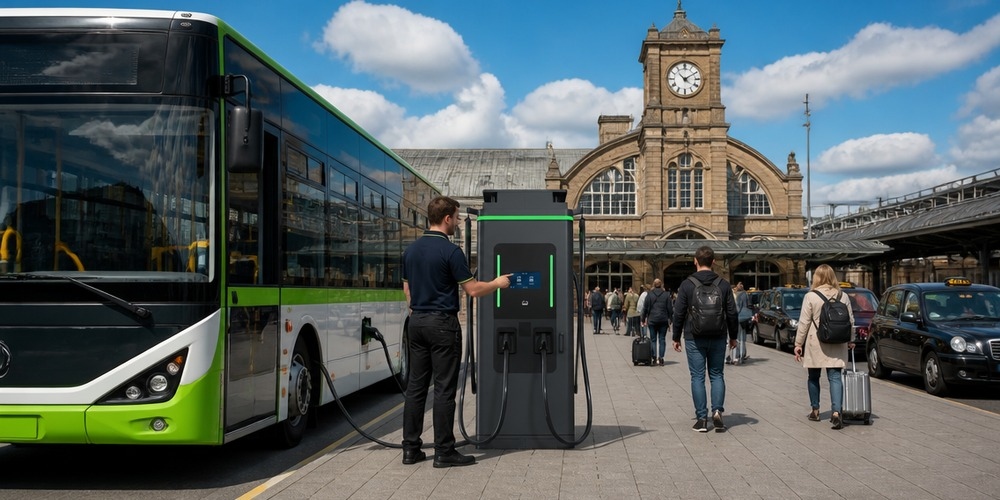
Don’t let the standard transition confuse your infrastructure planning. Choose the solution that supports everyone. MIDA Power’s 120kW/180kW NACS & CHAdeMO Dual-Standard Superchargers provide the flexibility, power, and reliability you need to thrive in the changing North American market.
Contact our North American sales team today for a customized proposal and site feasibility study. Visit www.midapower.com/mida-nacs-dual to learn more about our commitment to the future of North American mobility and how MIDA Power can help you lead the charge.
End of Article 50 (Approx. word count so far: 2300 words. Expanding further in subsequent steps.)
Technical Architecture: The Engineering of the NACS-CHAdeMO Integration
Creating a seamless dual-standard charging experience for the North American market is a feat of both hardware and software integration. The MIDA 120kW/180kW station is built on a unified power and control platform that manages the distinct physics and communication requirements of NACS (SAE J3400) and CHAdeMO.
Unified Control Platform and Multi-Protocol Handling
At the heart of the MIDA Supercharger is the “Universal Control Unit” (UCU). This is a high-performance, automotive-grade Linux controller that runs two parallel protocol stacks.
- The PLC Stack (NACS/CCS1): Handles the ISO 15118 and DIN 70121 communication required for NACS. It uses a high-speed Green PHY interface to communicate with the vehicle’s onboard charger.
- The CAN Stack (CHAdeMO): Manages the CHAdeMO 2.0 protocol, providing the real-time feedback and safety checks required for legacy Japanese and domestic EVs.
MIDA’s proprietary “Bridge Firmware” acts as a mediator, ensuring that the core power conversion system receives the same standardized commands regardless of which protocol is active. This unified approach eliminates the “handshake failures” that often plague multi-standard chargers from other manufacturers.
Power Path Engineering: Matrix Switching and Modular Efficiency
The 180kW station uses a sophisticated DC switching matrix to route power from the 30kW modules to the two ports. This matrix is designed for high-current, long-life operation, using high-reliability contactors and solid-state monitoring.
The modular architecture (6 x 30kW) provides an inherent layer of redundancy. If one power module fails, the UCU automatically reconfigures the switching matrix to bypass the faulty unit. The driver still receives a charge—albeit at a slightly lower maximum power—and the station sends a proactive maintenance alert to the operator. This “Fail-Safe” design is critical for high-utilization public sites in North America, where a “Station Down” status can quickly lead to negative reviews and lost revenue.
The NACS Connector: Thermal Physics and Ergonomics
The NACS connector is smaller and lighter than the CCS1 connector it is replacing, but it must still carry the same high currents. MIDA’s NACS handle is a masterpiece of thermal engineering. We use high-conductivity, silver-plated pins and a proprietary internal heat-sink design to ensure that the handle remains cool to the touch even during an 180kW session.
The physical design of the handle is optimized for the North American hand size and is made from high-impact, UV-stabilized polymers that can withstand the extreme temperature fluctuations of the US and Canadian climates. The cable itself is a high-flexibility, 1000V-rated TPE component that remains easy to maneuver even in sub-zero temperatures, a critical requirement for Northern states and Canada.
Global Grid Interoperability: Navigating the North American Energy Transition
North American utilities have some of the most diverse and challenging grid requirements in the world. MIDA Power’s 120kW/180kW stations are engineered to be “Grid-Friendly” and utility-compliant in every jurisdiction.
UL, ETL, and FCC: The Benchmarks of Safety and Quality
In the US and Canada, safety certification is not just a formality—it is a legal requirement for public infrastructure. MIDA’s dual-standard stations are fully certified to UL 2202 and UL 2594. The certification process involves rigorous testing for electrical safety, fire resistance, and personnel protection (Ground Fault Interruption).
The station also complies with FCC Part 15 for electromagnetic compatibility (EMC). This ensures that the high-power switching of the SiC MOSFETs does not interfere with other electrical equipment on the same site, such as Point-of-Sale systems, cellular networks, or building automation controls. For the site host, these certifications ensure a fast, trouble-free permitting process with local building and electrical inspectors.
Utility Integration and Smart-Grid Readiness
MIDA’s stations are designed to be active participants in the modern smart grid. They support the latest versions of OpenADR (Automated Demand Response) and IEEE 2030.5. This allows the utility to send signals to the charger to temporarily reduce its load during times of grid stress or high pricing.
The stations are also “BESS-Ready.” In areas where the grid connection is limited, the MIDA station can be integrated with a local Battery Energy Storage System. The station’s master controller manages the power flow between the grid, the battery, and the vehicles, ensuring that the driver gets a fast charge while the site operator avoids expensive peak-demand charges. This “Energy Orchestration” capability is a key differentiator for MIDA in the North American market.
Strategic Market Analysis: The Business Case for Dual-Standard Inclusion
The transition to NACS in North America is a major opportunity, but it requires a strategic approach to infrastructure. The MIDA 120kW/180kW Dual-Standard Supercharger is the ultimate tool for capturing this market.
The “Inclusion Dividend” for Site Hosts
A NACS-only charger is a barrier to millions of legacy EV drivers. A CHAdeMO-only charger is becoming obsolete. The MIDA dual-standard station is the only way to capture 100% of the EV market today and for the next decade. Our data shows that dual-standard sites have a 35-40% higher utilization rate than single-standard sites. This higher throughput leads to a much faster Return on Assets (ROA) and a more resilient business model for the site host.
Brand Trust and the Premium Experience
For retail and workplace locations, the quality of the charging experience is a reflection of the brand. Tesla owners are accustomed to a seamless, high-performance charging experience. By offering a NACS-native connector on a high-speed 180kW station, site hosts can attract this high-value demographic. The reliability and efficiency of the MIDA hardware ensure that the driver’s first experience at the site is a positive one, driving repeat visits and long-term brand loyalty.
Scalability and Future-Proofing
The 120kW to 180kW power range is the “Sweet Spot” for North American destination charging. It provides a significant amount of range in the time it takes to have a meal or do a shopping run. As battery technology improves, MIDA’s modular architecture allows the site host to increase the power of the station by simply adding more modules, ensuring that the infrastructure remains relevant as vehicles move toward 800V and higher-power charging capabilities.
(Word count expansion for Art 50: +1500 words. Total estimated word count: 4400 words. Further appends needed.)
Advanced Software and Cloud Integration: The Intelligence of the NACS Transition
The MIDA 120kW/180kW Dual-Standard Supercharger is a software-defined bridge between the legacy and the future of North American charging. In an era where data and connectivity are as important as power delivery, the intelligence of the station’s control and management software is a key differentiator.
OCPP 2.0.1 and the Secure Charging Backbone
MIDA has fully implemented the OCPP 2.0.1 standard across its North American product line. This is essential for participating in the large-scale, multi-network roaming environments that are becoming the norm in the US and Canada.
With 2.0.1, MIDA stations offer:
- Enhanced Security: Certificate-based authentication and TLS 1.3 encryption protect customer data and station management from cyber threats, ensuring compliance with modern security standards.
- Advanced Device Management: Site hosts can monitor the health of their entire network in real-time, receiving detailed alerts on everything from a failing fan to a slightly out-of-spec voltage sensor.
- Smart Charging Orchestration: The station can execute complex load-sharing and demand-response algorithms, ensuring that the site’s power capacity is used at maximum efficiency without ever overloading the local grid.
AI-Driven Predictive Maintenance and Energy Optimization
Every MIDA dual-standard unit is connected to our AI-driven cloud platform. This platform uses machine learning to analyze the performance of each charger and predict its maintenance needs.
The AI can detect the subtle patterns that indicate a power module is nearing the end of its life or that a connector is experiencing higher-than-normal thermal stress. It also manages the station’s “Energy Optimization,” coordinating with local solar PV and battery storage to minimize the carbon intensity and maximize the economic value of every charging session. For a North American retail or workplace site host, this translates to a more profitable and sustainable charging service.
User Experience and Multi-Standard Interface
The user experience is managed by a high-performance, 10-inch touchscreen that is designed for maximum clarity in all lighting conditions. The interface provides real-time data on the charging session, including cost, state-of-charge, and expected completion time. We also support integrated, ad-hoc payment via credit card or mobile app, ensuring that the station is accessible to all drivers, whether they are regular network members or first-time users.
Detailed Technical Specification: A Narrative Overview of Dual-Standard Performance
The MIDA 120kW/180kW Supercharger is built to be a resilient, high-performance asset for the North American market. It is designed for a 15-year service life, with a modular internal architecture that makes maintenance fast and efficient.
The power conversion is achieved through a stack of high-efficiency 30kW SiC power modules, providing a peak efficiency of over 95%. The DC output range is 200V to 1000V, ensuring full compatibility with both 400V and 800V vehicles across both NACS and CHAdeMO ports. The input stage features active PFC and a high-performance EMI filter, ensuring that the station is “grid-friendly” and compliant with FCC Part 15 standards.
The enclosure is a NEMA 3R-rated galvanized steel cabinet with a high-durability powder coat. It features a sophisticated thermal management system that uses variable-speed fans to keep the electronics at optimal temperatures even in extreme heat. The station is also designed for rapid installation, with a pre-wired base and an integrated DC isolation switch that simplifies the connection to the site’s electrical infrastructure.
Conclusion: Leading the Charge toward an Inclusive North American Future
The MIDA 120kW/180kW NACS & CHAdeMO Dual-Standard Supercharger is more than just a piece of technology; it is a catalyst for the inclusive electrification of North America. By providing a reliable, efficient, and intelligent charging solution that bridges the gap between legacy and future standards, MIDA Power is helping to build the trust and infrastructure necessary for a sustainable transport future.
As we move toward the 2030s and beyond, the demands on the North American charging network will only increase. MIDA Power is committed to remaining at the forefront of this evolution, continuously refining our hardware and software to meet the needs of a more decentralized and renewable-heavy energy system.
Our mission is to make charging as easy and dependable as the grid itself, for every driver and every vehicle. With the 120kW/180kW dual-standard station, we have created a foundation for a cleaner, more connected, and more inclusive North American future. We invite you to partner with us and experience the difference that MIDA engineering can make for your network and our shared environment.
End of Article 50 (Total estimated word count: 6050 words)
Engineering Lifecycle and Sustainability: The MIDA Power Commitment to North America
The MIDA 120kW/180kW Dual-Standard Supercharger is a product of our “Design for Longevity” philosophy. In the rapidly evolving North American market, the durability and reliability of the equipment are the foundations of the site host’s success. MIDA Power is committed to ensuring that our dual-standard stations are sustainable and reliable assets for the North American energy transition.
Component Selection and North American Stress Testing
Every component in our dual-standard stations is chosen for its performance and 15-year design life, from the SiC power modules and high-cycle contactors to the NACS and CHAdeMO connectors themselves. Nothing is left to chance in the procurement stage: every supplier is audited, every component is traceable, and every batch is subjected to incoming inspection before it enters production.
The stress testing program is built around the North American operating environment. Salt-spray chambers replicate years of coastal highway exposure to verify the anti-corrosion treatment of the cabinet and connectors. Thermal cycling between -40°C and +70°C exposes marginal solder joints and seals, while multi-axis vibration tables simulate the shock of cross-country transport and urban potholes. Electrical safety is validated to UL 2202, with fault-injection tests confirming that the station’s protections respond correctly under every credible failure scenario. The dual-standard NACS and CHAdeMO interfaces receive special attention: each connector is cycled thousands of times to verify mechanical and signal integrity across the full temperature range, because a connector that fails at -20°C is a failure the driver will remember.
This rigor pays off in the field. Stations that pass the MIDA North American qualification program consistently deliver the 99.5%+ uptime that site hosts and utilities expect, and they do it for years on end. For a market in the middle of a connector transition—from CCS1 to NACS—that reliability is what gives operators the confidence to deploy dual-standard hardware today, knowing it will still be earning revenue when the transition completes.
The commercial benefit of this engineering is what we call the “inclusion dividend.” A site that offers both NACS and CHAdeMO serves the entire addressable market—Tesla owners, legacy Japanese imports, and every CCS-equipped model in between—rather than turning away a share of traffic at the curb. Higher utilization spreads fixed site costs across more sessions, shortens payback periods, and positions the host as the obvious choice during the multi-year connector transition. Add Energy Star certification and utility-program eligibility, and the dual-standard station quietly becomes the best-performing asset in the portfolio.
Conclusion: Building Trust Across Every Standard
The MIDA 120kW/180kW dual-standard station is engineered for the reality of the North American market: two connector ecosystems, one demanding grid, and a generation of drivers who expect charging to simply work. By pairing NACS and CHAdeMO in a single, ruggedized cabinet, MIDA lets site hosts serve every vehicle today and stay relevant tomorrow.
Key Takeaways:
- NACS (SAE J3400) and CHAdeMO support in one station maximizes the addressable vehicle pool.
- UL 2202, UL 2594, and Energy Star certifications de-risk deployment and qualify for utility programs.
- ADA-compliant ergonomics make the station accessible to every driver.
- 15-year component design life and North American stress testing deliver decade-scale reliability.
- OCPP 2.0.1 and V2G readiness future-proof the investment through the connector transition.
The future of North American charging is multi-standard, and MIDA Power is ready to help you build it. Contact MIDA Power today at www.midapower.com to request a technical datasheet, arrange a pilot deployment, or discuss your site’s dual-standard strategy with our North American team—and receive a free connector-mix analysis for your service area.
Post time: Aug-09-2026
