
 Portable EV Charger
 Home EV Wallbox
 DC Charger Station
 BESS Charging Station
 V2G V2H V2V V2L
 EV Charging Module
 DC Charging Connector
 EV Accessories
The Future Landscape of High-Voltage BESS DC Charging
Quick Answer: High-voltage BESS DC charging refers to systems where battery storage operates on elevated DC voltage buses — 800 V, 1000 V, and beyond toward 1500 V — directly feeding high-power DC chargers, often with DC-coupled solar input, to serve 800 V and 1000 V vehicle platforms at 350–600 kW and above. The technology shift is being driven by three forces: vehicle architectures moving from 400 V to 800 V/1000 V (enabling 10–80% charge in under 15 minutes), the efficiency gains of DC coupling (eliminating two AC-DC conversion stages and lifting round-trip efficiency to 95%+), and liquid-cooled charging hardware that sustains 500 A+ currents continuously. By 2028, most new highway-class chargers will be built on 1000 V DC-coupled BESS platforms, with megawatt charging for trucks (MCS) pushing toward 1250 A and 3.75 MW per session.
Key Takeaways:
- Vehicle platforms are migrating from 400 V to 800 V/1000 V, and chargers must match voltage to avoid derating and charging-speed penalties.
- DC-coupled BESS architecture removes two conversion stages, raising system efficiency to 95%+ and cutting heat and energy losses at highway sites.
- Liquid cooling is mandatory above roughly 300 kW: it sustains 500 A+ continuous current through connectors and cables that air cooling cannot manage.
- Standards are consolidating around ISO 15118-20 (bidirectional and Plug & Charge), NACS adoption in North America, and MCS for heavy-duty truck charging.
- Future-proof site design means building for 1000 V DC buses, liquid-cooled hardware, and modular power blocks that can scale toward megawatt output.
The Voltage Race: From 400 V to 1000 V+ Vehicle Platforms
Every vehicle’s battery pack has a nominal voltage that determines the current required for a given charging power. At 400 V, delivering 350 kW requires roughly 875 A — a current that generates massive conductor heating and connector wear. At 800 V, the same power needs only ~440 A, and at 1000 V just ~350 A. This arithmetic is why virtually every major OEM launched 800 V platforms between 2021 and 2025 (with several announcing 900–1000 V architectures), and why charging infrastructure must match: a 400 V-class charger delivering to an 800 V vehicle either derates or requires DC-DC conversion, losing speed and efficiency.
| Architecture | Nominal Voltage | Current @ 350 kW | Charging Experience | Status |
| :— | :— | :— | :— | :— |
| Legacy 400 V | 350–450 V | ~875 A | 10–80% in 25–40 min | Declining for new installs |
| 800 V | 700–920 V | ~440 A | 10–80% in 12–18 min | Mainstream since 2023 |
| 1000 V | 900–1050 V | ~350 A | 10–80% in 10–15 min | Fastest-growing for new sites |
| 1500 V BESS bus | 1300–1500 V | — | Enables higher site power density | Emerging for storage + trucking |
| MCS (megawatt) | up to 1250 V | up to 1250 A | 500 kWh truck in 30–45 min | Pilot → commercial roll-out |
For site developers, the practical implication is that new installations should be specified for 1000 V output from day one. Chargers rated to 1000 V serve the full mixed fleet — 400 V, 800 V, and 1000 V vehicles — by negotiating the session voltage per ISO 15118, whereas 500 V-rated legacy hardware is stranded as the fleet migrates upward.
Why High-Voltage BESS Changes the Site Design Equation
A high-voltage BESS bus is not merely a bigger battery; it changes the site’s electrical architecture. Traditional sites convert AC grid power to DC at the charger, wasting 3–6% per conversion and burdening the grid connection. In a high-voltage DC-coupled design, the battery and solar array feed a shared 1000 V DC bus, and the chargers draw DC directly — eliminating two full conversion stages (AC-DC at the solar side and the grid-to-charger path). The measured outcome is a round-trip efficiency of 92–95% versus 85–90% for AC-coupled equivalents, plus reduced transformer and switchgear size for the same delivered energy.
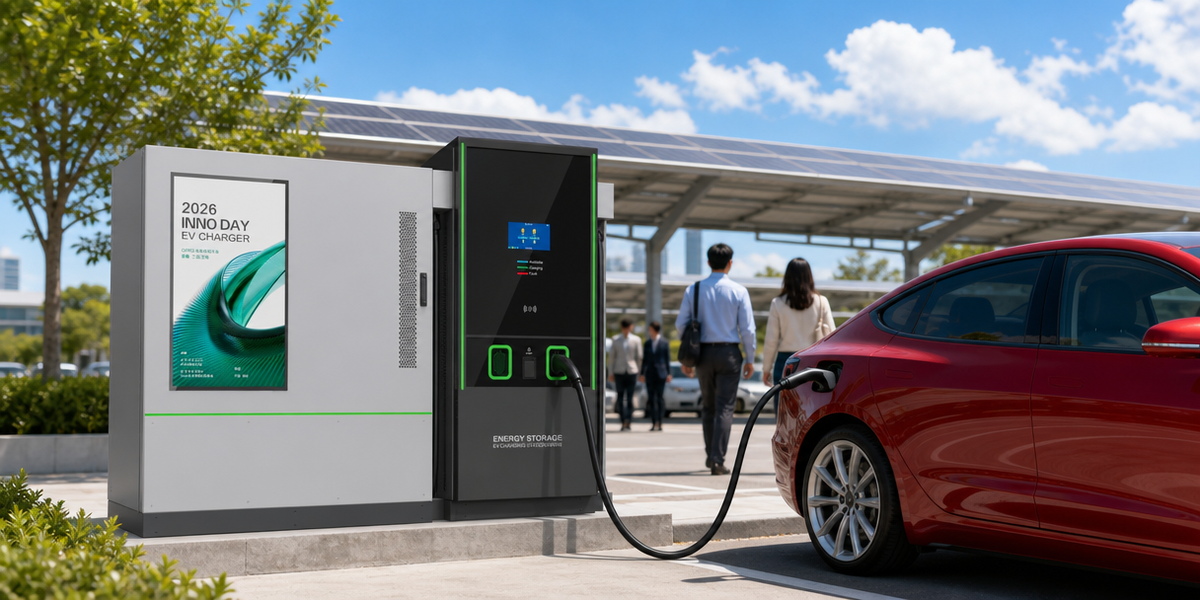
High-voltage buses also shrink conductors and losses proportionally to voltage. A 1500 V DC bus carries the same power at two-thirds the current of a 1000 V bus, enabling longer cable runs between distributed battery blocks and chargers — a decisive advantage for highway sites where battery cabinets sit 50–100 meters from the charging pads. This is why 1500 V-class BESS is becoming standard in containerized storage and why the top of MIDA’s product line — [split-type DC fast charging systems](https://www.midapower.com/400kw-500kw-split-dc-charging-systems-ccs-gbt-ev-charger-station-super-charger-pile-product/) from 360 kW to 1680 kW — uses high-voltage DC distribution to scale power without multiplying cable copper.
DC-Coupled Architectures: Cutting Losses at the Source
DC coupling means the photovoltaic array (if present), the battery, and the chargers all connect to a common DC bus, with a single grid-tied AC-DC converter managing the site’s net exchange with the utility. The architecture delivers three compounding benefits:
1. Higher solar utilization. PV energy goes directly to the battery or vehicles without an intermediate conversion, so off-grid solar-plus-storage stations operate with ~95% of the panel energy delivered to useful work. 2. Lower demand charges. The site’s AC-side import is smoothed by the battery, and the DC bus absorbs the mismatch between solar production, battery state, and charging load. 3. Simpler power electronics. Fewer converter stages mean fewer failure points, lower cooling loads, and a smaller footprint per installed kilowatt.
MIDA’s [integrated energy storage charging stations](https://www.midapower.com/energy-storage-charging-station) — from the [200 kWh/120 kW off-grid solar MPPT units](https://www.midapower.com/200kwh-120kw-mobile-ev-charger-off-grid-solar-mppt-dc-fast-charging-station-product/) to the [482 kWh/320 kW](https://www.midapower.com/320kw-482kwh-bess-charger-mobile-ev-charging-station-energy-storage-system-product/) and 625 kWh/400 kW configurations — implement exactly this DC-coupled topology. The MPPT solar input and the battery share the DC bus with the charger power stack, which is why these systems can operate fully off-grid while still delivering full fast-charging performance.
Liquid Cooling: The Enabler of Megawatt-Class Charging
Current density is the physical wall that high-power charging hits. Air-cooled connectors and cables are limited to roughly 250–350 A before heat and cable weight become unmanageable; above that, the connector reaches thermal limits within minutes and must derate. Liquid cooling changes the equation by circulating coolant through the cable jacket and connector body, removing heat at the source. Liquid-cooled charging systems sustain 500–600 A continuously, with MCS connectors targeting 1250 A.
The implications for station design are structural:
- Sustained high power without derating. A liquid-cooled 600–1080 kW station can deliver full power across back-to-back sessions in summer heat, where air-cooled equivalents derate by 20–40%.
- Thinner, lighter cables. A 500 A liquid-cooled cable weighs roughly half of an air-cooled equivalent at the same rating, improving ergonomics for drivers — a genuine adoption factor in daily-use fleet and highway sites.
- Liquid-cooled power modules. The converter modules themselves (40–125 kW class) are liquid-cooled, enabling the high module density that megawatt-class cabinets require. MIDA’s 40 kW/60 kW/75 kW/125 kW [liquid-cooled power modules](https://www.midapower.com/40kw-dc-bus-input-1000v-dc-dc-ev-charging-module-liquid-cooled-power-module-product/) power the top of the charging portfolio.
High-voltage DC plus liquid cooling is the combination that makes 600 kW to 1 MW+ sites physically realizable in a single cabinet line, which is precisely where the market is heading as 800 V trucks and high-end passenger EVs arrive in volume.
Standards Shaping the Next Decade
The high-voltage future is being codified by three standard families, and procurement specifications should reference them explicitly:
| Standard / Protocol | Role | Impact on Site Design |
| :— | :— | :— |
| ISO 15118-20 | Bidirectional communication, Plug & Charge, smart charging | Enables V2G, session-level voltage/power negotiation, secure billing |
| NACS (North American Charging Standard) | Connector standard adopted by major US OEMs | New North American sites need NACS-native or NACS-compatible hardware |
| MCS (Megawatt Charging System, IEC 63379 / CharIN) | 1250 A / up to 3.75 MW heavy-duty charging | Highway truck corridors move from 350 kW to 1–3.75 MW per bay |
| OCPP 2.0.1 | Network control and security | TLS-secured remote management of high-power sessions |
| Grid codes (IEEE 1547, EN 50549) | Distributed generation interconnection | BESS export, anti-islanding, fault ride-through at high voltage |
The convergence of ISO 15118-20 and MCS matters because it standardizes the data layer for megawatt sessions: authentication, metering, and bidirectional power flow are negotiated digitally, which is a prerequisite for both V2G revenue and multi-MW truck charging hubs. NACS adoption in North America, meanwhile, means connectors must be NACS-ready on new US-targeted hardware, while CCS2 remains the European default — a regional split that modular, multi-standard charger families handle without redesign.
Technology Outlook: What Arrives by 2028
The trajectory from today to 2028 is visible in vendor roadmaps and standard workstreams:
| Trend | Today (2026) | 2028 Outlook |
| :— | :— | :— |
| Vehicle platforms | 800 V mainstream, 1000 V early | 1000 V standard on premium; 800 V on volume |
| BESS bus voltage | 800–1000 V typical | 1500 V standard in container systems |
| Charging power | 350–600 kW liquid-cooled | 1–3.75 MW MCS corridors; 600 kW passenger class |
| Architecture | DC-coupled emerging | DC-coupled default for new sites |
| Energy services | V2G pilots | Commercial V2G in fleets; BESS as grid asset |
| Connectors | CCS2 + NACS | NACS North America; CCS2 Europe; MCS trucks |
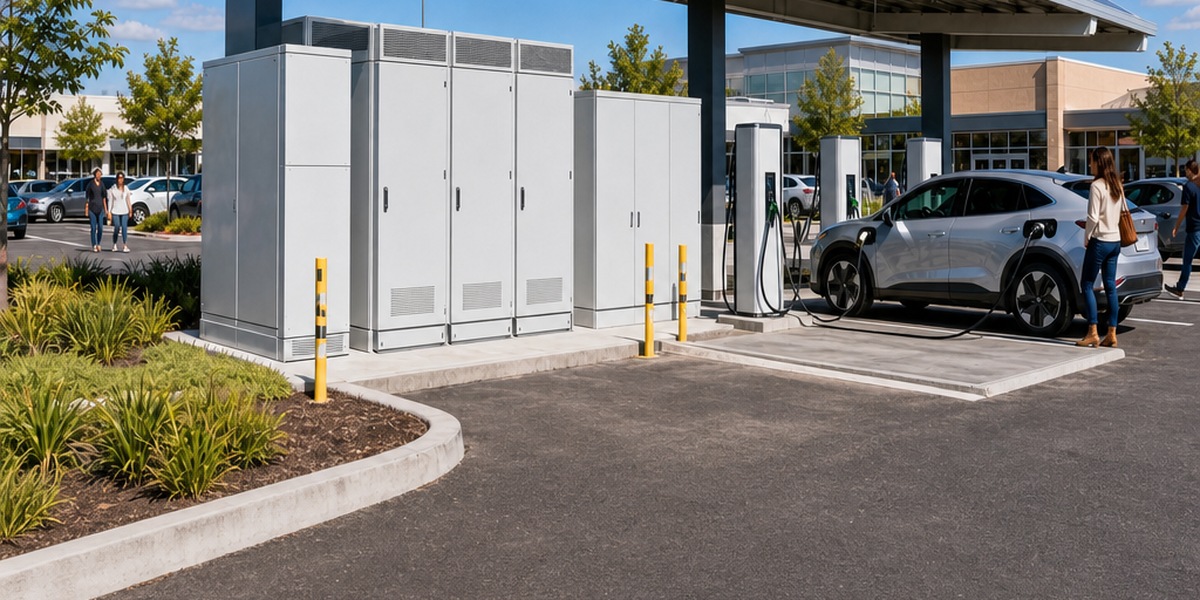
Two planning implications follow. First, site power infrastructure (transformers, switchgear, conduits) should be sized for the 2030 fleet, not the 2026 fleet — retrofitting switchgear is 3–5× more expensive than oversizing at construction. Second, battery and charger hardware should be chosen from modular families that accept higher-voltage modules and liquid-cooled upgrades in place, so the site’s storage and power stack evolve with the fleet rather than being replaced with it.
Future-Proofing Your Investment: A Checklist
Developers can lock in the high-voltage future with five specification decisions:
1. Specify 1000 V DC chargers (dual-standard CCS2/NACS or market-appropriate) for all new passenger and fleet sites. 2. Choose DC-coupled BESS with a shared DC bus for solar, battery, and chargers to capture the 5–10% efficiency advantage. 3. Mandate liquid-cooled power modules and connectors at any site above 300 kW to avoid summer derating. 4. Size grid-side infrastructure for 1.5–2× initial capacity to absorb megawatt upgrades without switchgear replacement. 5. Select modular BESS platforms whose bus voltage and power blocks can be upgraded in place toward 1500 V and MCS-class output.
The future landscape of high-voltage BESS DC charging is not speculative; it is already measurable in vehicle platform launches, charger shipments, and standard workstreams. Sites designed today on 1000 V DC-coupled, liquid-cooled, modular platforms will be the ones still competitive in 2030 — and the ones earning grid-service revenue while the rest of the market rebuilds.
FAQ
1. What is high-voltage BESS DC charging? It is an architecture where battery storage operates on a high-voltage DC bus (800–1500 V) that directly feeds DC chargers — often with DC-coupled solar — enabling 350 kW to megawatt charging with fewer conversion losses.
2. Why does vehicle voltage matter for charging infrastructure? Higher vehicle voltage (800 V/1000 V) delivers the same power at lower current, reducing heat and losses; chargers must match the vehicle’s voltage to avoid derating or conversion losses.
3. What is the efficiency advantage of DC-coupled BESS? DC coupling eliminates two AC-DC conversion stages, lifting system round-trip efficiency from roughly 85–90% (AC-coupled) to 92–95% (DC-coupled).
4. Why is liquid cooling necessary for high-power charging? Above ~300 kW, air cooling cannot sustain the current through cables and connectors; liquid cooling removes heat at the source, enabling 500–600 A continuous output without derating.
5. What is MCS, and when will it matter? The Megawatt Charging System (up to 1250 A, 3.75 MW per session) is the CharIN/IEC standard for heavy-duty truck charging; it transitions highway corridors from 350 kW to megawatt-class power as electric trucks scale.
6. Should I buy 1000 V or 1500 V BESS today? For most EV charging sites, a 1000 V system serves the current and near-term fleet; operators planning containerized or trucking infrastructure should verify the platform’s path to 1500 V bus upgrades.
7. Will NACS or CCS2 dominate in the future? NACS is the de facto standard for new North American sites, while CCS2 dominates Europe; multi-standard chargers that support both, plus ISO 15118-20, are the safe choice for global operators.
Post time: Aug-14-2026
