
 Portable EV Charger
 Home EV Wallbox
 DC Charger Station
 EV Charging Module
 DC Charging Connector
 EV Accessories
SAE International announces it will promote NACS charging technology standardization, including charging PKI and infrastructure reliability standards
On June 27, the Society of Automotive Engineers (SAE) International announced that it will standardize the North American Charging Standard (NACS) connector developed by Tesla. This will ensure that any supplier or manufacturer can use, manufacture, or deploy the NACS connector for electric vehicles (EVs) and charging stations across North America. SAE International (SAEI) is a global organization dedicated to advancing mobility knowledge and enabling safe, clean, and accessible mobility solutions, and setting standards for industry engineering. Companies that have announced their use of the NACS connector include Ford Motor Company, General Motors, and Rivian. Electric vehicle charging network operators such as EVgo, ChargePoint, Flo, and Blink Charging, as well as fast charger manufacturers such as ABB North America, Tritium, and Wallbox, have announced their support for CCS and Tesla’s technology.
Prior to this: Tesla’s NACS charging technology is not strictly speaking a standard. It merely permits a limited number of charging stations to serve CCS-equipped electric vehicles via adapters, while providing basic technical specifications for the charging technology available for download. However, any company wishing to make its electric vehicles compatible with Tesla’s NACS requires Tesla’s permission to access its charging network and develop software integrating with its proprietary charging interface and billing system. Although Tesla does utilise some of the same standards-based communication technologies employed in CCS, the company’s NACS technology has yet to establish an open charging ecosystem for the North American charging industry. Similarly, Tesla’s technology remains unavailable to all parties wishing to build upon it – a fundamental principle typically expected of standards.
SAE International states that the NACS standardisation process represents the next step in establishing a consensus-based approach to maintain NACS and verify its ability to meet performance and interoperability standards. The US Joint Office of Energy and Transportation has played a significant role in facilitating the SAE-Tesla partnership and accelerating plans to standardise NACS—a crucial step towards establishing an interoperable national charging network for all electric vehicle drivers. This initiative also enjoys the backing of the White House. (White House Fact Sheet, 27 June: The Biden-Harris Administration Advances a Convenient, Reliable, American-Made National EV Charger Network). The new SAE NACS connector standard will be developed within a short timeframe, representing one of several key US initiatives to strengthen North America’s electric vehicle charging infrastructure. This includes the SAE-ITC Public Key Infrastructure (PKI) for cybersecurity in charging. According to various analyses, the United States will require between 500,000 and 1.2 million public charging ports by 2030 to support the Biden administration’s goal of electric vehicles accounting for half of all new vehicle sales in the country by the end of the decade. Per data from the US Department of Energy’s Alternative Fuels Data Centre, the nation currently hosts over 100,000 Level 2 slow-charging ports and approximately 31,000 DC fast-charging ports. Tesla’s fast-charging network, however, boasts 17,000 charging points – more than five times the figure reported by the Department of Energy’s Alternative Fuels Data Centre. It is only a matter of time before NACS charging technology becomes the standard for North America.
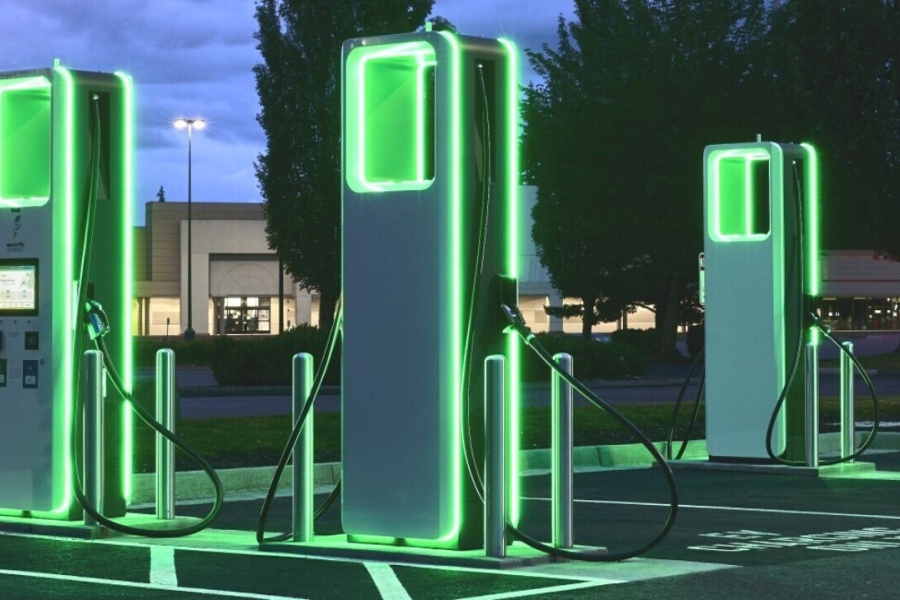
Electify America, which has not yet committed to supporting Tesla’s NACS charging technology, is also one of the major EV charging companies in North America. Its network of over 3,500 charging stations in the US, primarily based on CCS, is funded by the $2 billion Dieselgate settlement reached between its parent company, Volkswagen, and the US government in 2016. Volkswagen is a core member of the CharIN consortium. CCS has been battling for dominance in North America for nearly a decade, even introducing an alternative fast-charging standard, CHAdeMO, which is favored by some Japanese automakers, including EV pioneer Nissan. Nissan announced last year that its new EVs sold in North America would switch to CCS. Currently, many EV charging stations in North America and Europe still offer both technologies.
Post time: Sep-13-2025
