
 Portable EV Charger
 Home EV Wallbox
 DC Charger Station
 EV Charging Module
 DC Charging Connector
 EV Accessories
The entire charging ecosystem in the United States faces challenges and pain points.
In the second quarter of this year, nearly 300,000 new electric vehicles were sold in the United States, setting another quarterly record and representing a 48.4% increase compared to the second quarter of 2022.
Tesla led the market with over 175,000 units sold, representing a 34.8% quarter-on-quarter increase. Tesla’s overall sales growth benefited from substantial price reductions in the US and incentives significantly exceeding industry averages.
In June, the average price of electric vehicles in the US market fell by nearly 20% year-on-year.
Electric vehicles accounted for 7.2% of the US market share in the second quarter, up from 5.7% a year earlier but below the revised 7.3% recorded in the first quarter. Tesla ranked first among luxury car brands in the US market, yet its share of EV sales continued to decline.
In Q2 this year, Tesla’s market share fell below 60% for the first time, though its sales volume still far exceeded that of second-placed Chevrolet – ten times greater. Ford and Hyundai ranked third and fourth respectively, trailing only Chevrolet. Newcomer Rivian sold over 20,000 units during the quarter.
The once-dominant Model S is no longer the best-selling premium electric vehicle. Its estimated sales last quarter stood at 5,257 units, representing a year-on-year decline of over 40% and falling significantly behind the BMW i4 electric vehicle’s second-quarter sales of 6,777 units.
As global demand for electric vehicles grows exponentially year-on-year, the development of charging infrastructure has progressively become an essential requirement.
According to the International Energy Agency, electric vehicles’ share of the global automotive market rose from approximately 4% in 2020 to 14% in 2022, with projections reaching 18% by 2023. Executives within the American automotive industry anticipate that electric vehicles will constitute 50% of new vehicle sales in the United States by 2030.
The current focus lies in addressing concerns that insufficient charging infrastructure exacerbates consumer range anxiety.
According to S&P Global Mobility, approximately 140,000 EV charging stations currently operate across the United States. S&P indicates that even incorporating residential home chargers, the total number of US chargers must quadruple by 2025. The organisation forecasts an eightfold expansion of this figure by 2030.
This implies the installation of 420,000 new chargers by 2025 and over one million by 2030.
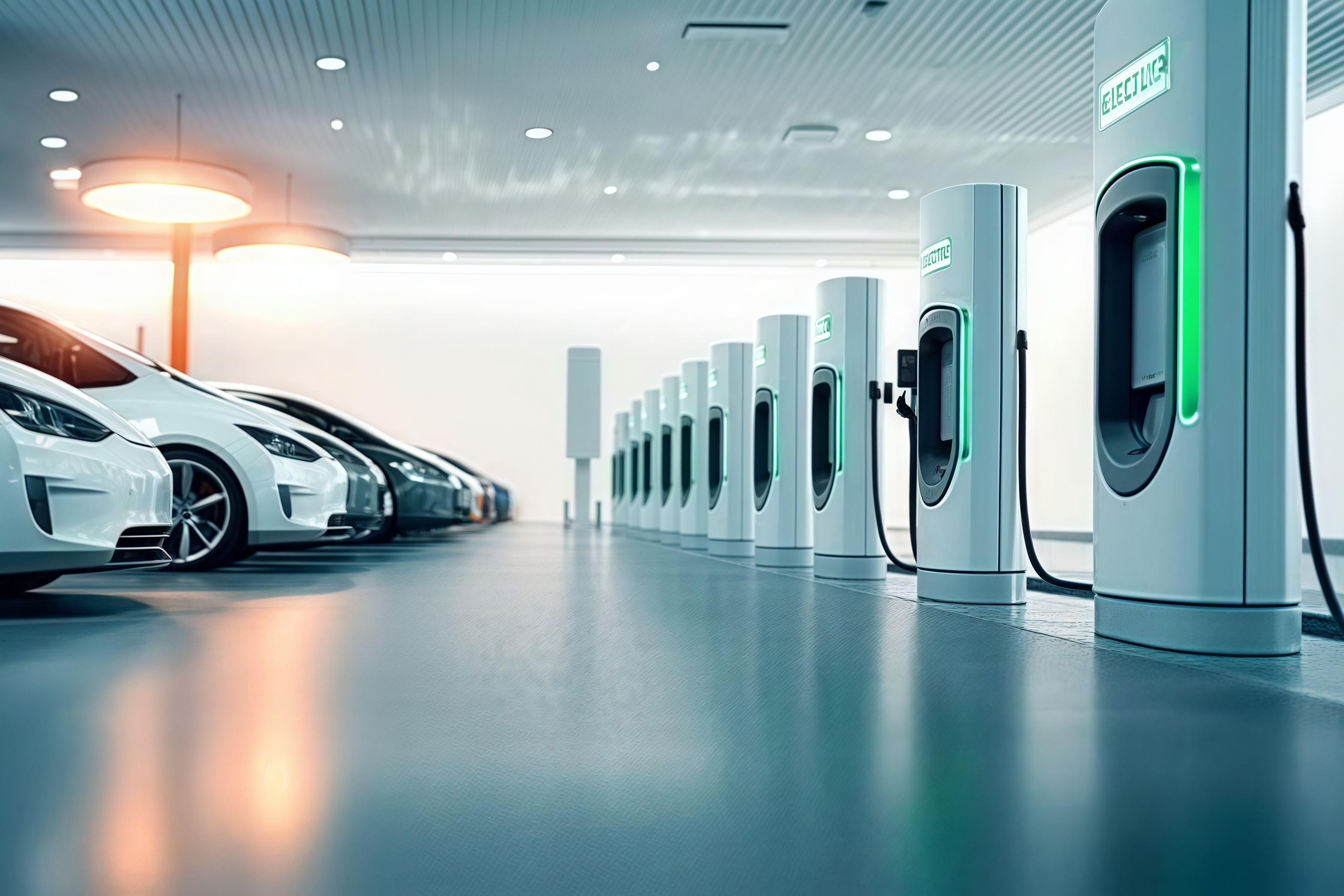
As electric vehicle sales continue to grow, American EV retailers increasingly require charging solutions. Market indicators suggest the United States will witness rapid, large-scale and sustained deployment of charging stations in the coming years. This deployment aims to deliver the convenient, swift and high-quality driving and charging experience expected by American electric vehicle customers, thereby realising the nation’s electrification transformation.
I. Opportunities in the Property Market Charging station companies are urgently seeking and securing prime locations for rapid public charging infrastructure deployment. While demand in the United States is substantial, suitable property projects remain limited in number.
II. Protecting Development Rights Charging stations exhibit low commonality, with each site presenting distinct characteristics. Permitting processes and easement issues further compound deployment uncertainties.
III. Financing Requirements Funding channels are diverse and standards inconsistent. Capital for charger manufacturing includes government grants, each with its own reporting requirements.
IV. Regional Variations State governments retain jurisdiction over standards for these new applications and technologies (Authority Having Jurisdiction, AHJ), while national standardisation remains ongoing. This means differing locations have distinct guidelines for obtaining permits.
V. Sufficient Grid Expansion Infrastructure Significant increases in electricity transmission loads are projected for national grids. Some US forecasting firms estimate the country will require a 20% to 50% increase in power capacity to meet EV charging demands.
VI. Sufficient Construction Capacity The current pool of qualified construction contractors in the United States is limited, rendering it fundamentally incapable of meeting the installation targets for the specified number of charging points within the designated timeframe.
VII. Component Supply Capacity The United States currently lacks a sufficiently robust supply chain system to support its future incremental market for charging point manufacturing. Disruptions in component supply could delay project construction. The complexity of electric vehicle charger structures. Clients, contractors, developers, utility companies, and government agencies all play distinct roles in charger projects. The growth in electric vehicle sales has increasingly highlighted the gap in America’s charging infrastructure, with experts viewing this as a dominant issue within the US automotive industry.
Post time: Sep-13-2025
