
 Portable EV Charger
 Home EV Wallbox
 DC Charger Station
 BESS Charging Station
 V2G V2H V2V V2L
 EV Charging Module
 DC Charging Connector
 EV Accessories

What is PNC (Plug&Charge) function – Plug and Charge
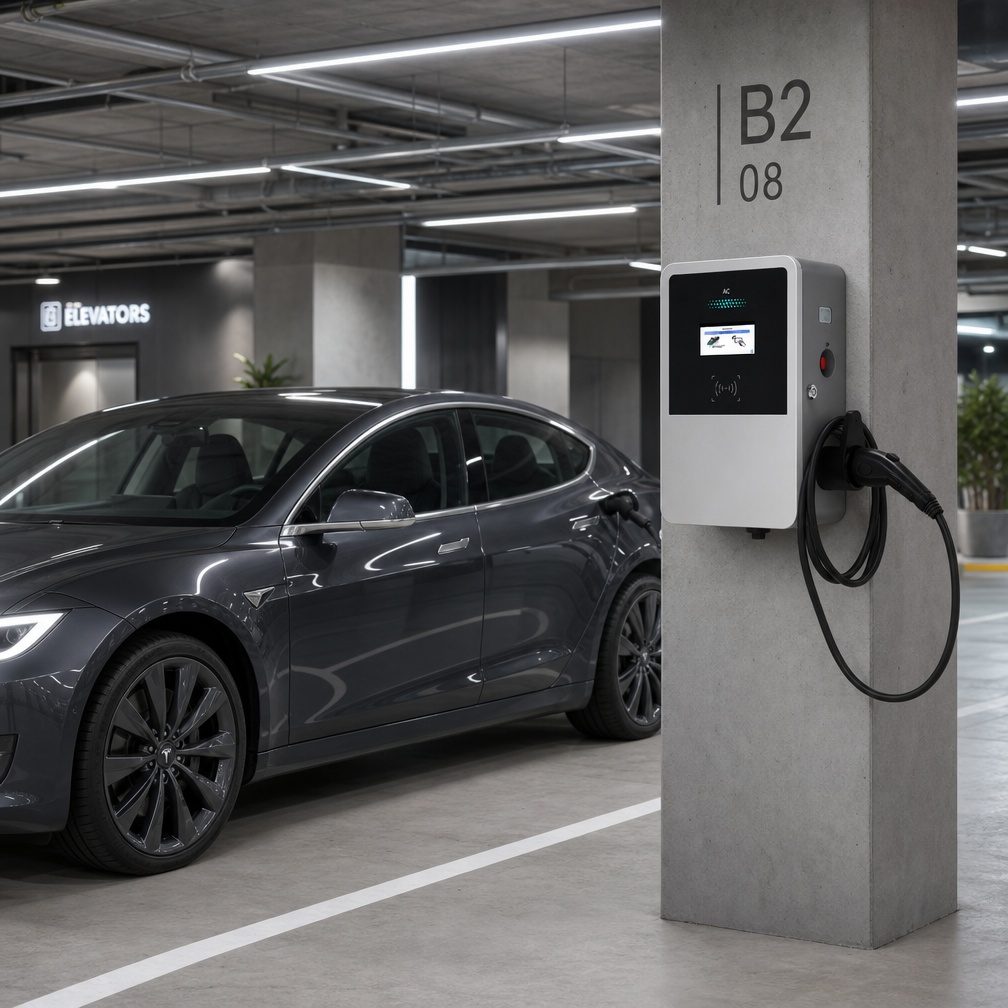
Different from the plug and play of household charging stations and regional Auto Charge, the PNC function allows electric vehicles to be “plug and play” on public charging stations. The only thing users need to do is to plug the charging gun into the charging interface of the car, which is called “Plug&Charge” in English.
From a technical perspective, it can be divided into two application solutions: AC PNC and DC PNC, which can automatically start charging, power on, pay, and end the charging process. PNC technology is based on the ISO 15118 communication standard.
Imagine driving an electric vehicle that supports PNC (Plug&Charge) to a charging station. Simply remove the charging gun and insert it into the vehicle’s charging port, and charging will automatically begin. No need to search for apps, no need to swipe cards or scan codes, the entire identity verification and payment process is silently completed in the background, which not only greatly improves the charging experience of users at public charging stations, but also shortens the turnover time of charging stations for operators. Let the charging experience reach new heights for both parties, A and B.
The technical principle behind the PNC (Plug&Charge) function:
Electric vehicles and charging stations achieve automatic identification and confirmation through digital certificates – essentially encrypted identity verification, used to prove the identity of the device or service, without the need for external identification (such as RFID cards, debit cards, or charging apps).
By placing the digital certificate inside the car, electric vehicles can complete identity confirmation at public charging stations in just a few seconds, thus realizing the full process of charging and billing functions.
What is a digital certificate? The contract certificate refers to the charging bill and account between the vehicle and the user, which is provided by the Mobile Service Provider (MSP). Identity verification and authorization (to confirm if you are allowed to charge) are all automatically completed – there are no app applications, no card swiping, and no other payment actions.
How the PNC (Plug&Charge) function ensures payment security:
Users rely on a complex encryption mechanism every time they use the PNC (Plug&Charge) feature, which includes securely exchanging secret session keys for encrypting and decrypting data, digital signatures to ensure messages are not tampered with, and digital certificates to verify the authenticity of each participant – all of which occur between the user’s electric vehicle, charging station, charging station operator, and mobile service provider, and the entire process is completed within seconds. This security level is the same as that of online banking systems, ensuring that all data bytes flowing through charging cables and other channels remain private and protected by security.
- ✔ Establish TLS 1.3 encrypted secure connections between networks;
- ✔ Establish interoperability sharing of X.509 certificate chains and PKI root certificate systems between operator networks;
- ✔ Adopting the ISO 15118 communication standard, digital certificates are issued and managed in a mutually trusted manner among all participants in the EV charging ecosystem, ensuring data security and charging compatibility;
PNC (Plug&Charge) is currently the most efficient and secure payment method for reducing charging errors.
PNC (Plug&Charge) ecosystem:
The current situation of PNC (Plug&Charge) ecosystem until 2025:
CPOs that support PNC functionality worldwide:
Europe: Allego, Aral Pulse, Atlante, Electra, IONITY, Mer, Shell Recharge, Smatrics, Vattenfall
UK: dom: IONITY, Shell Recharge
United States: Chargepoint, Electrify America, IONNA
EV OEMs worldwide that support PNC functionality:
Audi, BMW Cupra、 Ford Genesis、 Modern, Kia Lucid、 Mercedes MAN、Mini、 Nissan Polestar、 Porsche, Renault Vinfast、 Volkswagen, Volvo, etc.
Global OEM charging stations that support PNC function:
ABB、Alpitronic、Autel、Defa、Delta、Ekoenergetyka、Enersys、i-Charging、IOCharger、Kempower、Liteon、Mennekes、Power Electronics、StarCharge、Vestel、XCharge Wait.
PNC (Plug&Charge) OCPP 2.0.1:
Currently, OCPP 1.6 and OCPP 2.0.1 are still being used in parallel globally. If you need a charging station with PNC functionality, OCPP 2.0.1 provides a standardized, end-to-end path. Plug&Charge based on 1.6 can work, but this increases the possibility of CPMS/charger mismatch leading to related errors (such as different message encapsulation or supplier IDs), so 1.6 requires specifying supplier combinations and conducting extensive interoperability testing to avoid PNC functionality not functioning properly. The verification time cost, manpower cost, and economic cost invested are higher than those of OCPP 2.0.1 standardized protocol version.
The mandatory implementation date for PNC (Plug&Charge) is January 1, 2027
PNC (Plug&Charge) has shifted from an optional value-added service to a mandatory infrastructure requirement in Europe and the United States.
The Alternative Fuel Infrastructure Regulation (AFIR) has been further upgraded. On January 1, 2027, public and private chargers across Europe must support the advanced ISO 15118-20 standard, and infrastructure structural transformation is urgently needed. This regulatory approach has prompted network operators to deploy ahead of schedule and pushed manufacturers to meet compliance requirements before the deadline. AFIR needs to comply with the ISO 15118 standard, not the PNC (Plug&Charge) function itself. However, supporting the latest ISO 15118 20 standard without PNC functionality is not very meaningful.
The United States has adopted a similar approach: through the National Electric Vehicle Infrastructure (NEVI) program requirements, all chargers must comply with the ISO 15118-3 standard and their hardware should have the ability to implement the ISO 15118-20 and ISO 15118-20 protocols.
The value of Plug&Charge lies in the fact that OEMs can not only provide users with the most reliable and convenient services, but also offer the safest and most comfortable charging experience without sacrificing data security.
Post time: Sep-20-2026
