
 Portable EV Charger
 Home EV Wallbox
 DC Charger Station
 BESS Charging Station
 V2G V2H V2V V2L
 EV Charging Module
 DC Charging Connector
 EV Accessories
When exporting charging stations overseas, the first thing that comes to mind is the European market and CE certification.
Market Potential
The European market is very large – covering a population of 400 million in 46 member states, so the demand for new energy charging piles is naturally high. Meanwhile, most countries in Asia, Africa, and Australia basically follow European standards and certification systems, and obtaining CE certification is equivalent to indirectly passing the certification of these countries. Spend one dollar to do multiple things, eat more at once.
However, the North American market has received relatively little attention from domestic pile companies.
Challenges in North America
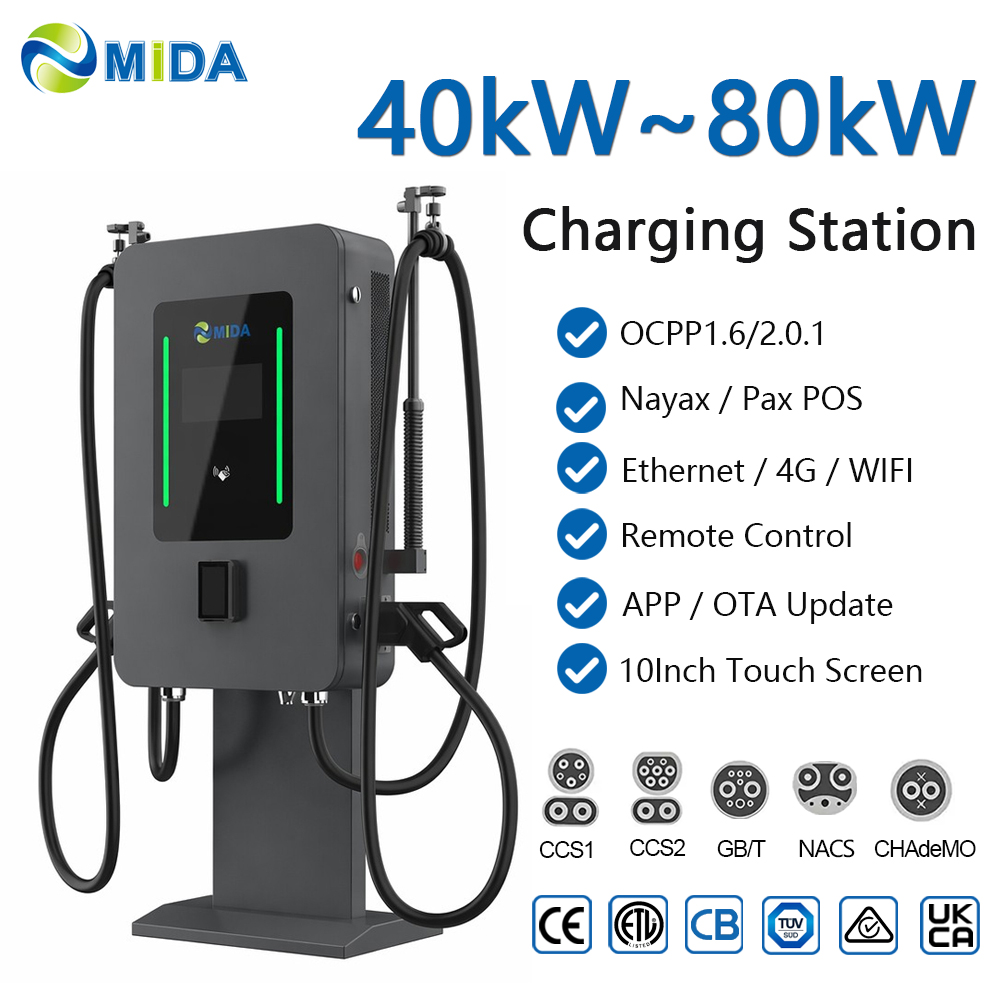
- ⚠ Confusion in Standards There are three types of physical interfaces for individual charging stations, namely CCS1, NACS, and CHAdeMO. At present, the mainstream interface on the market is still CCS1, which is supported by most car companies. The NACS interface represented by Tesla is also growing rapidly. Ford and General Motors have announced support for NACS in their new models. Japan’s CHAdeMO interface is on the verge of being phased out, with a market share of only about 10%. Therefore, there is no unified statement on whether the export of charging stations to the United States is for CCS1 interface certification, NACS certification, or chademo certification, which is confusing.
- ⚠ High Entry Threshold The United States tends to support domestic enterprises, and the Inflation Reduction Act (IRA) passed in 2022 requires that 40% of the components of charging stations be produced domestically in the United States. If this ratio is not met, subsidies for new energy cannot be received. At the same time, influenced by the Trump administration, some models of domestic charging stations exported to the United States are subject to tariffs of up to 25%, causing Chinese products to suddenly lose competitiveness. The consequence of this is that the market share of three domestic American companies, ChargePoint, EVgo, and Blink Charging, exceeds 50%, leaving little room for foreign companies to survive.
- ⚠ High Cost of Certification Exporting to the United States is definitely the first choice for UL certification. Taking a simple communication post as an example, for CE certification, if you choose European certification leaders T Ü V S Ü D S Ü D or Rheinland, the whole set can be solved for about 200000 yuan, and the certification cycle is about three months. For similar products, the UL certification fee exceeds 500000 yuan, and the cycle is also about six months. The certification cost for DC piles is even more exaggerated, with CE costing around 300000 to 400000 yuan and UL’s cost easily exceeding one million yuan. Charging stations are biased towards the hardware manufacturing industry, and the profits of the station companies themselves are very low. It is unrealistic to spend high funds on certification without obtaining market revenue.
The standards are chaotic, certification is expensive, and taxes are high. Naturally, most pile companies do not want to prioritize the layout of products in North America.
If you don’t want to do it in North America anymore, you have to give it a try. The reason is also very sad – it’s harder to do it in other overseas markets, and the European and Southeast Asian markets are becoming saturated, with competition becoming increasingly fierce. By comparison, the North American market is somewhat lucrative. In a bad environment, fly legs are all meat.
How can domestic charging stations open up the US market?
This is a complex problem. Apart from sales at the market level, the most difficult task undoubtedly is how to obtain market access permits in the United States with the least cost and comply with relevant regulations. This means that for admission qualifications, pile companies need to seek certification bodies other than UL that are also recognized by the US government and market. At the same time, it is necessary to have a detailed understanding of the design specifications of North American charging stations at the beginning of product design and make targeted adjustments.
As a senior R&D engineer and certified engineer of North American charging stations, I am well aware of the complexity and unfairness of exporting to North America.
In the following article, I will delve into the North American certification system consisting of NFPA 70, NRTL, OSHA, and UL, starting from market access; Later, I will provide a detailed interpretation of UL 2594 (AC pile standard) and UL 2202 (DC pile standard), comparing the differences between American standard charging piles and national standard European standard charging piles, to help everyone avoid detours; Finally, I will discuss the requirements for personal protective systems (UL 2231) and functional safety (UL 991 and UL 1998) in American standard charging stations, in order to thoroughly eliminate obstacles in the design of charging stations.
Without further ado, if you happen to be interested in the North American charging pile market, I sincerely invite you to embark on the journey of designing and certifying charging piles in North America with me.
Post time: Sep-21-2026
