
 Portable EV Charger
 Home EV Wallbox
 DC Charger Station
 BESS Charging Station
 V2G V2H V2V V2L
 EV Charging Module
 DC Charging Connector
 EV Accessories
The previous article introduced the software implementation of the European standard CCS 15118 protocol. As is well known, in order to achieve the practical application of charging pile products, it is also an extremely important step to test the integration with real vehicle charging. This article will analyze and discuss some specific issues related to the protocol encountered during the on-site operation of European standard charging stations overseas.
At present, there are many brands of new energy vehicles overseas, some of which are self-developed EVCCs, while others purchase mature EVCC modules from third parties. Although different companies also follow the CCS standard in the implementation of EVCC, the 70121 and 15118 protocols themselves do not specify every detail and exception, and each company has its own understanding of the protocol, so there will be different approaches in handling details. In actual operation, charging stations have to face numerous different brands of cars. Once charging fails, customers generally believe that it is a problem with the station rather than their own car. Therefore, how to improve the compatibility, stability, and charging success rate of charging stations is an important but thorny issue that station companies commonly face.
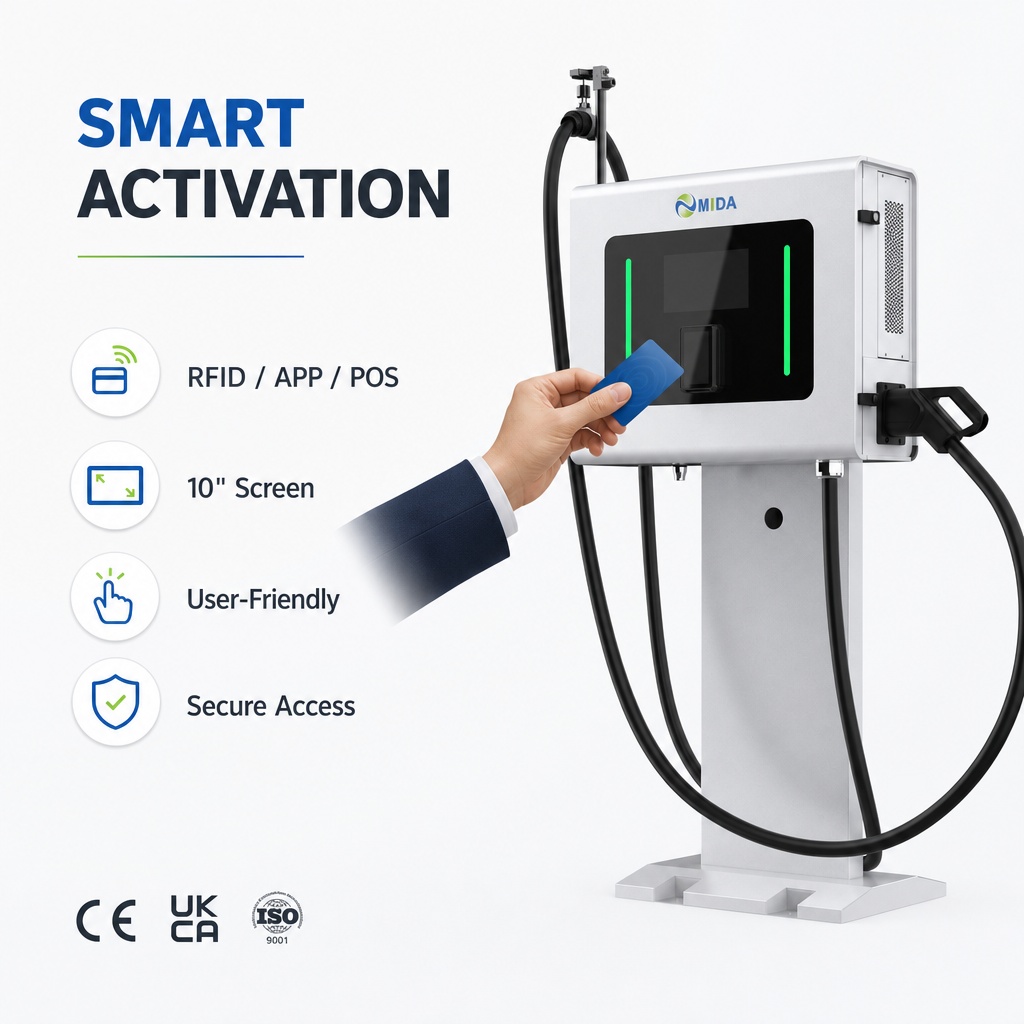
Below is an analysis and discussion of the problems we encountered in testing different brands of car models in multiple overseas locations. This will not only help everyone avoid detours, but also deepen their understanding of the agreement through discussion. (Considering sensitivity, we will not provide specific explanations of the brand of the car model later, and will use a certain model instead.)
1. Problem phenomenon: PWM signal issue
After inserting the charging gun and turning on the charging, the station emits a PWM wave (5% duty cycle, 1kHz), but fails to receive the link layer connection request from the vehicle within the timeout period.
Problem analysis: Check module status, hardware signals, and PLC signal characteristics (SD -75dBm/Hz, 1.3V carrier) as per 15118-3.
2. Problem phenomenon: SLAC crosstalk
If both guns start the charging process at the same time, the SLAC process cannot be completed normally due to signal crosstalk.
Problem analysis: Implement fault tolerance for multiple EVCC requests and consider shielded wiring.
3. Problem phenomenon: NMK/NID networking failure
SECC issued default NMK and NID, but the vehicle end was unable to complete the networking.
Problem analysis: Use randomly generated, rule-compliant NMKs and NIDs for each session.
4. Problem phenomenon: Early request timeout
Vehicle sends CM_SLAC-PARM.REQ before the PLC chip is initialized.
Problem analysis: Add appropriate delay before emitting the PWM wave after chip initialization.
5. Problem phenomenon: Pre-PWM request handling
Vehicle issues requests before SECC outputs PWM.
Problem analysis: Configure SECC to respond to vehicle requests immediately after chip initialization.
6. Problem phenomenon: Missing SDP requests
After SLAC, the pile fails to receive SDP requests.
Problem analysis: Check IPv6 NDP process and CP state (State B, 9V).
7. Problem phenomenon: ChargeGameterDiscovery interruption
Vehicle disconnects during the OnGoing phase.
Problem analysis: Include the SAScheduleList parameter during the OnGoing phase for compatibility.
8. Problem phenomenon: Low current request
Vehicle requests small current under 70121 protocol.
Problem analysis: Include EVSEMaximumPowerLimit parameter during the CPD phase.
9. Problem phenomenon: Cable check timing
Vehicle drops CP voltage after sending cable check.
Problem analysis: Adjust CP voltage judgment logic to improve fault tolerance.
10. Problem phenomenon: ServiceDiscovery interruption
Process interruption after ServiceDiscovery message.
Problem analysis: Properly handle servicedetail messages even in EIM mode.
11. Problem phenomenon: Random interruptions
Occasional charging interruptions during operation.
Problem analysis: Verify PLC signal stability and implement retransmission mechanisms.
The above is an analysis of some typical problems encountered during the actual vehicle charging docking test in overseas markets. Overall, due to the charging characteristics of new energy electric vehicles, even a high-power charging station requires a certain amount of time to fully charge the vehicle. After inserting the charging gun and starting the charging process, users often leave the charging station to do other things, and only return after it is expected to be fully charged. If the charging is interrupted due to certain issues, the user experience will be very poor. So the stability and compatibility of charging stations are important indicators for improving user experience. For SECC products, in addition to ensuring the reliability and stability of hardware design, the principle of software design is that SECC generally does not actively interrupt the process unless it may cause safety issues. It is up to the vehicle or pile end to determine whether termination is necessary to improve compatibility and fault tolerance.
The testing questions raised above are just a starting point for discussion, and we also hope that colleagues with practical experience in vehicle integration can participate in the discussion together, exchange ideas, avoid pitfalls and detours, and accelerate the pace of domestic charging piles and new energy vehicles entering overseas markets.
Post time: Sep-21-2026
